
Decorative Concrete Trends Taking Over Greenville Homes
We at Ace Concrete Construction pour decorative concrete in Greenville and across the Upstate, SC. More Greenville homeowners are choosing decorative concrete for how it looks as well as how it lasts. Stamped, polished and exposed-aggregate finishes are replacing plain gray slabs on homes across the Upstate.
Last updated
- SC licence RBS.65343
- 20+ years in the trade
- Free on-site estimates
- Financing through Wisetack
Fast & Free
Get Your Free Concrete Estimate
More Greenville homeowners are choosing decorative concrete for how it looks as well as how it lasts. Stamped, polished and exposed-aggregate finishes are replacing plain gray slabs on homes across the Upstate.
By the crew at Ace Concrete Construction, Taylors, SC
Stamped concrete for Greenville patios, walkways and pool decks
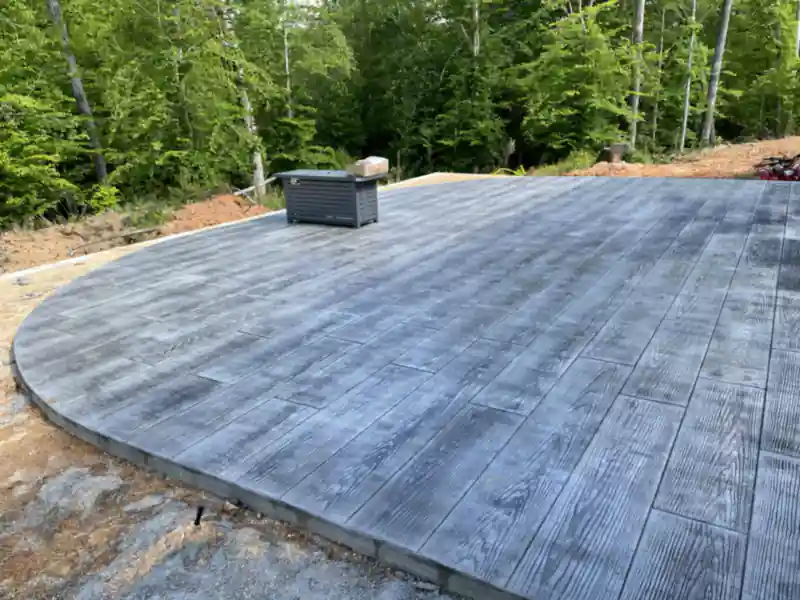
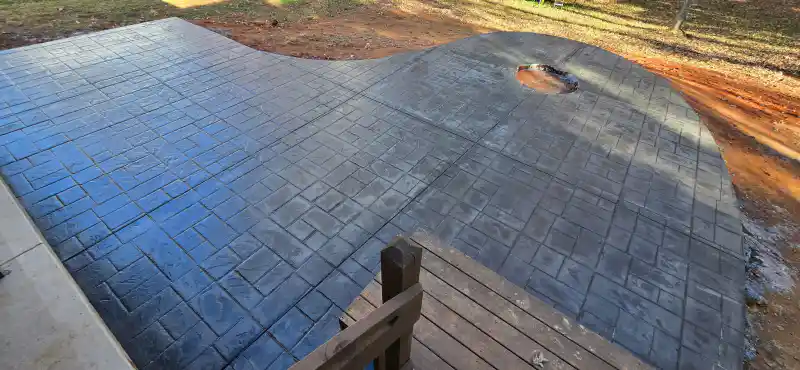
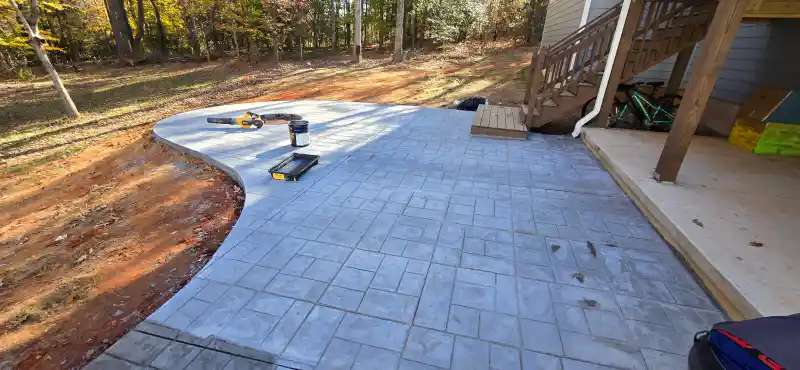
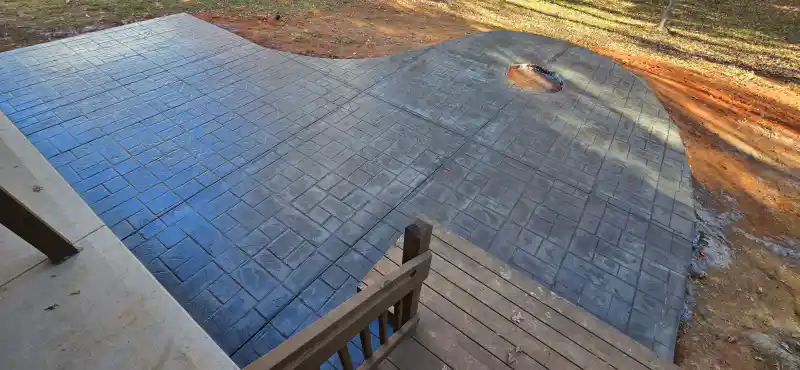
Stamped concrete gives a slab the look of natural stone, brick or wood. Popular stamped patterns around Greenville include:
- Ashlar slate for pool decks
- Cobblestone for front walkways
- Wood plank for patios
Durability matters in South Carolina’s climate. Natural stone can crack during our freeze-thaw cycles, and stamped concrete installed right does not have that problem.
Polished concrete floors in Greenville homes and shops
Polished concrete is an interior floor finish for Greenville homes and businesses, and it offers:
- Cool surface temperatures through Greenville summers
- Easy maintenance
- A wide range of colors and looks with stains and dyes
Exposed aggregate concrete in Greenville
Exposed aggregate concrete shows the stone in the mix at the surface, which gives it texture and practical slip resistance for pool areas and outdoor entertaining spaces.
What can a concrete countertop include in a Greenville kitchen?
In a Greenville kitchen, a concrete countertop can be made with:
- Custom colors
- Integrated sinks cast into the countertop
- Heat and stain resistance once sealed
Why Decorative Concrete Works in Greenville
Concrete’s thermal mass helps moderate temperature swings, and properly installed decorative concrete holds up through Greenville’s humid summers and occasional winter freezes.
Decorative concrete also fits the shift toward low-maintenance landscaping, which matters to busy Greenville families.
How is a stamped concrete pattern actually set into fresh concrete?
A stamped pattern is pressed into the slab while the concrete is still plastic, not applied after the fact. The Portland Cement Association's guide to finishing concrete with color and texture, Finishing Concrete Slabs with Color and Texture (PA124), specifies a small top-size coarse aggregate for stamped work, commonly 3/8-inch pea gravel, so the imprinting tools can press cleanly into the mix.
The surface is floated or troweled once, and PCA says it should not be troweled a second time before stamping starts. Large platform stamping pads go down edge to edge so the pattern lines up, and a finisher steps from one pad to the next, pressing the design about 1 inch into the surface; PCA notes at least two pads are needed so one can be lifted while the next is set. A thin polyethylene sheet, 1 to 2 mil, is often laid over the slab first. PCA's guide explains the plastic keeps concrete from sticking to the tool and rounds the edges of the pressed pattern for a softer, more natural look; textured surfaces sometimes need a powdered release agent instead for finer detail.
Timing decides whether a stamp job holds up. PCA's guide is direct about it: all stamping has to be finished before the concrete hardens. A small hand stamp fills in edges and corners the platform pads cannot reach, and a tool similar to a bricklayer's jointer is sometimes run afterward to dress the lines and add small imperfections that read as natural. The impressions between "stones" are usually left open, though PCA also describes a grouted finish for jobs that want a contrasting mortar line: the grout goes on 3 to 7 days after the pour and is worked into the joints with a squeegee, then wiped clean with a rinsed piece of foam rubber before it sets.
PCA's own guide specification for pattern-stamped surfaces sets a floor under the mix itself: a minimum cement content of 335 kg per cubic meter (564 lb per cubic yard), a maximum water-cementitious ratio of 0.45, and 5 to 8 percent air content on any concrete that will face freezing temperatures and deicers, which covers most driveways and walkways around Greenville. The same specification caps the coarse aggregate in a stamped mix at 3/8 inch and the slump at 5 inches, tighter limits than a plain driveway pour needs.
How does exposed aggregate concrete get its texture, and what makes one stone harder-wearing than another?
PCA's guide lays out three ways to build an exposed-aggregate surface: seeding a select stone into the top of a normal mix, a monolithic method where the aggregate is batched through the whole load, and a thin topping course that carries the exposed stone over a plain base slab. For the seeded method, PCA specifies a base-mix slump of at least 3 inches at 70°F so the seeded stone can still be worked into the surface, rising to as much as 5 inches as the concrete gets warmer. The crew waits until the slab will support a finisher kneeling on it without leaving a dent, then washes and brushes the surface until the flush water runs clear and no cement film is left on the stone.
Depth of exposure matters more than most homeowners realize. PCA's guide sets the ceiling at one-third of the coarse aggregate's diameter and never more than half the diameter of the smallest stone in the mix, and it names three grades: light exposure just skims the cement film off the top of the stone, medium exposure leaves stone and mortar joints reading as roughly equal area, and deep exposure makes the coarse aggregate the dominant surface. Getting that depth right is a timing question as much as a technique question, which is why PCA recommends a sample panel on any job before the crew commits to a full slab.
Not every stone wears or cleans the same way. On the Mohs hardness scale PCA cites, quartz aggregate rates about 7, close to carbon steel, and granite rates nearly as high since it runs roughly 30 percent quartz to 70 percent feldspar; gravel and marble can run anywhere from 3 to 7 depending on the source rock, and vitreous or ceramic aggregates sit around 5.5. Acid washing, used to brighten an exposed surface and lift any leftover cement film, is not safe on every stone either: PCA's guide warns that limestone, dolomite and marble will discolor or dissolve in the muriatic acid solution used for the wash, so only acid-resistant stone like quartz or granite should get that treatment, and PCA recommends waiting a minimum of two weeks after the pour before any acid touches the surface.
The amount of stone a seeded job actually uses scales with its size: PCA's guide puts the seeding rate at roughly 15 kg per square meter (3 lb per square foot) for 3/8-inch aggregate, climbing to about 30 kg per square meter (6 lb per square foot) for 2-inch stone, and it calls for having the full supply of select aggregate on hand before seeding starts so the job is not left with a visible seam where one batch ran out and another began.
How is color actually added to a decorative concrete slab?
PCA's guide lists five ways to color concrete: mixing pigment into the whole batch, called the one-course or integral method; a colored topping poured over a plain base slab, called the two-course method; a dry-shake color hardener broadcast onto the surface and floated in; a bonded color overlay on existing concrete; and paints or chemical stains applied after the pour. Which one makes sense depends on the slab's thickness and how the finished color needs to hold up, and PCA notes the integral method is more cost-effective on thinner sections, while dry-shake or two-course work suits thicker slabs better.
Pigment used in the integral and dry-shake methods has to meet ASTM C979, the specification written for integrally colored concrete, and PCA caps the dose at no more than 10 percent of the cement's weight. The guide's own numbers put a full-strength color at about 3 kg (7 lb) of pigment mixed with one bag of cement, dropping to roughly 0.7 kg (1.5 lb) per bag for a pastel shade. PCA's table of mineral pigments ties black to iron oxide, green to chromium oxide, blue to cobalt oxide, and buff to yellow ocher or yellow iron oxide, with white portland cement recommended over standard gray cement for cleaner, brighter colors in every shade except black.
The dry-shake method applies the colored material in two passes at a right angle to each other so coverage reads evenly across the slab, with each pass floated into the surface before the next goes down; PCA calls for dust masks and eye protection while handling the powdered material. Chemically reactive stains work on a different principle: they are acidic, water-based solutions that react with the calcium hydroxide already inside hardened concrete rather than sitting on top of it as pigment does. PCA's guide recommends a minimum 14-day cure before staining a new slab, and says blue, green and gold shades need 30 to 60 days of cure before the color reaction develops fully.
Does decorative concrete need to be sealed, and what do curing and joints look like on a colored slab?
Sealing is optional on most decorative work, but PCA's guide says it is common on dry-shake stamped concrete and exposed aggregate, both to protect the color underneath and make the surface easier to clean. The guide points to methyl methacrylate, silane and siloxane as the better-performing clear coatings; it specifically warns against linseed oil, which can darken the surface and oxidize to a dirty yellow or brown after enough sun exposure. Sealer goes on only after the slab has fully cured, commonly around 28 days after the pour according to PCA, and any curing compound used earlier has to be compatible with whatever sealer follows or the two can interfere with each other at the surface.
Curing follows the same underlying rule no matter the finish. The National Ready Mixed Concrete Association's technical guide on curing, CIP 11, puts a typical curing period at 3 to 7 days and says the concrete should not be allowed to drop below 50°F while it cures, since the rate of hydration and strength gain slows as the temperature drops. For colored work specifically, PCA's guide flags that moist curing can raise the risk of efflorescence on pigmented concrete, and that plastic sheeting left wrinkled against a white or colored slab can leave dark streaks or a mottled look where moisture collected unevenly underneath it.
Joints still have to be planned on a decorative slab exactly as they would on a plain one. NRMCA's CIP 6 puts maximum joint spacing at 24 to 36 times the slab's thickness, which works out to roughly 10 feet between joints on a standard 4-inch driveway, patio or walkway slab, with individual panels kept close to square rather than long and narrow so they resist cracking. On a stamped surface those joints often follow the pattern lines themselves, and PCA's guide notes that hand-tooled joints are not always practical on an exposed-aggregate finish, where a sawed or divider-strip joint holds up better against the stone.
NRMCA's CIP 11 lists sprinkling, waterproof curing paper, plastic sheeting and liquid membrane-forming compounds as the accepted ways to hold moisture in a slab while it cures, and it specifically calls alternate wetting and drying "not an acceptable curing practice," since the surface needs steady moisture rather than an on-and-off supply to hydrate evenly. On a colored or stamped slab, PCA adds one more condition: any curing compound used has to be formulated for colored, patterned or exposed-aggregate work, since an ordinary compound can leave a film that stains the surface or blocks a sealer from bonding later.
Which decorative concrete fits a Greenville home?
That depends on where it goes. Stamped patterns suit patios, front walkways and pool decks; exposed aggregate suits pool areas and outdoor entertaining spaces where slip resistance matters; polished concrete is an interior floor finish. Our decorative concrete page covers the work we do in Greenville.
Want to see what decorative concrete would look like on your property? Send a photo of the space and the finish you have in mind, and we price it on site.
What do jobs like these look like when we pour them?
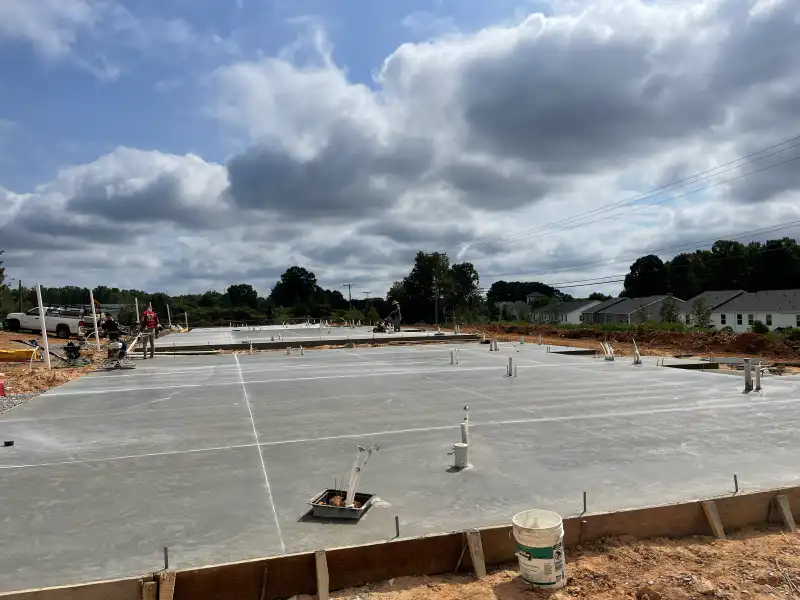
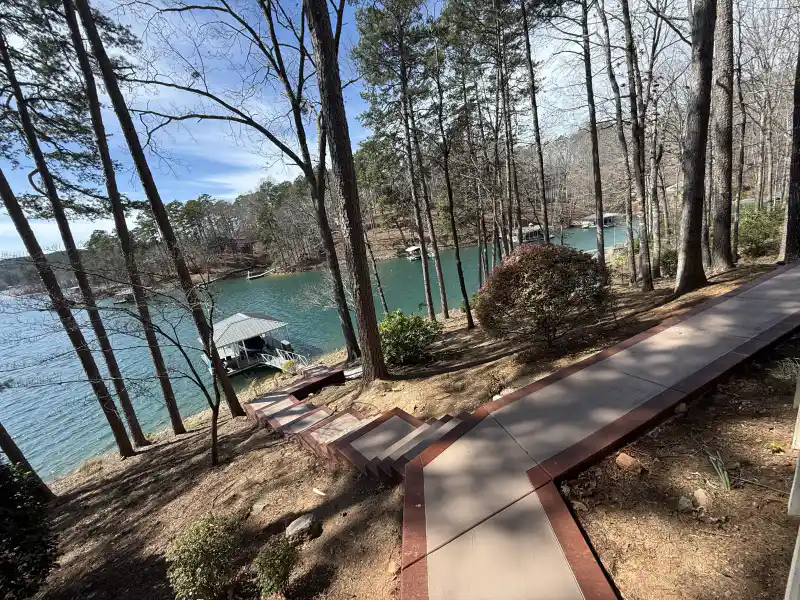
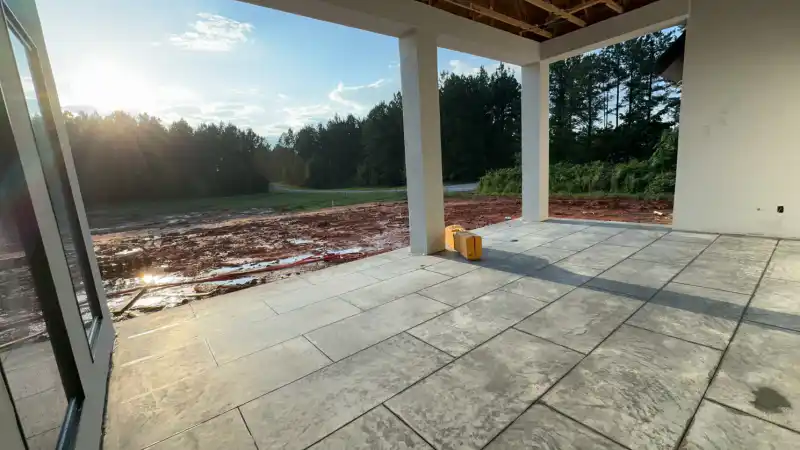
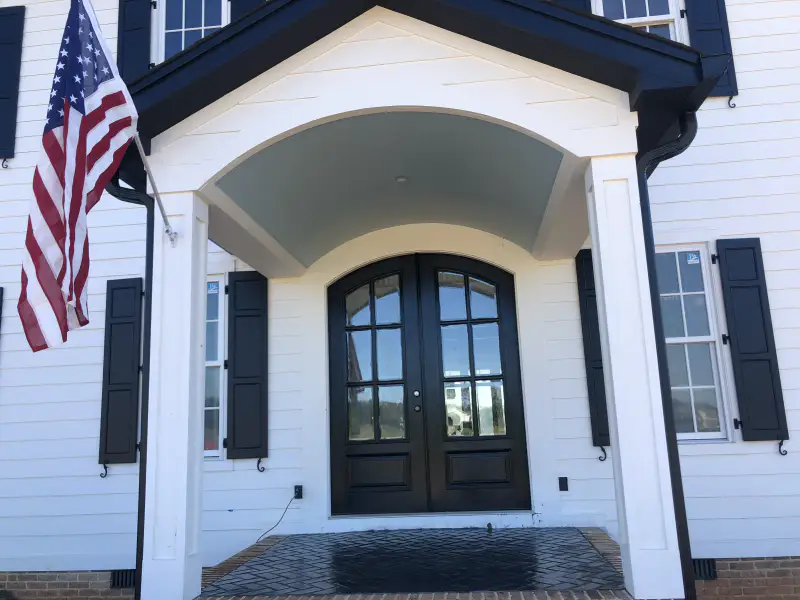
These are decorative concrete jobs our crews poured.
Stamping and finishing decorative concrete in Greenville and the Upstate, on video
Stamping and finishing decorative concrete. The pattern goes in during a short window while the slab is still workable.
Concrete reviews from Greenville and the Upstate
Ace concrete was excellent. They did a wonderful job. Very great experience with the workers and was very surprised that the owner showed up at the job and he actually did smoothing of…Google review
Ace installed a small patio on a sloping area requiring a poured concrete wall on one side. They removed the existing patio block structure and installed the concrete patio in one day. The results were fantastic…Google review
Ace knocked it out the park for me on a large concrete driveway pour in Taylors, SC.…Google review
Great job, the pad for our generator is perfect I highly recommendGoogle review
I needed a 24' x 40' concrete floor for a metal building. After getting several quotes I decided to go with Ace Concrete Construction.…Google review
Great work team was finished in a day and all the areas look great.Google review
Concrete guides for Greenville and Upstate homeowners
More guides from our crew on concrete work in Greenville and the Upstate.
Cracked, Lifted, or Crumbling: When to Repair a Concrete Sidewalk in Greenville and When to Replace It
Cracked, lifted, or crumbling concrete walkway or steps in Greenville? How to tell a repair from a replacement, why Upstate walks fail early, and the honest fix. Free estimates.
September 9, 2026Old Garage Floor Cracking or Flaking? When to Replace a Garage Slab in Greenville
Is your old garage floor cracking, flaking, or settling? How to tell a resurface from a full garage slab replacement in Greenville, why they fail, and what a proper pour includes. Free estimates.
September 8, 2026Freeze-Thaw in the Upstate: What January and February Do to Concrete That Was Poured Wrong
How Upstate SC freeze-thaw cracks and spalls concrete each winter, why a badly poured slab fails first, and what protects a driveway or patio. Free estimates.
Licensed concrete contractor in Greenville: who we are
Concrete service areas around Greenville
We work from our shop at 4706 Locust Hill Rd in Taylors, SC across Greenville, Spartanburg, Anderson and Laurens counties, from our offices at 10 Accountants Circle, Suite 1B in Seneca, SC and 405 S Pine St, Suite J in Spartanburg, SC, and from an office in Asheville, NC.
Free decorative concrete estimates in Greenville
We price the job on site.
Concrete work we pour across the Upstate: driveway installs, garage slabs, stamped concrete, commercial jobs, industrial jobs, patios and outdoor living, and retaining wall work.
Request a decorative concrete estimate in Greenville
Someone comes out and prices it standing on it. Estimates are free.
- Driveways
- Patios & Outdoor Living
- Decorative Concrete
- Garage & Building Slabs
- Foundation & Retaining Walls
- Commercial Concrete
- Industrial Concrete
- Epoxy Flooring
- Foundation Repair & Concrete Restoration
Financing available through Wisetack. Check your options in about a minute without impacting your credit score.
See financing options*All financing is subject to credit approval. Your terms may vary. Payment options through Wisetack are provided by our lending partners.
Fast & Free
Get Your Free Concrete Estimate