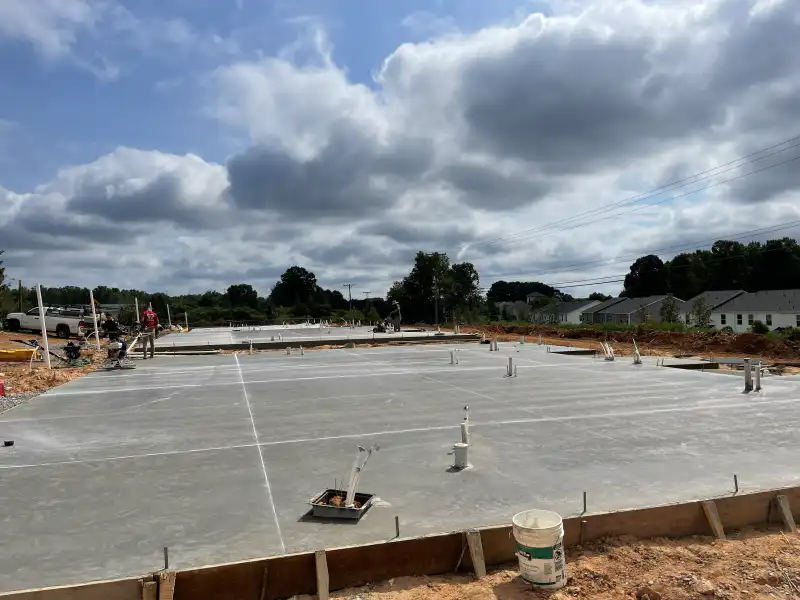
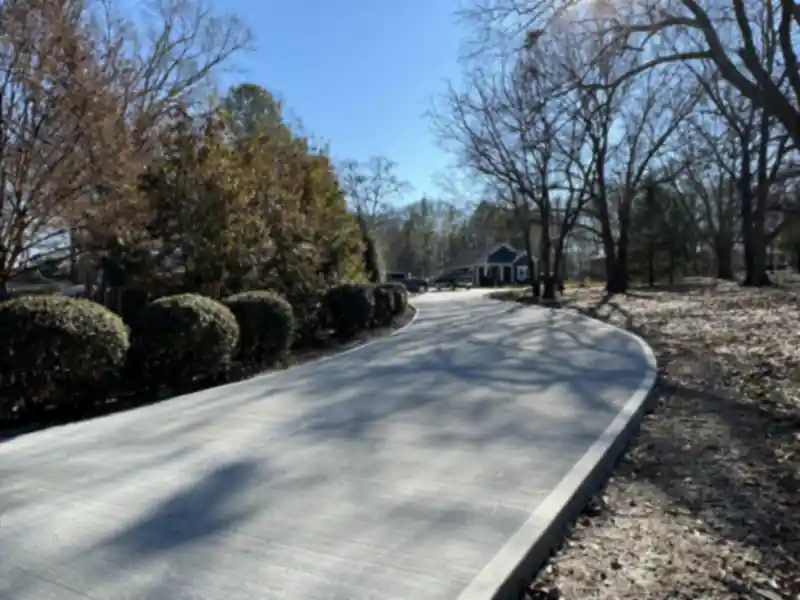
September and October are the two best pouring months on the Upstate calendar. Here is why the season matters to your slab, and why the fall schedule fills early.
By the crew at Ace Concrete Construction, Taylors, SC
Ask anyone who finishes concrete for a living what kind of day they want, and the answer sounds a lot like an Upstate fall day. Mild, dry, with a night that stays comfortably above freezing. Summer around Greenville rarely cooperates, and mid-winter brings its own problems. The stretch in between is the window, and it is shorter than most homeowners think.
What a concrete pour actually needs from the weather
Concrete does not dry, it cures. The cement in the mix reacts with water over days and weeks, and that reaction is what builds strength. The weather can help it or fight it. When the surface loses water faster than the reaction can use it, you get a weak top layer and shrinkage cracks. When temperatures drop too far, the reaction stalls before the slab has built the strength it needs.
That is why the calendar matters more with concrete than with most outdoor work. The mix leaving the truck is the same in July and October. What happens in the first 48 hours after the pour is not.
Why Upstate summers fight the pour
Greenville summers are hot and humid, and the heat pushes the surface of fresh concrete to set faster than the slab below it. Crews fight that with early starts, water management and curing compound, and an experienced crew handles it fine. But you are working against the weather instead of with it, and the afternoon thunderstorms that roll through the Upstate all summer can shut down a pour with the forms already set.
Fall takes most of that off the table. The heat breaks, the storm pattern settles down, and day after day comes up pourable. That is exactly why the season books up.
The red clay angle nobody mentions
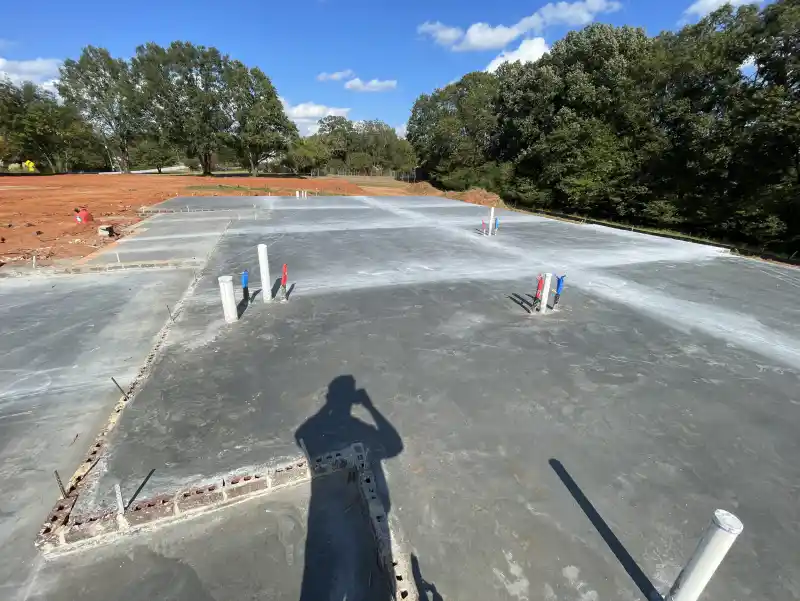
Most of the Upstate sits on Piedmont red clay, and clay moves with moisture. It shrinks when it is dry and swells when it is wet. A slab poured in early fall goes down on ground that is settling out of the dry late-summer pattern, then gets its full cure in before the wet winter months push moisture back into the soil. The slab meets its first real freeze-thaw season already at strength, sitting on a properly compacted base.
Pour that same slab in December and it faces January and February, the hardest months on concrete in this region, while it is still young. Base prep and reinforcement matter more than anything else here, which is why we compact stone under every pour and spec reinforcement to the load. But the season is the one factor you get to choose for free.
What belongs on a fall schedule
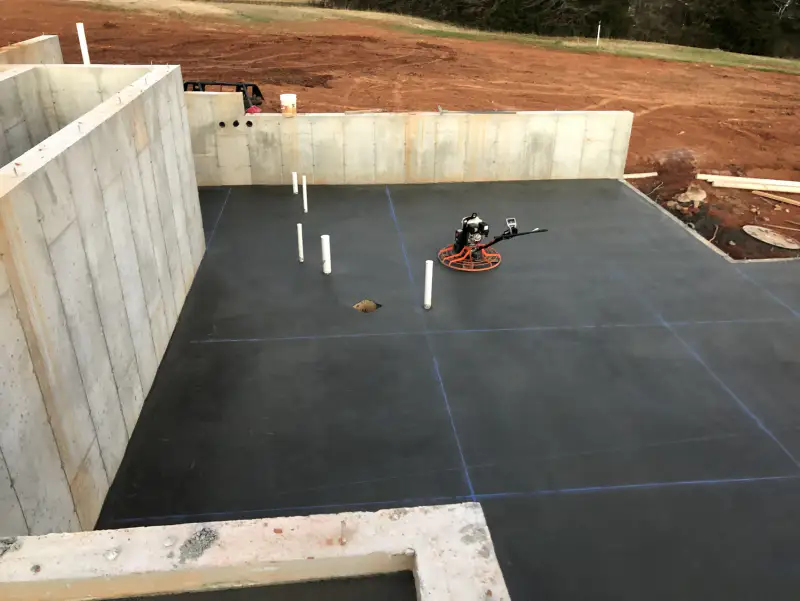
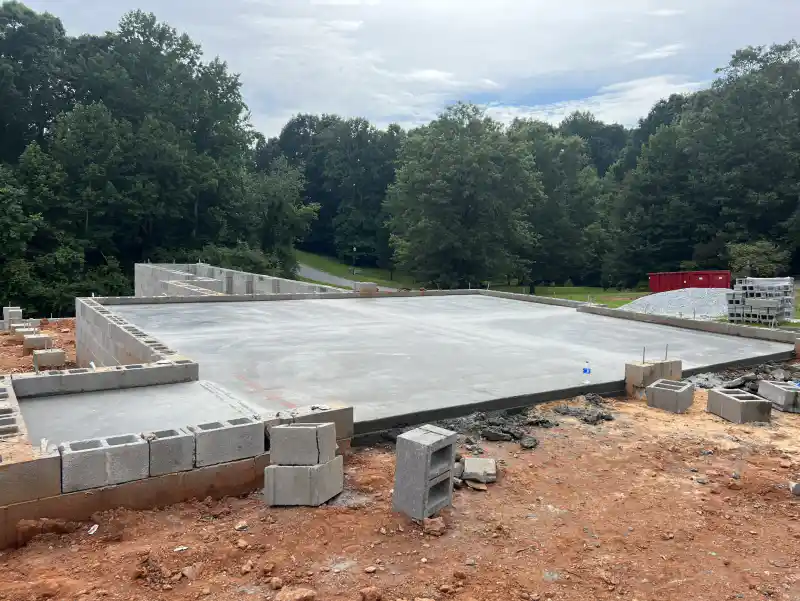
The projects we most want on the calendar in September and October are the ones that live outside all winter. Concrete driveways top the list, because a driveway poured now takes on winter fully cured. Garage and shop slabs are close behind, since builders want them down before winter framing. Parking pads and RV pads follow the same logic.
Patios and decorative concrete are the sleeper picks. Nobody is thinking about their patio in October, which is exactly why October is when to pour it. It cures over the winter and is ready for the first warm Saturday in March, while your neighbors are still waiting on spring estimates.
How a fall pour actually runs
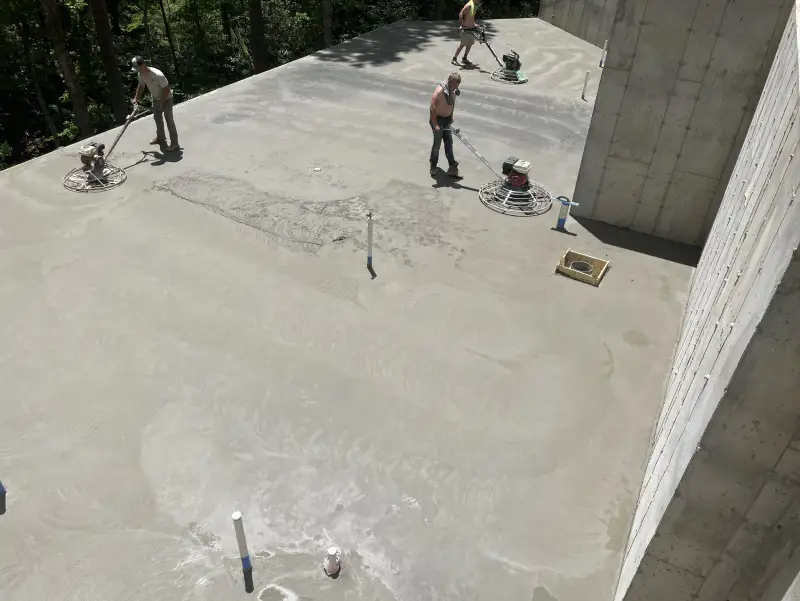
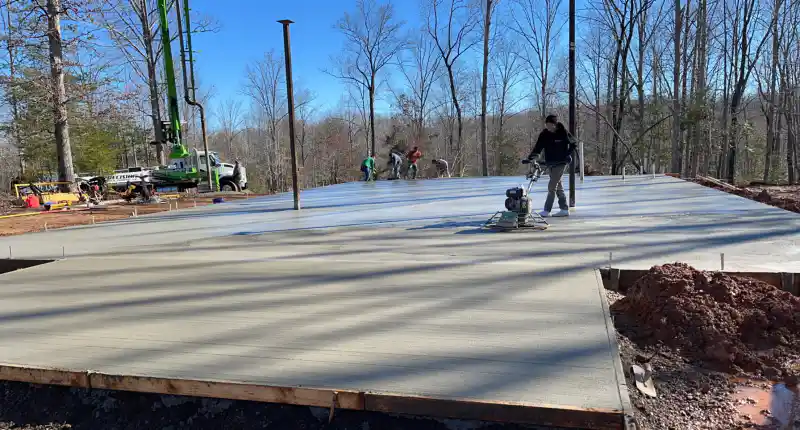
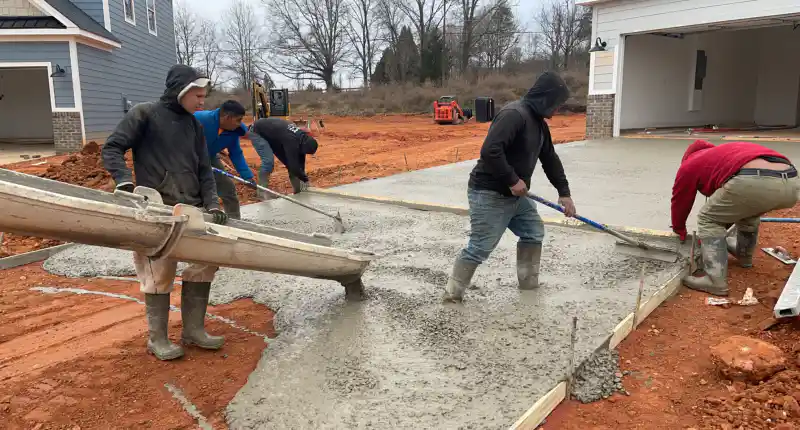
The rhythm of the job changes with the season, mostly for the better. Summer pours start at first light to beat the heat, and the finishing window is a sprint. In October the crew can pour mid-morning and finish without racing the sun. The forecast still runs the show: we want a dry day for the pour and a mild stretch behind it, and we will move a pour date rather than put concrete down in front of weather that will hurt it.
If a surprise cold night shows up behind a pour, the trade has answers for it. Fresh concrete generates its own heat as it cures, and covering a young slab holds that heat in through a cold snap. That is routine protection late in the season, not a reason to wait until spring. What has no answer is a slab poured onto frozen ground or through a hard freeze, which is why the calendar, not the thermometer on pour day, is what we plan around.
One more thing fall gives you that summer does not: better scheduling honesty. Because the weather cancels fewer days, the date we give you in October is far more likely to be the date the truck shows up.
The honest version of the booking pitch
Every contractor tells you to book early. Here is the specific reason it is true in this trade: the fall window is finite, weather-dependent, and shared by every builder, homeowner and business in the Upstate who spent the summer putting a project off. When a rain week eats five pour days, everything behind it slides. Getting an estimate in September does not commit you to anything, and it puts you in line while the line is short.
Questions Greenville homeowners ask us
How late in the year can you pour concrete in Greenville, SC?
The Upstate usually holds mild daytime temperatures deep into November, so the pouring season runs long around Greenville and Spartanburg. We watch the overnight forecast before every pour, and once hard overnight freezes start showing up we get selective about pour days rather than gambling with your slab.
Does cooler fall weather slow down curing?
It slows the surface set a little, and that is mostly a good thing. Concrete gains strength through a chemical reaction that wants steady moisture and moderate temperatures. A driveway poured on a mild October morning in Taylors cures more evenly than one poured in the August heat, because the surface is not drying out faster than the slab underneath.
Can I still get a patio done before spring?
Yes, and fall is the smart time to do it. A patio poured in September or October is fully cured long before you want to use it, and you skip the spring rush when everyone in the Upstate calls at once. Stamped and decorative finishes need a bit more time on site, so earlier in the fall is better for those.
Get on the schedule
Ace Concrete Construction is a licensed South Carolina contractor (RBS.65343) based at 4706 Locust Hill Rd in Taylors, and our own crews handle every pour from grading to finish. Estimates are free, and we offer senior and military discounts. Request a free estimate online or call 864-214-5271. We answer seven days a week, 7am to 7pm.