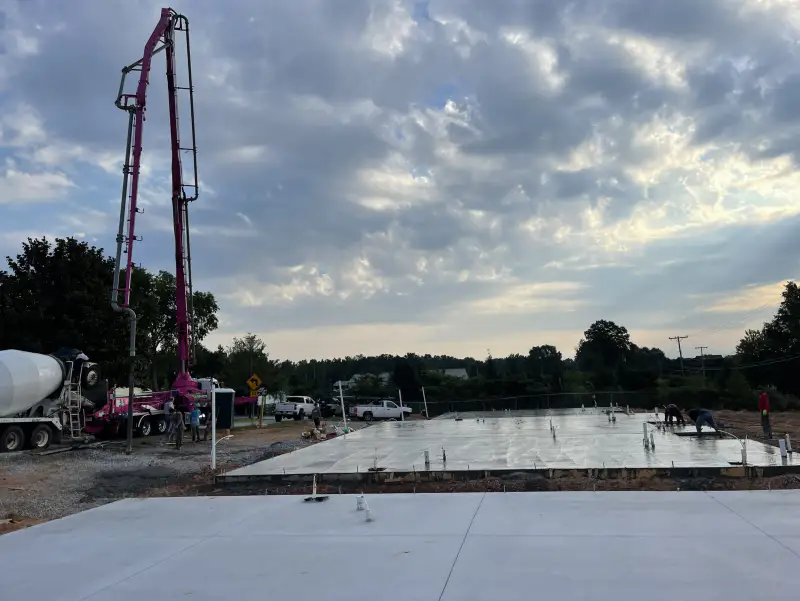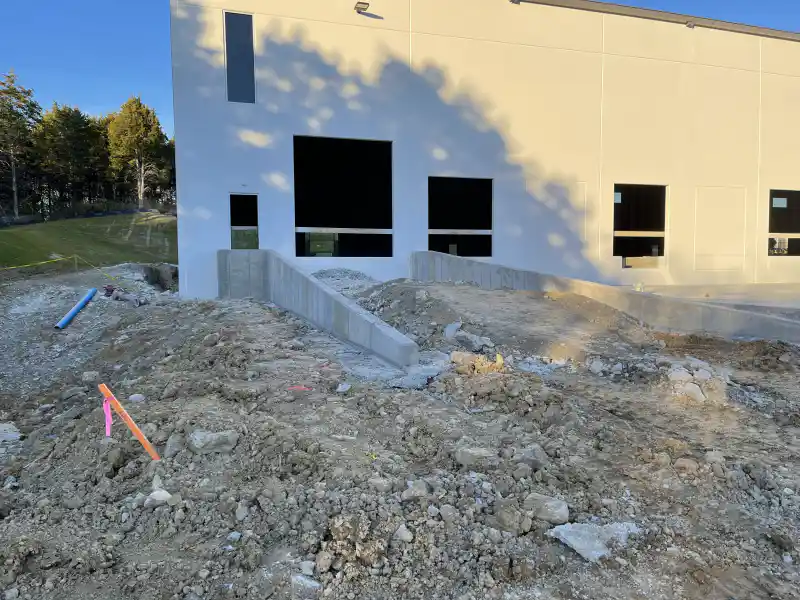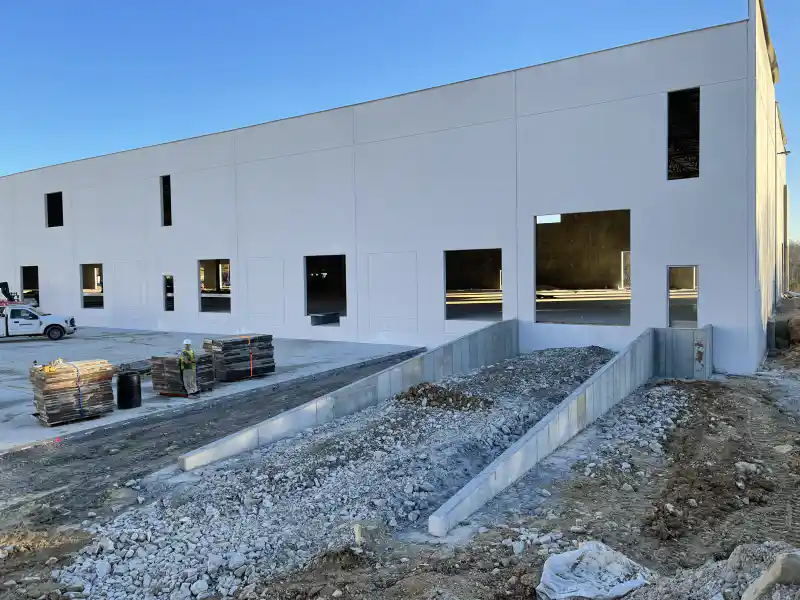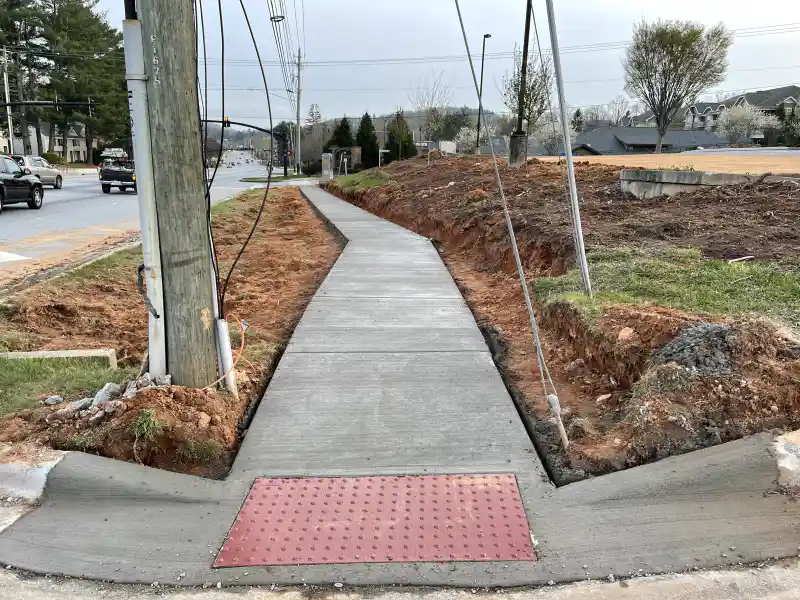
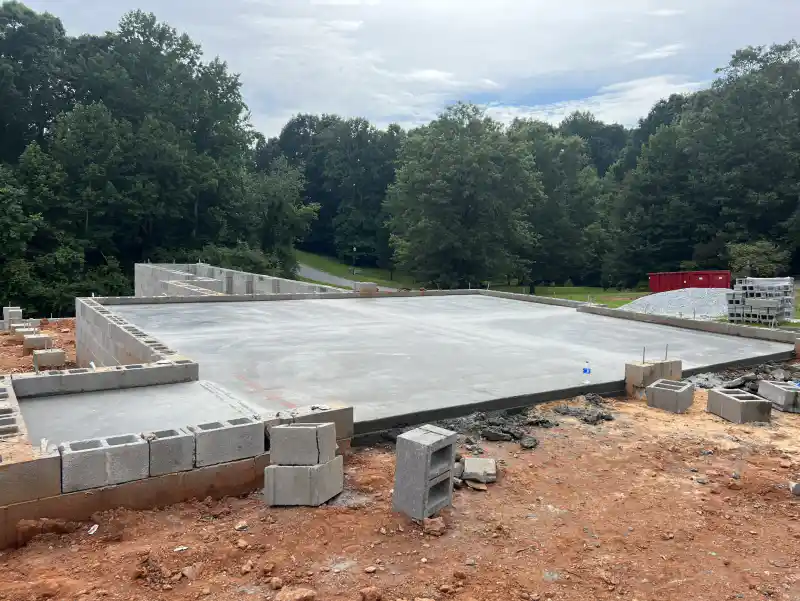
A commercial slab or parking pad is not just a bigger version of a home driveway. Get these five things right before the pour and the pad carries loads and sheds water for decades. Miss them and you are repairing it inside a few years.
By the crew at Ace Concrete Construction, Taylors, SC
When a Greenville County business owner or property manager calls us about a new slab, loading area, or parking pad, the pour is rarely the hard part. What separates a commercial pad that lasts from one that spiderwebs and sinks is the planning that happens before a single yard of concrete shows up. Here are the five things worth settling first, whether you hire us or someone else.
1. What is actually going to use it
Everything downstream comes from this one answer. A pad that holds employee cars is a different build from one that takes box trucks at a loading dock, a dumpster on a steel-wheeled bin, or a forklift moving pallets. Heavier and more concentrated loads mean a thicker slab, a stronger mix, and more reinforcement. Before anything else, be honest about the heaviest thing that will ever sit on or roll across that pad, including the delivery and service vehicles you do not own but will host. That number drives the whole design.
2. The base and subgrade under it
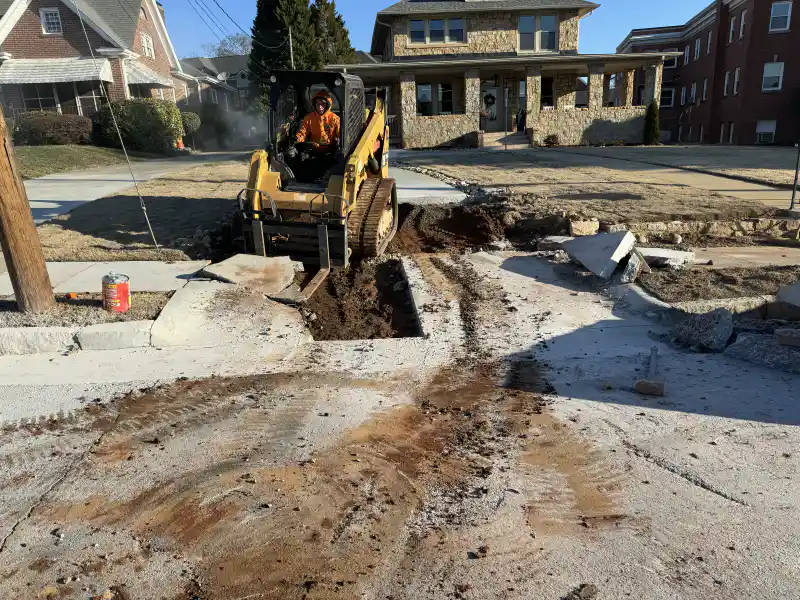
A commercial slab is only as good as what it sits on, and in the Upstate what it sits on is usually Piedmont red clay that holds water and moves with it. Skipping proper subgrade work is one of the most common reasons commercial pads fail early. That means the area is cleared and graded, the subgrade is compacted, and a proper stone base is laid and compacted to give the slab a stable, draining foundation. It is invisible once the concrete is down, and it is the difference between a pad that stays flat and one that cracks and settles under the first heavy season.
3. Drainage and slope
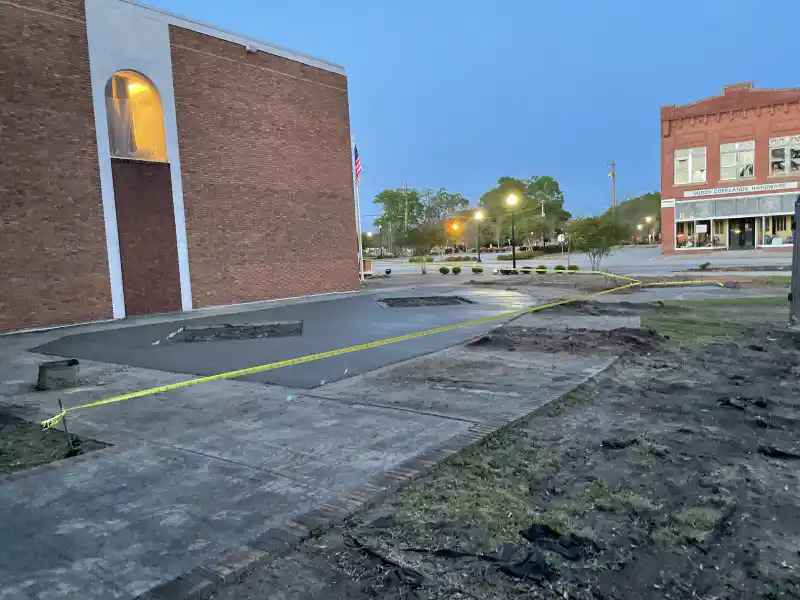
Standing water is the enemy of any exterior concrete, and on a large flat commercial pad there is a lot of surface for it to sit on. Before the pour you want a clear plan for where water goes: the slope that moves it off the slab, where it drains to, and how that ties into the rest of the site. Good drainage protects the concrete from freeze-thaw and wear, keeps the surface safe to walk and drive on, and is often part of what the county wants to see on a commercial site. Getting slope right is a design decision, not something you fix after the concrete has cured.
4. Joint layout and reinforcement
Concrete moves as it cures and as temperatures swing, and on a large pad that movement has to be controlled or it shows up as random cracks. That is what a joint plan is for. Control joints are placed so the slab cracks along clean, intended lines; isolation joints separate the pad from buildings, footings, and other fixed structures so they can move independently; and construction joints handle where one day's pour meets the next. Alongside the joints, the reinforcement is sized to the load. On a commercial pad none of this should be improvised on pour day; it belongs in the plan.
5. Permits, access, and schedule
Commercial work runs on a different set of rules than a residential pour. It is far more likely to need a permit and plan review, it may call for engineered drawings, and it has to fit around your operations rather than an empty backyard. Confirm the permitting path with Greenville County or your design professional early, because that timeline often matters more than the pour date. Then think through access: where the trucks and pump can set up, how to keep the area open for business during the work, and how long the pad needs to cure before it carries full traffic. A contractor who plans all of this with you up front is telling you they have done commercial work before.
Plan it once, pour it once
The theme running through all five is the same: a commercial pad rewards planning and punishes shortcuts, because everything that fails is expensive and disruptive to fix once your business is running on top of it. Our commercial concrete crew handles storefront pads, loading and dumpster pads, curbs, and parking areas across Greenville County, and for heavier-duty work our industrial concrete team pours warehouse floors and equipment pads built for real load. You can see how we approach the flatwork itself on our concrete slab and concrete pad pages.
If you are weighing a commercial slab or parking pad, the cheapest step is the first one: get someone who pours this work to walk the site with you before anything is committed. We do that at no charge.
Questions Upstate property owners ask us
How thick does a commercial slab or parking pad need to be?
It depends entirely on what will drive and sit on it, which is the whole point of speccing it before you pour. A pad that only carries cars is a different build from one that takes delivery trucks, dumpsters, or forklifts, and the thickness, the concrete strength, and the reinforcement all step up with the load. The right answer comes from the actual use and the site, not from a number off a web page, which is why we walk the site and talk through the traffic before we quote.
Do I need a permit for a commercial concrete slab in Greenville County?
Commercial flatwork is far more likely to need a permit and plan review than a home driveway, and the requirements depend on the size, the use, and where it sits on the property. We always tell owners to confirm with Greenville County or their design professional early, because the permit and any required drawings drive the schedule. We are used to working inside that process and can pour to what the approved plans call for.
How long does a commercial pour take from estimate to finished pad?
The pour itself is often the fastest part. What sets the real timeline is everything ahead of it: the site visit, the layout and any engineering, permitting where it applies, and base preparation, plus cure time before the pad can carry full traffic. We give you an honest schedule up front that includes all of it, so you can plan around a working timeline instead of just the day the truck arrives.
Get on the schedule
Ace Concrete Construction is a licensed South Carolina contractor (RBS.65343) based at 4706 Locust Hill Rd in Taylors, and our own crews handle every pour from grading to finish. Estimates are free, and we offer senior and military discounts. Request a free estimate online or call 864-214-5271. We answer seven days a week, 7am to 7pm.