
Driveway Repour vs Resurfacing in Greenville SC: Which One Your Driveway Needs
We at Ace Concrete Construction resurface and repour driveways in Greenville and across the Upstate, SC. Your driveway is cracking and you have two very different quotes in front of you: resurface it, or tear it out and start over. Here is how to tell which one your slab actually needs.
Last updated
- SC licence RBS.65343
- 20+ years in the trade
- Free on-site estimates
- Financing through Wisetack
Fast & Free
Get Your Free Concrete Estimate
Your driveway is cracking and you have two very different quotes in front of you: resurface it, or tear it out and start over. Here is how to tell which one your slab actually needs.
By the crew at Ace Concrete Construction, Taylors, SC
This is one of the most common calls we get across Greenville County, and it is also the one where the wrong answer costs the most. Resurfacing a driveway that needed replacing pays for a fix that fails with the slab underneath it, and replacing one that only needed a fresh surface costs more than it had to. The deciding question is whether the problem is the surface or what the surface is sitting on.
What resurfacing actually is
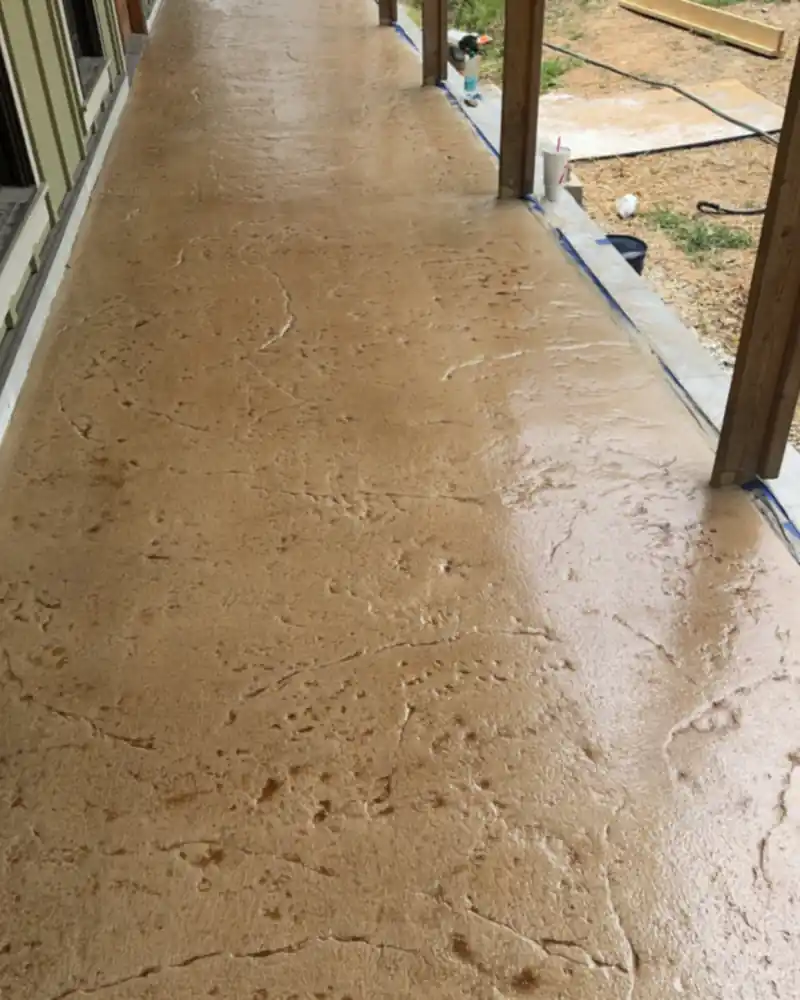
Resurfacing, or an overlay, bonds a thin new layer of concrete over your existing driveway, covering surface wear and minor spalling and carrying a fresh broom or decorative finish, using less material than a full replacement because the old slab becomes the base.
An overlay is only as good as the slab underneath it: sound, level and cracking only at the surface, it is a cost-effective choice, but a slab that has moved needs a tear-out and repour instead.
What tear-out and repour actually is
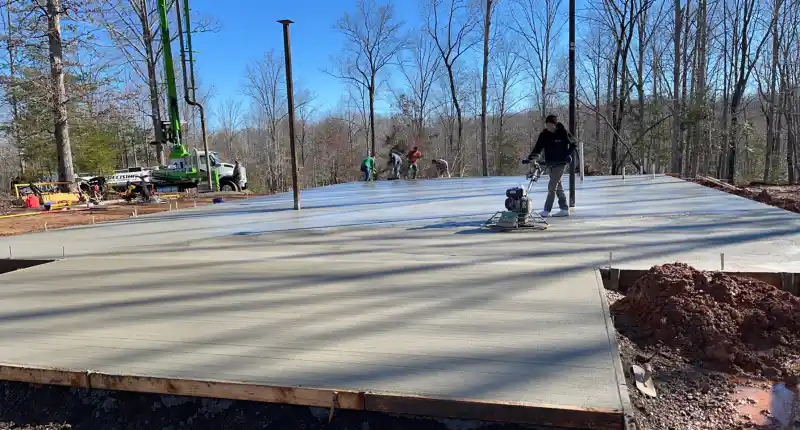
We break out the old driveway, haul it off, and start over from the ground: regrade and recompact the base, set new forms, place reinforcement, pour a fresh slab from a mix specced for the load and written on your estimate, and cut the control joints where we want the cracks to go. It is more work and more concrete, and it resets every one of the things that make a driveway last. Our demolition and repair crew handles the tear-out on the same job, so it is one crew start to finish.
How does red clay decide between repour and resurfacing?
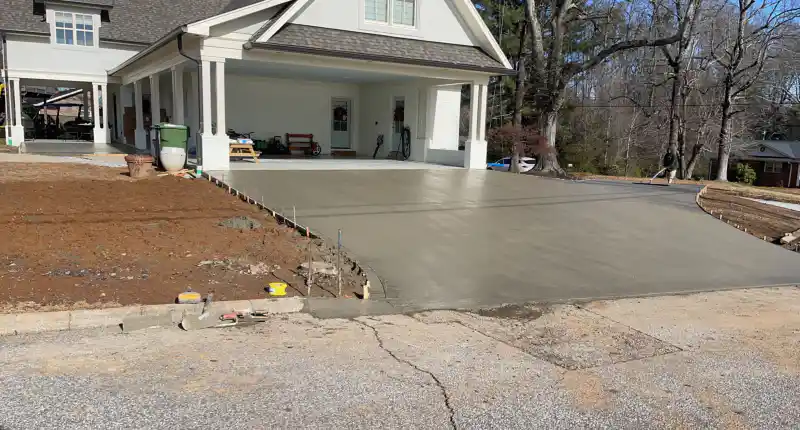
When a driveway is cracking because the red clay under it was never properly compacted, or because there was no real stone base to begin with, the failure is coming from below, and an overlay poured on top will crack again along the same lines. Most of the Upstate sits on Piedmont red clay, which moves with moisture, and that movement is behind a large share of the cracked driveways we see around Greenville, Taylors, and Greer.
This is why so many Upstate driveways that look like a resurfacing job are really a repour.
What does an overlay actually need from the slab underneath it?
The Portland Cement Association's own guidance on resurfacing is blunt about the one condition that decides whether an overlay is the right call: the existing slab has to be sound, meaning it has enough strength, durability and stability for the job it is about to keep doing, before a new layer goes over it. PCA's guide is specific about what happens when that is not true: "random cracks in existing slabs will mirror through this type of surfacing technique," so a crack in the base telegraphs straight back up through the new surface, usually inside a season or two.
Thickness is not a guess either. PCA's guide sets traditional concrete overlay material at a minimum of about 1 inch, with specialty thin-topping products running anywhere from 1/8 inch to 3/4 inch depending on the manufacturer, and it caps the coarse aggregate in a colored overlay mix at roughly one-third the thickness of the topping itself so the stone does not poke through a thin layer. Match those numbers against a driveway that has already heaved or settled unevenly and the reason an overlay will not fix it becomes a matter of physical thickness, not opinion.
Bonded stamped overlays follow their own thickness rule on top of that. PCA's guide says traditional concrete materials work for stamped overlay sections of 1 inch or more, but a shallow overlay thinner than that needs a stamp pattern specifically designed for the shallow-overlay process, since an ordinary stamping tool will not press its full pattern depth into a thin layer without breaking through it.
What is Upstate red clay actually made of?
USDA's official soil survey has a name for the clay under most Greenville County driveways: the Cecil series, described as "fine, kaolinitic, thermic Typic Kanhapludults" found on the "interstream divides, ridges, and side slopes" of the Piedmont uplands, formed from residuum weathered out of felsic igneous and high-grade metamorphic rock. USDA rates the profile "very deep," well drained, with slopes running 0 to 25 percent, and maps it across a large extent of Virginia, North Carolina, South Carolina, Georgia and Alabama.
The layer that actually moves sits below the topsoil: USDA describes the subsurface horizon as "clay loam, clay, or sandy clay" with moderately high permeability but only medium surface runoff, meaning water works its way down into that clay more easily than it runs off the surface. Clay particles that size swell when they take on water and shrink as they dry, and a driveway slab sitting on ground that is doing that underneath it will crack along the same lines again unless the base under a repour is properly compacted stone rather than the clay itself.
How do control joints affect whether a repour cracks again?
A fresh repour means a new set of joints as much as a new slab, and NRMCA's CIP 6 spells out the spacing those joints need: a maximum of 24 to 36 times the slab's thickness, which comes out to roughly 10 feet on a standard 4-inch driveway, with 15 feet as a hard ceiling even on a thicker section. CIP 6 also calls for panels that are close to square, flagging any panel whose length runs past 1.5 times its width as more likely to crack somewhere the joint pattern did not plan for.
Where a repour meets something that was not torn out, an existing garage slab, a front walk, a stoop, CIP 6 calls for a separate isolation joint rather than a plain butt edge, since those adjoining sections move independently of the new pour and a rigid connection between them just relocates the cracking problem to that seam. Getting the joint layout right the first time is one of the few things a repour can do that resurfacing cannot, since an overlay is stuck following whatever joint pattern the original slab already has.
Those isolation joints get filled with a different material than a control joint does. CIP 6 calls for premolded joint filler, asphalt-impregnated fiber sheeting or a compressible foam strip, packed into the gap so the two slabs can move independently instead of a rigid saw-cut line that assumes both sides are part of the same continuous pour. CIP 6 adds that at least 2 inches of sand over a footing will also keep the new concrete from bonding to it, one more way an isolation joint gets built into a repour rather than assumed.
How long does a fresh repour need to cure before it handles traffic?
NRMCA's CIP 11 puts a typical curing period at 3 to 7 days, with the slab's own temperature held above 50°F throughout so the cement keeps reacting with water at a steady rate. Skipping that window has a measurable cost: CIP 11 says concrete cured in a dry environment can lose as much as 50 percent of its potential strength compared with concrete that was properly moist-cured, and it ties a rushed cure directly to a less durable surface, more prone to crazing, dusting and scaling under the exact kind of daily wear a driveway sees.
That curing period runs before the slab is ready for a car, not after the forms come off. A driveway or garage pour that looks solid enough to walk on within a day is still gaining most of its design strength over the following week, which is the practical reason a repour is scheduled around a window the household can work around, and around when the concrete truck can show up.
NRMCA's CIP 11 lists the accepted ways to hold that moisture in while the slab cures: sprinkling, waterproof curing paper, plastic sheeting, or a liquid membrane-forming compound applied once the surface water sheen has gone. Whichever method the crew uses, the guide is specific that alternating between wet and dry during the curing window does more harm than a shorter but consistent cure, since the concrete needs steady moisture rather than a cycle of soaking and drying out.
How can you tell whether your driveway needs a repour or resurfacing?
You will not know for certain without an eye on the slab, but these are the signs we read when we walk a driveway:
Resurfacing may be enough when
The cracks are shallow and hairline, the slab sits flat with no sections that have heaved or sunk, the edges are intact, and the driveway drains without pooling. That is surface wear on a sound slab, and an overlay can genuinely renew it.
Tear-out and repour is the honest answer when
Sections have settled or lifted so the slab is no longer level, cracks are wide or run the full width, pieces move underfoot, or the same cracks have already come back after a patch. Those are base and structural problems, and a surface layer will not hold them.
If you want to read the cracks yourself first, our guide to concrete crack repair in Greenville walks through which cracks are cosmetic and which ones are telling you something. If the damage came from something sudden, like a tree coming down on the slab, read whether insurance pays for a damaged driveway in South Carolina before you pick either quote.
What we do on a driveway call
We come out, look at the slab and how it sits, check the drainage and the edges, and tell you which option your driveway actually needs, not which one sells better. If it is a concrete resurfacing job we say so, and if it needs a repour we explain what we saw and price that. You can see how we build a new one on our concrete driveway page, and what moves the number is covered in our driveway cost guide.
Questions Greenville homeowners ask us
Can you resurface a cracked concrete driveway in Greenville?
Sometimes, and we will tell you honestly whether it is worth it. Resurfacing bonds a new layer over the old slab, so it only works when the slab underneath is still sound and level. If the base has moved, the cracks will telegraph straight back through the overlay in a season or two. We look at what is actually failing before we recommend one over the other.
How long does a resurfaced driveway last compared to a repour?
A good overlay on a sound slab can last years and looks close to new, but it is a surface fix that lives and dies with the slab beneath it. A full tear-out and repour resets the base, the reinforcement and the joints, which is why it is the longer-term answer when the driveway is cracking because of what is underneath it.
Which one is cheaper, resurfacing or replacing?
Resurfacing usually costs less up front because there is no demolition and less concrete. The catch is that resurfacing a driveway that really needs replacing means paying twice, because the overlay fails with the slab. We price both once we have seen the driveway, so you are comparing the real options for your slab, not a guess.
Who pours concrete in Greenville and the Upstate?
We at Ace Concrete Construction are a licensed South Carolina contractor (RBS.65343) based at 4706 Locust Hill Rd in Taylors, and our own crews handle every pour from grading to finish. Estimates are free, and we offer senior and military discounts. Request a free estimate online or call 864-214-5271.
What do jobs like these look like when we pour them?
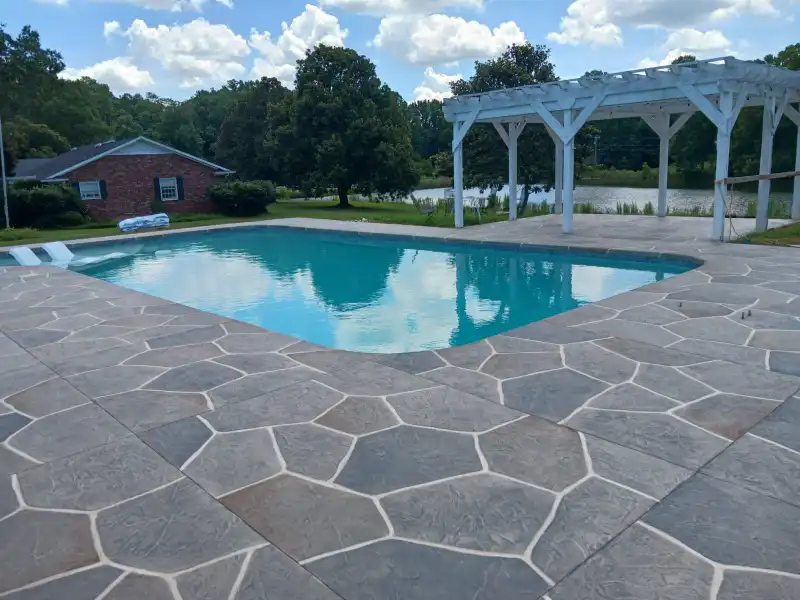
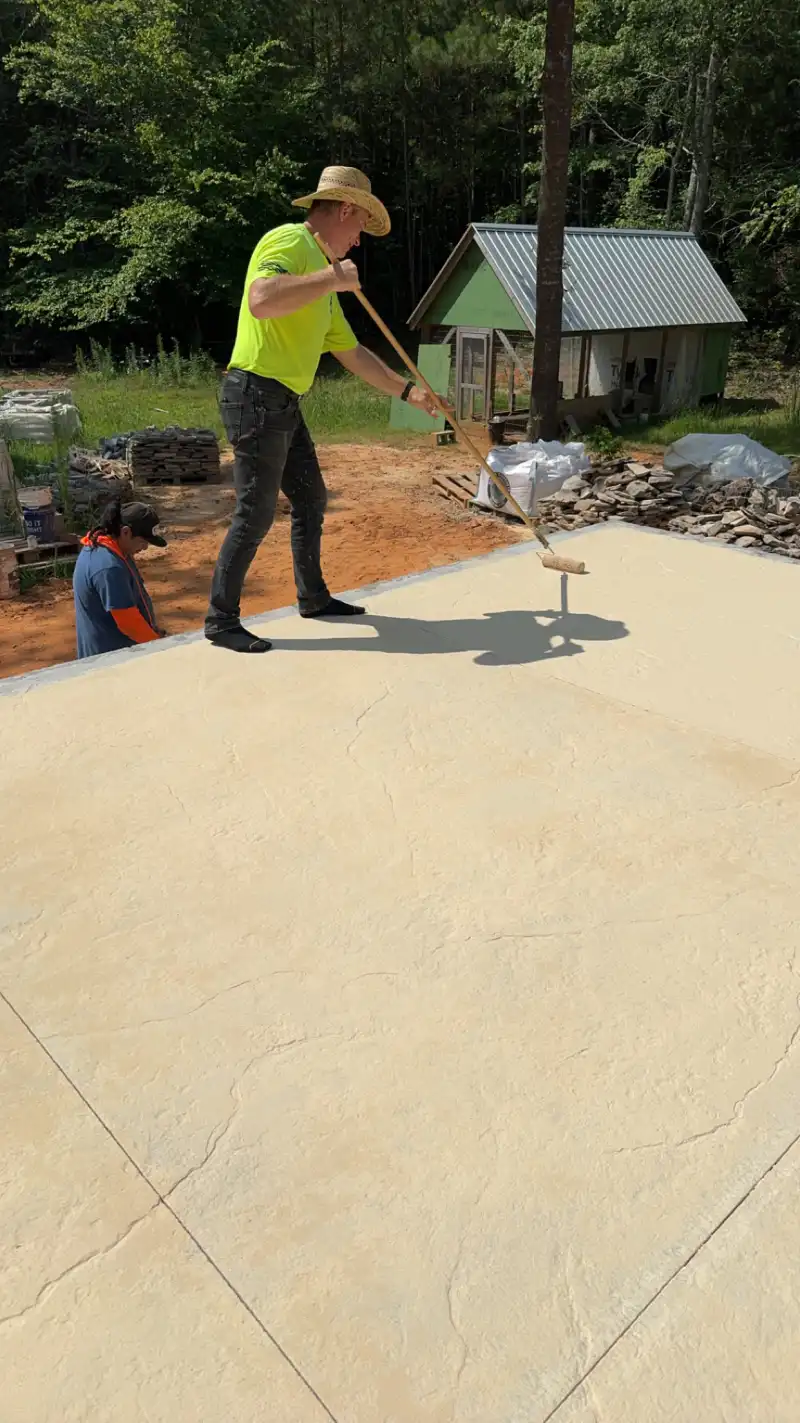
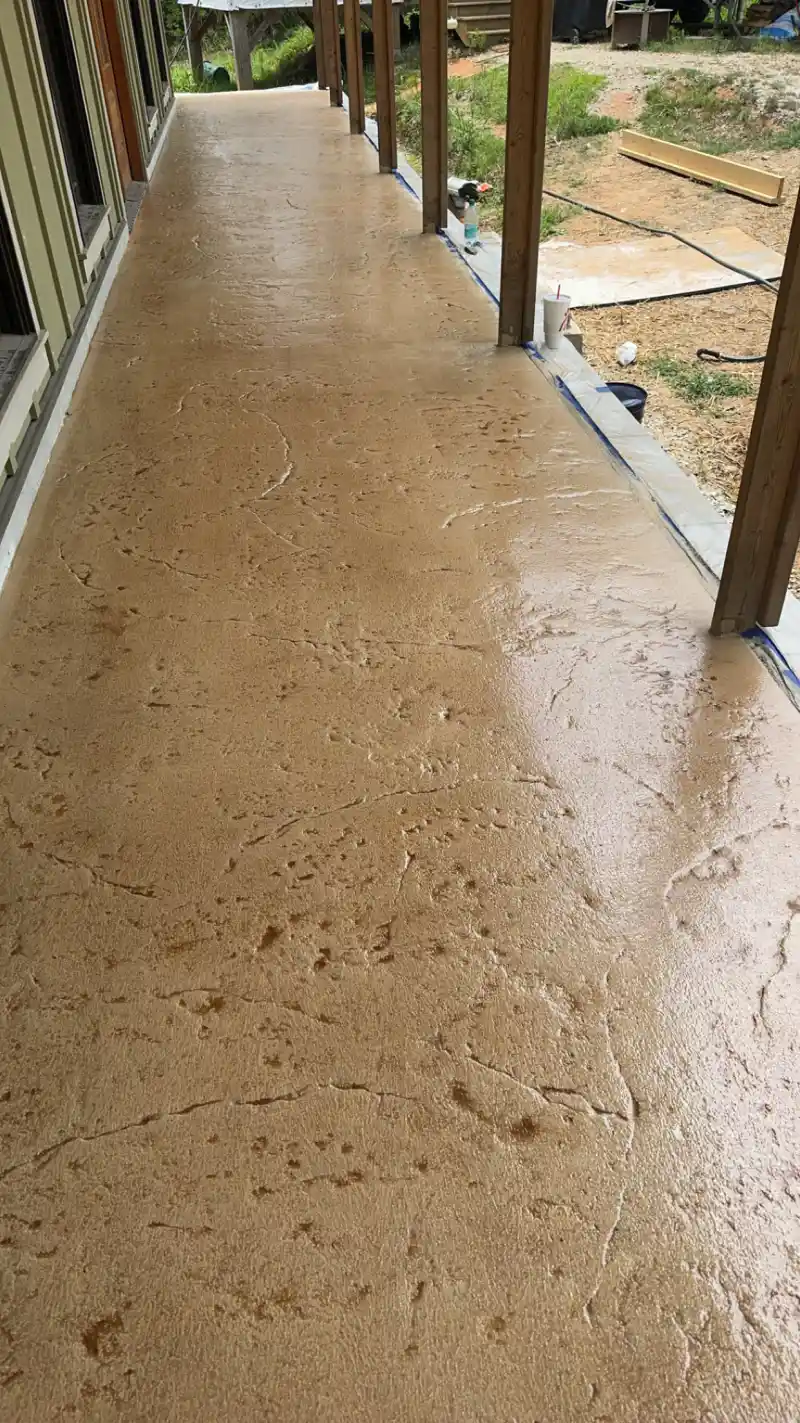
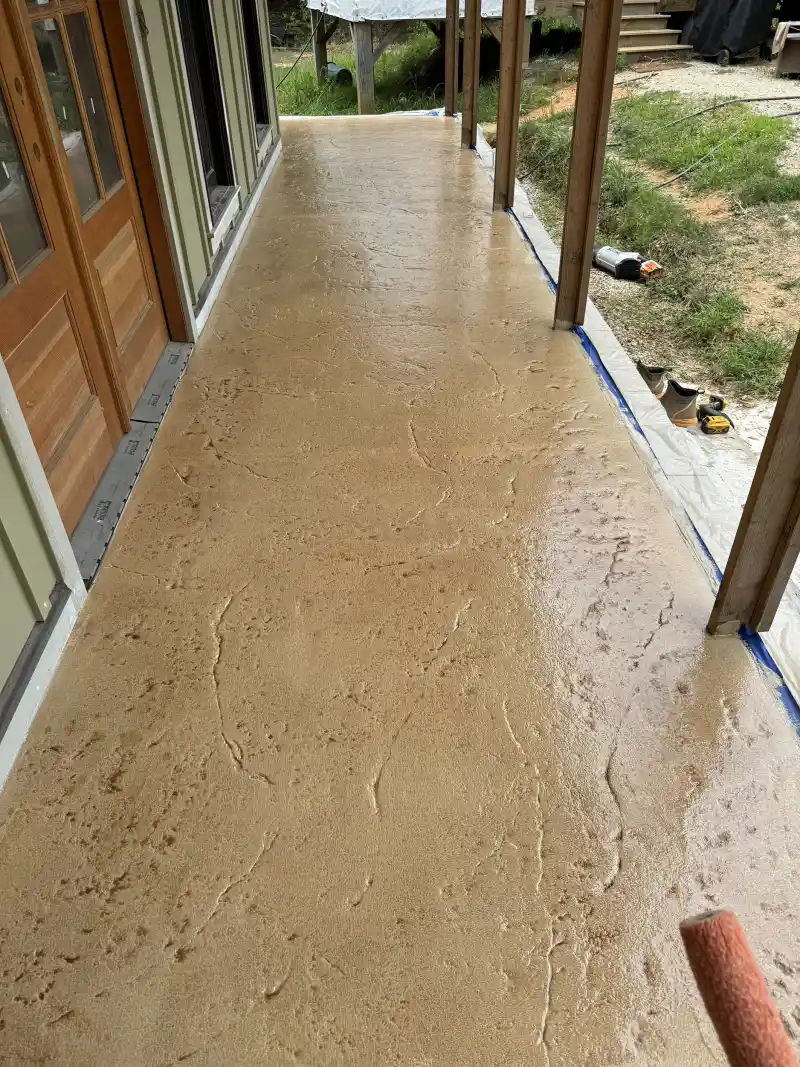
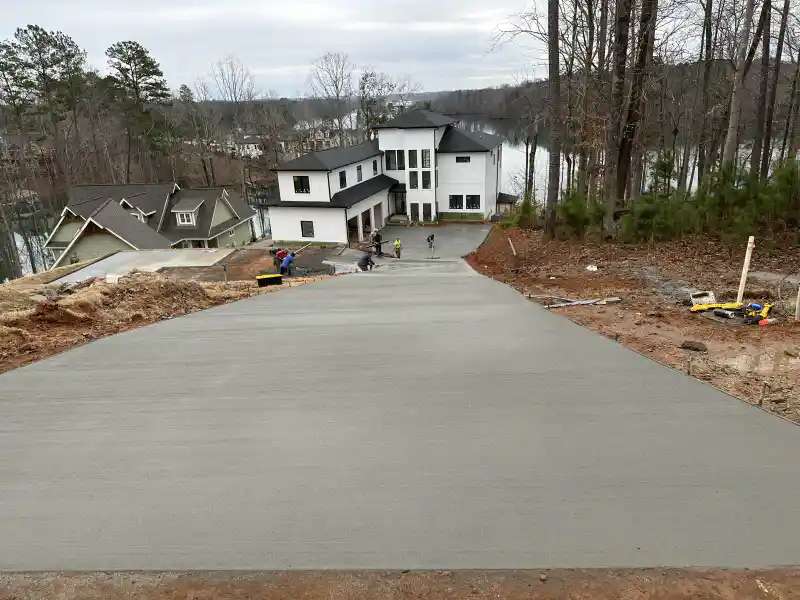
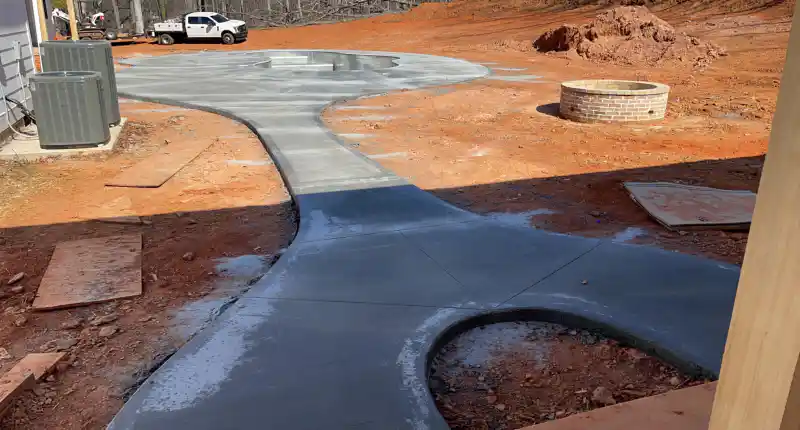
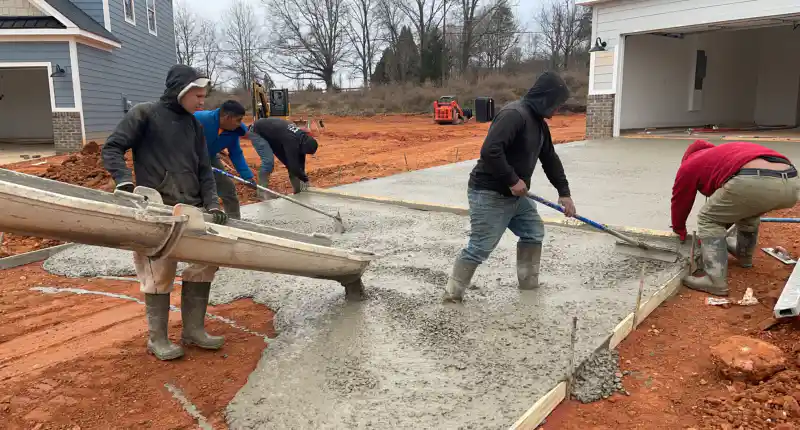
These are driveway and overlay jobs our crews completed.
Pouring a driveway in Greenville and the Upstate, on video
A driveway going in: base prepped, forms set and braced, then the pour worked and finished before it sets.
Concrete reviews from Greenville and the Upstate
Ace concrete was excellent. They did a wonderful job. Very great experience with the workers and was very surprised that the owner showed up at the job and he actually did smoothing of…Google review
Ace installed a small patio on a sloping area requiring a poured concrete wall on one side. They removed the existing patio block structure and installed the concrete patio in one day. The results were fantastic…Google review
Ace knocked it out the park for me on a large concrete driveway pour in Taylors, SC.…Google review
Great job, the pad for our generator is perfect I highly recommendGoogle review
I needed a 24' x 40' concrete floor for a metal building. After getting several quotes I decided to go with Ace Concrete Construction.…Google review
Great work team was finished in a day and all the areas look great.Google review
Concrete guides for Greenville and Upstate homeowners
More guides from our crew on concrete work in Greenville and the Upstate.
Cracked, Lifted, or Crumbling: When to Repair a Concrete Sidewalk in Greenville and When to Replace It
Cracked, lifted, or crumbling concrete walkway or steps in Greenville? How to tell a repair from a replacement, why Upstate walks fail early, and the honest fix. Free estimates.
September 9, 2026Old Garage Floor Cracking or Flaking? When to Replace a Garage Slab in Greenville
Is your old garage floor cracking, flaking, or settling? How to tell a resurface from a full garage slab replacement in Greenville, why they fail, and what a proper pour includes. Free estimates.
September 8, 2026Freeze-Thaw in the Upstate: What January and February Do to Concrete That Was Poured Wrong
How Upstate SC freeze-thaw cracks and spalls concrete each winter, why a badly poured slab fails first, and what protects a driveway or patio. Free estimates.
Licensed concrete contractor in Greenville: who we are
Concrete service areas around Greenville
We work from our shop at 4706 Locust Hill Rd in Taylors, SC across Greenville, Spartanburg, Anderson and Laurens counties, from our offices at 10 Accountants Circle, Suite 1B in Seneca, SC and 405 S Pine St, Suite J in Spartanburg, SC, and from an office in Asheville, NC.
Free driveway estimates in Greenville
We price the job on site.
Concrete work we pour across the Upstate: concrete driveways, decorative concrete, commercial concrete work, industrial concrete work, concrete patios, and foundations and retaining walls.
Request a driveway estimate in Greenville
Someone comes out and prices it standing on it. Estimates are free.
- Driveways
- Patios & Outdoor Living
- Decorative Concrete
- Garage & Building Slabs
- Foundation & Retaining Walls
- Commercial Concrete
- Industrial Concrete
- Epoxy Flooring
- Foundation Repair & Concrete Restoration
Financing available through Wisetack. Check your options in about a minute without impacting your credit score.
See financing options*All financing is subject to credit approval. Your terms may vary. Payment options through Wisetack are provided by our lending partners.
Fast & Free
Get Your Free Concrete Estimate