
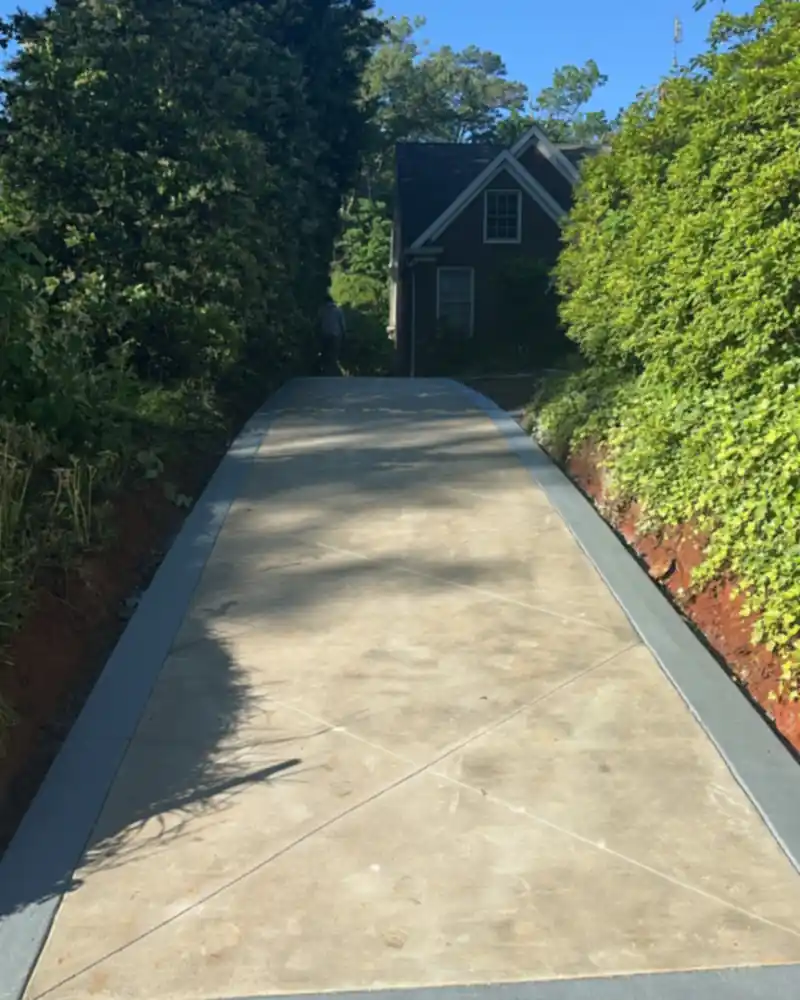
Does Homeowners Insurance Cover a Cracked Concrete Driveway in South Carolina?
Usually yes for sudden damage, like a tree landing on the slab. Usually no for cracks that grow slowly. Below is where South Carolina policies commonly draw that line, and what to ask your agent.
Last updated
- SC licence RBS.65343
- 20+ years in the trade
- Free on-site estimates
- Open Mon to Sun, 7am to 7pm
Fast & Free
Get Your Free Concrete Estimate
Homeowners insurance in South Carolina can pay to repair a driveway, sidewalk, patio or slab damaged by a sudden covered event, things like a falling tree, a runaway vehicle or a covered storm. It typically will not pay for cracks that show up from ordinary wear, settling, freeze-thaw cycles or tree roots. This is general information about how South Carolina policies commonly work, not advice about your own coverage.
By the crew at Ace Concrete Construction, Taylors, SC
We pour and repair concrete. We are a concrete contractor, not an insurance agency, so read what follows as background for your own conversation with your agent, not a ruling on your policy.
What a South Carolina homeowners policy pays for on a driveway, walkway or patio comes down to one question first: did the damage happen suddenly, or did it happen slowly. Everything below follows that line, plus a few causes South Carolina's own insurance regulator lists as excluded no matter how the damage happened.
Does other structures coverage include your driveway?
A South Carolina homeowners policy bundles several coverages into one form, and the state's own consumer brochure lists them by letter. Coverage B is the one that reaches past the walls of the house: it applies to "other structures located on the premises if they are not used for business or rented to others," and the South Carolina Department of Insurance caps it at up to 10% of the dwelling amount, though an agent can raise that limit for an extra premium. The National Association of Insurance Commissioners defines the same coverage a little more technically in its 2026 guidance to state insurance regulators: Coverage B pays for damage to "other detached structures on the residence premises" caused by a covered peril. A driveway, sidewalk, patio or detached slab is not named item by item in either definition, but insurers commonly place them in this same bucket alongside a detached garage, a shed or a fence, the same percentage cap and the same rules.
A slab poured against the house, like an attached carport pad or a stoop, usually falls under Coverage A instead, the same coverage that pays to repair the dwelling itself: NAIC describes Coverage A as covering "the dwelling and/or other attached structures." The line between the two matters less for what gets paid and more for which limit applies, since Coverage A is typically the larger number on a declarations page. If your policy needs a fresh look before you file anything, that is a conversation for your agent, not a guess on our part.
Whichever letter applies, a repair still runs through your deductible first, the amount "you agree to pay out of your pocket for losses before your insurance company begins to pay," as the Department of Insurance brochure puts it. For a driveway crack that runs a few hundred dollars to patch, the math sometimes does not clear the deductible at all, and calling a concrete crew before calling an agent can be the faster route. If a full concrete driveway installation in Greenville ends up being the honest fix rather than a patch, that page covers what a new pour involves and what we look at on-site before we price it.
Sudden and accidental versus wear, settling and freeze-thaw
Every source we checked draws the same line first: was the damage sudden, or did it happen over time. The Insurance Information Institute states it plainly for a standard policy: "A standard policy will not pay for damage caused by a flood, earthquake or routine wear and tear." Wear and tear is doing a lot of work in that sentence. It covers a driveway that cracks because the joints were cut too far apart, a slab that settles a little more each winter, or a walkway that heaves as a root grows under it. None of that happens in a single afternoon, and none of it is the kind of loss a named-peril policy was written to pay for.
The South Carolina Department of Insurance's own brochure defines the opposite of sudden directly, in its section on how a claim gets valued: "Depreciation is the decrease in home or property value due to age or wear and tear since it was built or purchased." That is the language an adjuster reaches for on a claim that looks like age rather than an accident. Our own guide to freeze-thaw concrete damage in the Upstate walks through what January and February do to a slab that did not have enough base rock or the right joint spacing to begin with, the kind of slow damage that shows up as a crack pattern rather than a single event.
Settling reads the same way to most policies. Upstate red clay swells when it is wet and shrinks when it dries, and a driveway on a thin base moves with it season after season. That is gradual by definition, which is why a properly compacted base is the fix for that problem, not a claim. If a slab is heaving or cracking slowly rather than all at once, our page on driveway repour vs resurfacing covers how to tell which repair path fits, insurance or not.
A tree falls on your driveway, or a vehicle hits it
Sudden damage is the other half of the line, and it is where a policy is more likely to pay. Insurance regulators separate perils like this out by name rather than lumping them in with weather or age. NAIC's own 2026 definitions for the broad homeowners form list "falling objects" as one of the named perils covered beyond a basic policy, the same category a downed limb or a dead tree across a driveway would fall into. A vehicle striking a driveway, a mailbox post or a section of walkway reads the same way to an adjuster: one specific event on one specific date, not a pattern that built up over years.
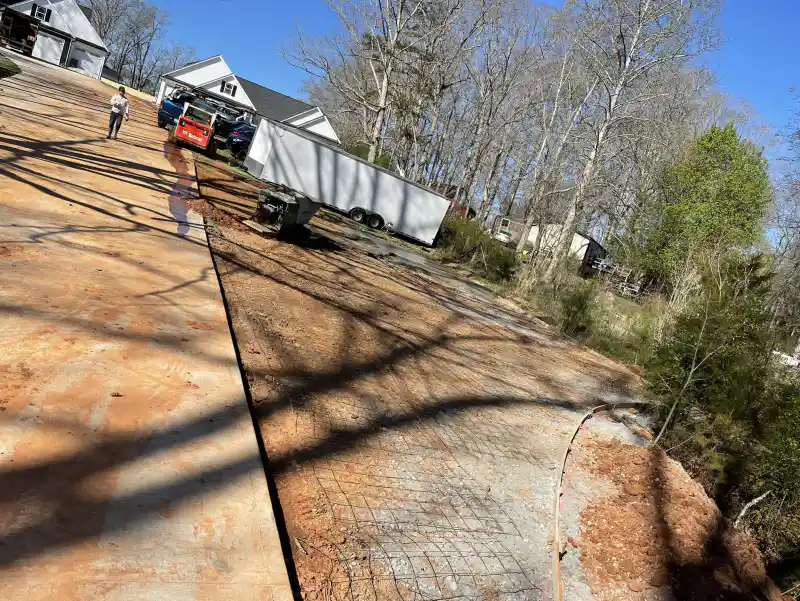
None of this means every fallen-tree claim gets paid without question. The size of the damage, your deductible and the exact wording on your own declarations page all still matter, and a small crack from a glancing branch may not clear the deductible even when the cause is covered. What changes is the starting assumption: a policy built around named perils is built to answer "what happened on this date" rather than "how did this get worse over time," and a fallen tree or a vehicle strike answers that question a lot more easily than a slab that has been slowly heaving for years.
If a storm knocks a tree down anywhere near a driveway, patio or walkway, our advice runs the same order every time: call your agent first, photograph everything before you touch it, then call a concrete crew for a repair estimate. We can tell you what the fix costs. We cannot tell you what your policy will pay.
Flood, earth movement and surface water: what South Carolina excludes
Some causes are excluded no matter how sudden they look, and South Carolina's own regulator spells them out in one short list. The Department of Insurance's homeowners brochure states it directly under "What May Not Be Covered": earth movement, sewer back-up, flood and surface water run-off, adding "be sure to ask your agent about coverage for these and other specific perils." That list matters more in the Upstate than it sounds, since a driveway is graded ground first and concrete second, and a lot of driveway trouble here starts with water that had nowhere to go.
NAIC's own 2026 policy-form definitions describe a standard HO-3 policy as covering "all perils except those explicitly excluded, such as floods or earthquakes," which is the regulator's way of confirming the same exclusion from the other direction. If heavy rain runs off a slope and undercuts a driveway's edge, or a ditch backs up during a storm and pools against a slab, that reads as surface water or flood to most adjusters, not as storm damage to the concrete itself. A separate flood policy through the National Flood Insurance Program is the route most agents point homeowners to for that gap.
Earth movement is the other big one, and it covers more than earthquakes. Soil that shifts, settles or erodes under a slab falls in that excluded category on most policies, which loops back to the same red-clay base issue behind a lot of Upstate cracking in the first place. None of this is a case for skipping insurance. It is a case for building the base right the first time, since the policy was never going to pay for a foundation problem regardless of what triggered it.
Tree roots pushing up a driveway or a sidewalk slab
Tree roots sit on the gradual side of that line. A root growing under a slab is slow by nature. It pushes a section up a fraction of an inch at a time over several growing seasons, which is the textbook definition of the gradual damage the Insurance Information Institute and South Carolina's own regulator both describe as uncovered.
That does not mean the fix is complicated, just that it usually sits on the homeowner's side of the ledger rather than the insurer's. A lifted panel next to a healthy tree usually means cutting the offending root, adding a root barrier and repouring just that section, rather than tearing out the whole run. If the lift is on a public sidewalk rather than your own driveway or walk, the next section covers who that repair actually falls on.
A cracked sidewalk in front of your Greenville home: who is responsible
Your own homeowners policy answers one question: what does it pay for. It does not answer the separate question of who owns the repair bill for the panel of sidewalk running along the street in front of your house, since that is set by your city or county's own code, not by an insurance form. Greenville devotes a whole chapter of its municipal code, Chapter 36, to "Streets, Sidewalks and Other Public Places," and the specifics of who repairs what, and when, live there rather than in any insurance document. If you are not sure whether the panel out front is your job or the city's, the fastest answer is a call to the City of Greenville or Greenville County Public Works before you patch it yourself, not a guess based on where the property line happens to run.
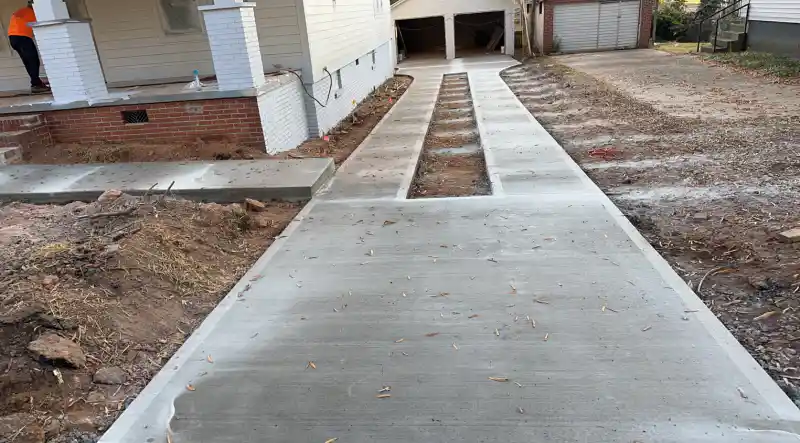
What your own policy does cover, wherever the repair bill lands, is liability. The South Carolina Department of Insurance brochure lists Coverage E, personal liability, as protection for "sums which you may become legally obligated to pay as damages for bodily injury or property damage to other people caused by your negligence," and Coverage F, medical expenses, pays medical bills for a visitor "who sustains bodily injury caused by an accident on your premises," even when you are not found legally responsible. If someone trips on a cracked section of your own walk and gets hurt, that is the coverage that matters, separate from whichever coverage, if any, pays to fix the concrete itself.
Documenting damage and talking to your agent
Whatever caused the crack, the same first steps apply before you call anyone to fix it. NAIC tells homeowners preparing any claim to slow down and document first: "Carefully photograph or videotape each item and document a brief description, including age, purchase price and estimated current value." That guidance is written for household contents, but the same habit serves a driveway claim well: photograph the damage from a few angles, note the date and write down what you remember about when it happened, especially for a sudden event like a fallen limb or a vehicle strike.
Call your agent before you call a contractor, not after. NAIC's own advice is to "check with your insurance agent at least once a year to make sure your policy provides adequate coverage," and a fresh loss is as good a reason as any to have that conversation sooner. An agent can tell you what your Coverage B limit actually is, what your deductible looks like on this kind of claim and whether it is even worth filing for a smaller repair. We will give you a free on-site estimate either way, before or after that call, so you have a real number to bring to the conversation instead of a guess.
If the estimate turns into a full replacement rather than a patch, ask for it in writing with a breakdown, since that is usually what an adjuster wants to see before approving a claim. We will give you that estimate whether or not insurance ends up covering any of it.
Questions Upstate homeowners ask
Does homeowners insurance cover a cracked concrete driveway in South Carolina?
It depends on why it cracked. South Carolina's own insurance brochure lists Coverage B, other structures, as covering property on your premises, capped at up to 10% of your dwelling amount, and a policy generally pays under that coverage when the cause is sudden, like a falling tree. It will not pay for cracks from wear, settling or freeze-thaw, which most policies treat as maintenance rather than an insured loss.
Does homeowners insurance cover tree root damage to a driveway or sidewalk?
Usually not. Root damage happens gradually, over several growing seasons, and the Insurance Information Institute lists routine wear and tear as one of the standard exclusions on a homeowners policy. A lifted panel with roots underneath typically reads to an adjuster as maintenance, not a covered accident.
Who is responsible for a cracked sidewalk in front of a Greenville home?
That is set by local code, not by your insurance policy. Greenville's own Code of Ordinances devotes Chapter 36 to streets and sidewalks. Check with the City of Greenville or Greenville County Public Works to find out whether the panel is the property owner's responsibility or the city's before you repair it.
If a section of driveway, walkway or patio needs more than a patch, our page on repairing a cracked or lifted Greenville sidewalk covers how we tell a repair from a full replacement, and you can ask there for a free estimate.
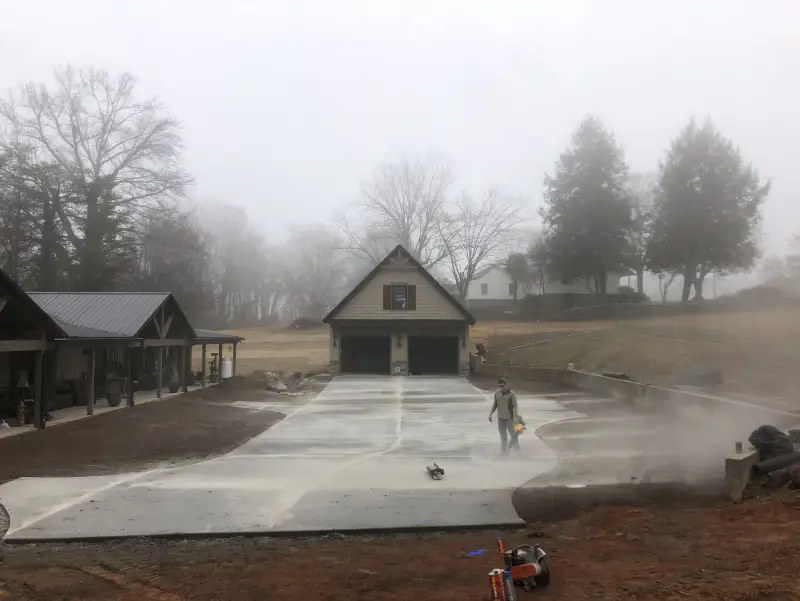
What do jobs like these look like when we pour them?
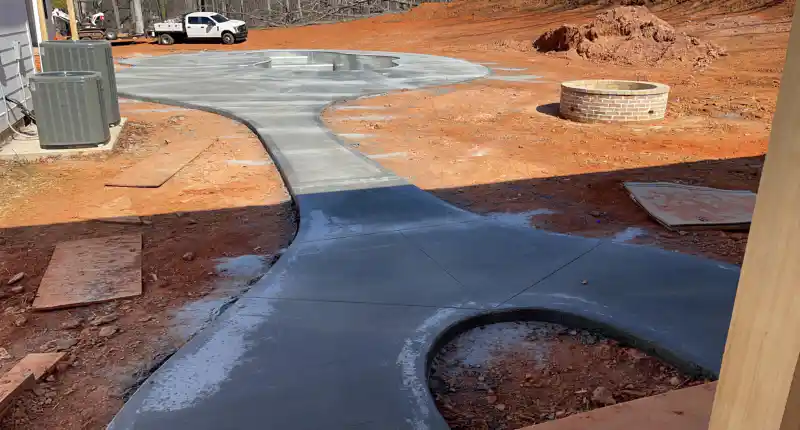
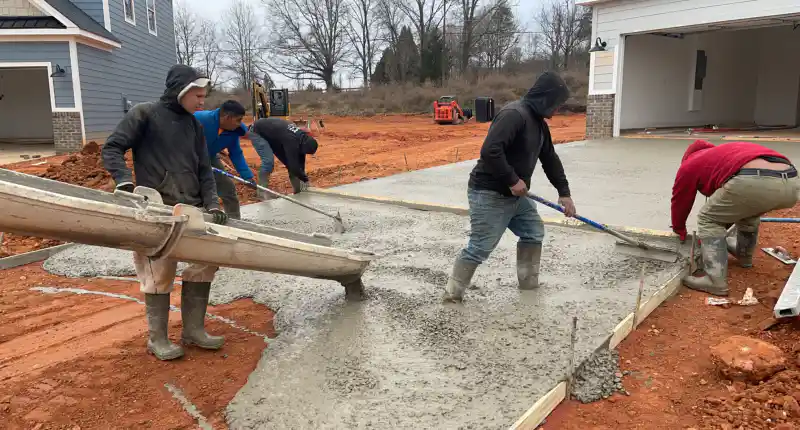
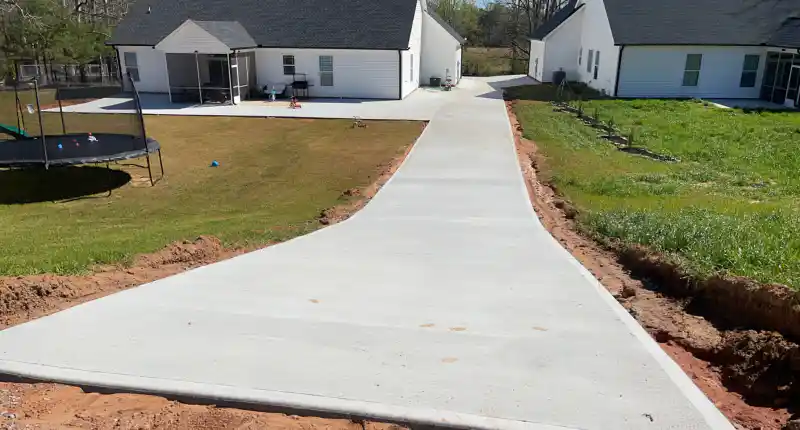
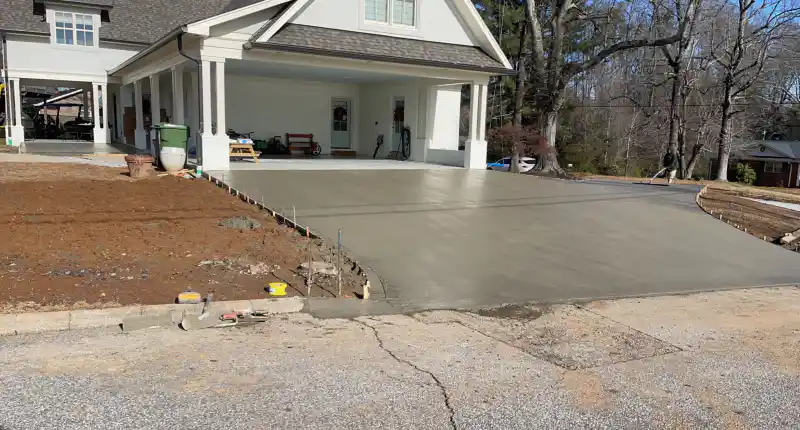
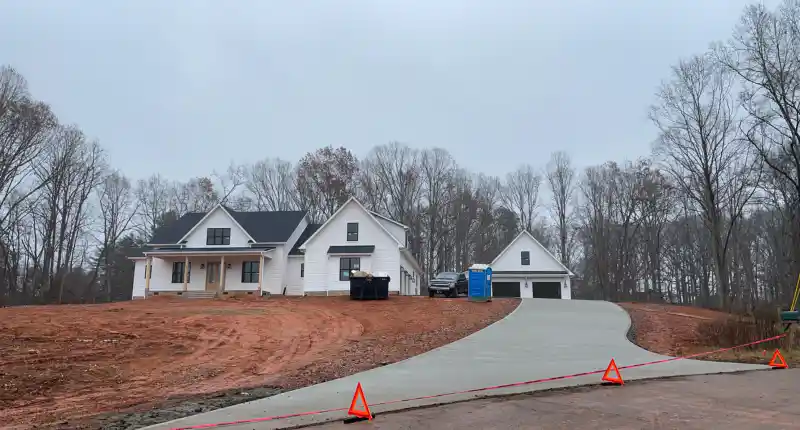
These are driveway jobs our crews poured.
Pouring a driveway in Greenville and the Upstate, on video
A driveway going in: base prepped, forms set and braced, then the pour worked and finished before it sets.
Concrete reviews from Greenville and the Upstate
Ace concrete was excellent. They did a wonderful job. Very great experience with the workers and was very surprised that the owner showed up at the job and he actually did smoothing of…Google review
Ace installed a small patio on a sloping area requiring a poured concrete wall on one side. They removed the existing patio block structure and installed the concrete patio in one day. The results were fantastic…Google review
Ace knocked it out the park for me on a large concrete driveway pour in Taylors, SC. From the initial estimate with Jason to the onsite coordination with Tyler, Ace was extremely…Google review
Great job, the pad for our generator is perfect I highly recommendGoogle review
I needed a 24' x 40' concrete floor for a metal building. After getting several quotes I decided to go with Ace Concrete Construction. I had met with Will Murphy and immediately felt like…Google review
Great work team was finished in a day and all the areas look great.Google review
Concrete guides for Greenville and Upstate homeowners
More guides from our crew on concrete work in Greenville and the Upstate.
Freeze-Thaw in the Upstate: What January and February Do to Concrete That Was Poured Wrong
How Upstate SC freeze-thaw cracks and spalls concrete each winter, why a badly poured slab fails first, and what protects a driveway or patio. Free estimates.
September 9, 2026Cracked, Lifted, or Crumbling: When to Repair a Concrete Sidewalk in Greenville and When to Replace It
Cracked, lifted, or crumbling concrete walkway or steps in Greenville? How to tell a repair from a replacement, why Upstate walks fail early, and the honest fix. Free estimates.
September 7, 2026Driveway Tear-Out and Repour vs Resurfacing: Which One Your Greenville Driveway Needs
Cracked driveway in Greenville? How to tell whether your slab needs resurfacing or a full tear-out and repour, and why Upstate red clay usually decides it. Free estimates.
Licensed concrete contractor in Greenville: who we are
Concrete service areas around Greenville
We work from our shop at 4706 Locust Hill Rd in Taylors, SC across Greenville, Spartanburg, Anderson and Laurens counties, and from an office in Asheville, NC.
Straight-line from our shop at 4706 Locust Hill Rd in Taylors, SC, Greenville sits about 10.6 miles out. Crews reach jobs along routes we already list on our service-area pages, including Poinsett Highway, Wade Hampton Boulevard and U.S. Route 276.
Free concrete driveway estimates in Greenville
We price the job on site. Open Mon to Sun, 7am to 7pm.
Request a concrete driveway estimate in Greenville
Someone comes out and prices it standing on it. Estimates are free.
- Driveways
- Patios & Outdoor Living
- Decorative Concrete
- Garage & Building Slabs
- Foundation & Retaining Walls
- Commercial Concrete
- Industrial Concrete
- Coatings & Overlays
- Foundation Repair & Concrete Restoration
Financing available through Wisetack. Check your options in about a minute without impacting your credit score.
See financing options*All financing is subject to credit approval. Your terms may vary. Payment options through Wisetack are provided by our lending partners.
Fast & Free
Get Your Free Concrete Estimate