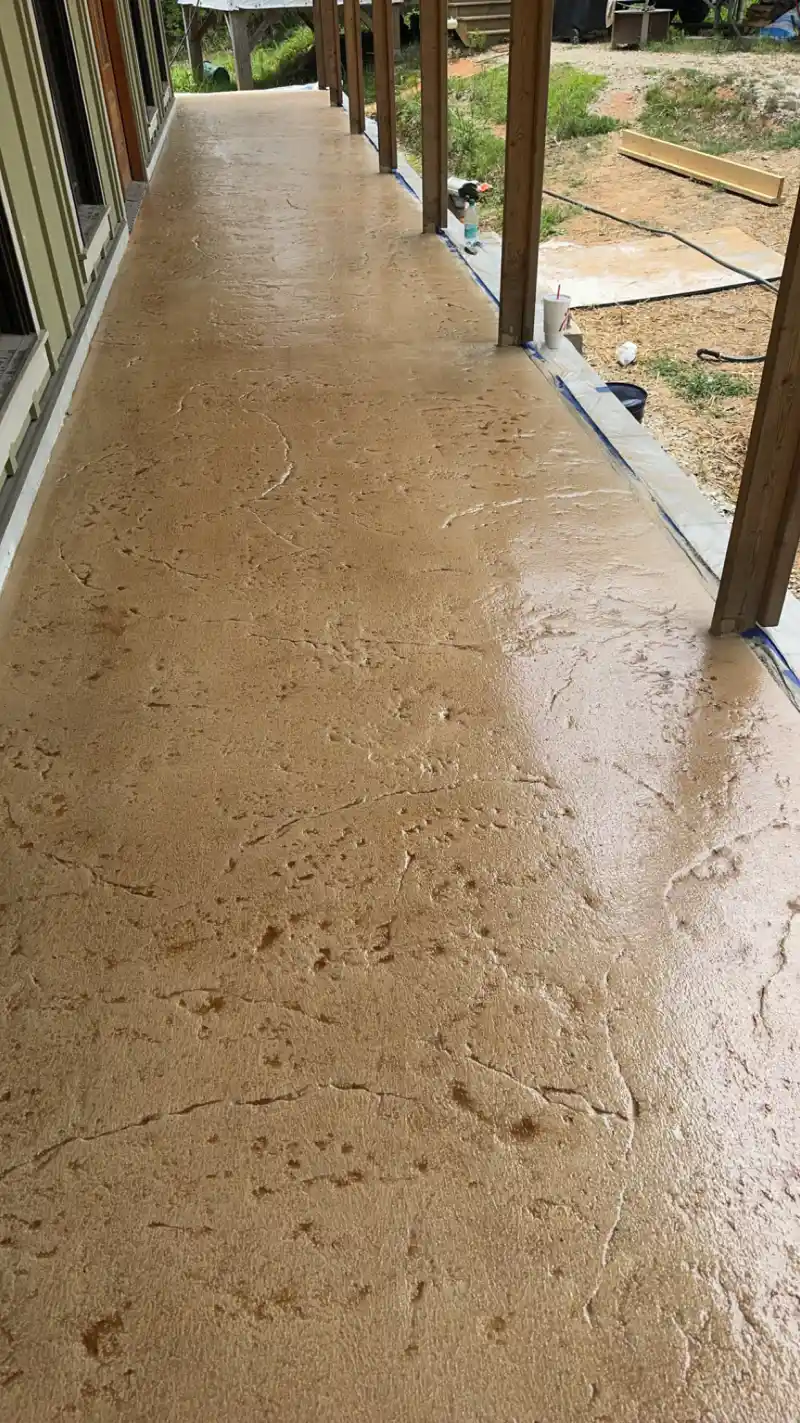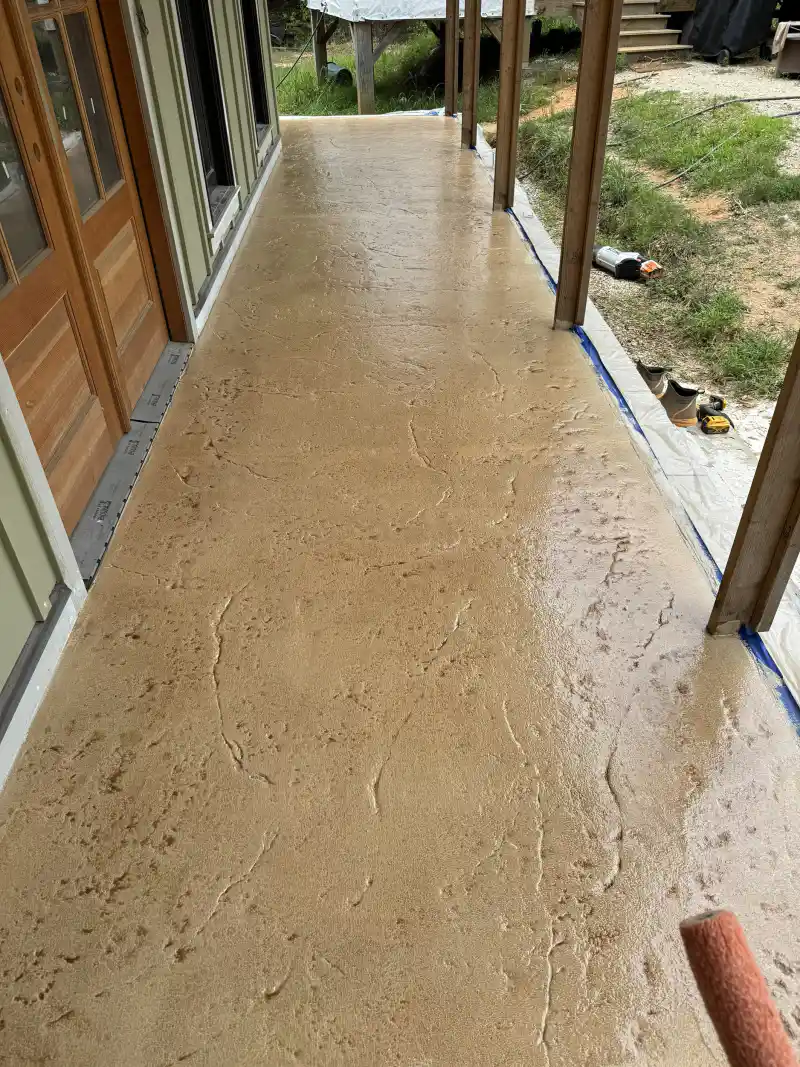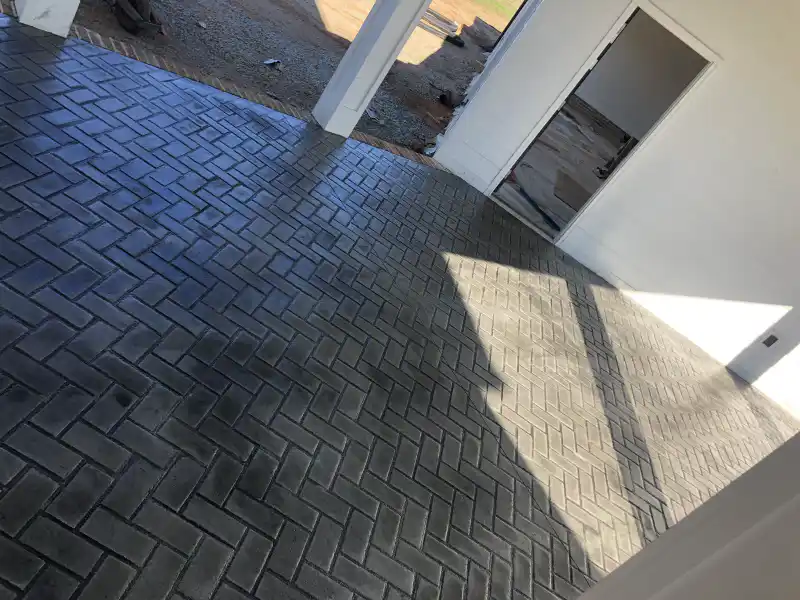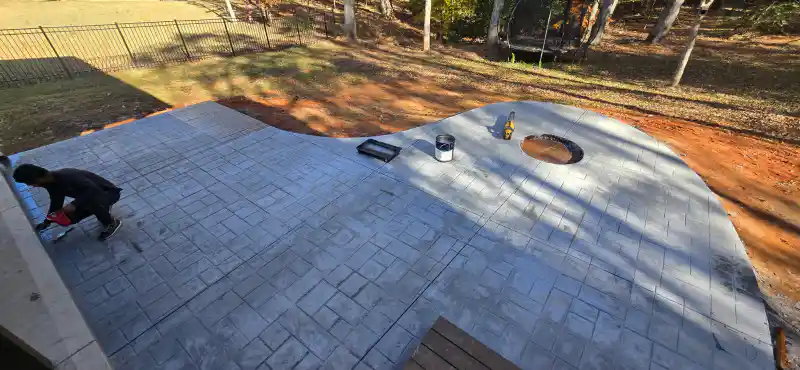
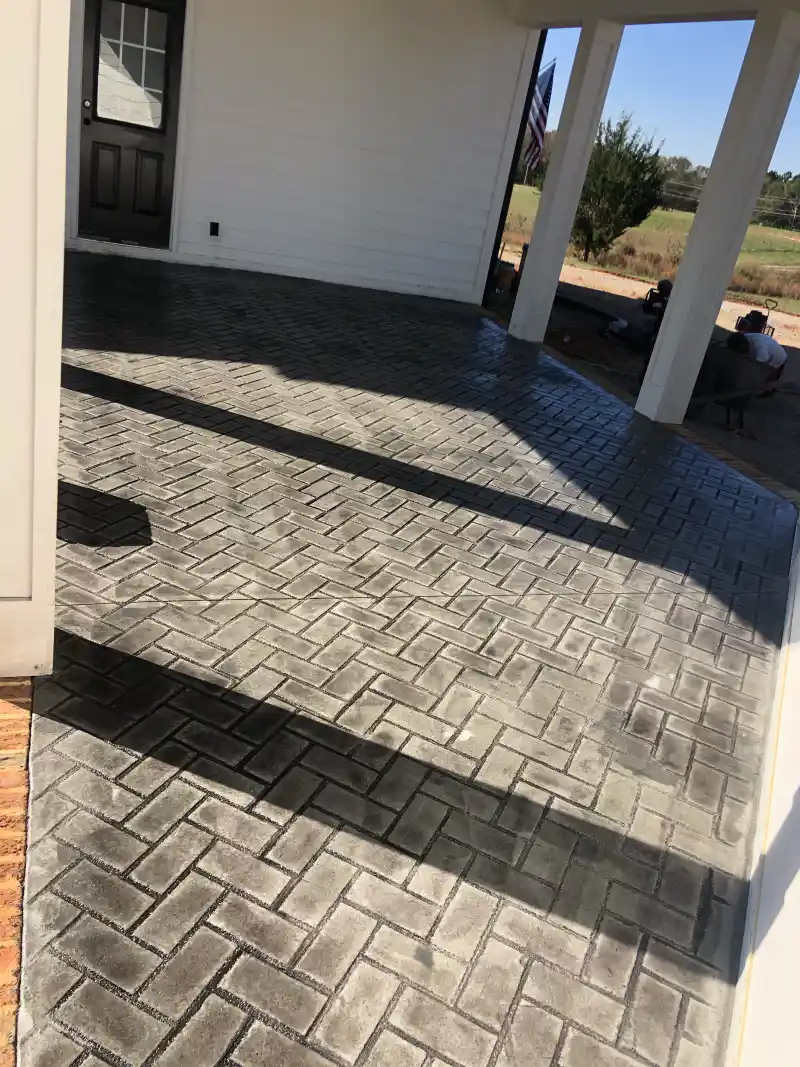
Most existing concrete can take a stain, but the slab decides how well. Reactive stain needs bare, clean concrete that still soaks up water. A patio with old sealer, paint or oil on it has to be stripped first, and an older, weathered slab usually colors lighter and less evenly than a new one.
If you already have a plain grey patio, porch or walkway in Greenville, Easley or elsewhere in the Upstate, here is what has to be true about it before stain is worth paying for.
How concrete stain works on a slab
The stains used on decorative concrete are mostly reactive, often called acid stains. One manufacturer's data sheet (Tru Tint, from Tru Impressions) describes them as metallic salt solutions that soak into cured concrete and react with the calcium hydroxide, or free lime, inside it. The reaction leaves color in the concrete itself, typically up to about 1/8 inch deep, instead of a film on top.
That reaction is where the mottled, shaded look comes from, and nobody can promise an exact color. The same data sheet says plainly that the stain will not produce a uniform color and that results vary with the concrete, the surface and how it was applied. For the other ways to color concrete, including integral color and color hardeners, see our guide to decorative concrete trends in Greenville homes.
What an existing slab has to pass first
Stain only reacts with concrete it can reach, so anything sitting on the surface blocks it. The Tru Tint sheet lists what has to come off an older slab: oil, paint, wax, sealers, curing compounds, rubber marks, dirt and laitance, the weak, chalky top layer.
A second manufacturer, SureCrete, gives a simple check in its VIVID acid stain data sheet. Sprinkle water on the slab. If it soaks in and darkens the concrete, the surface is open. If it beads up, something is still sealing it and more cleaning is needed before any stain goes down.
| What you see on your slab | What it usually means for stain |
|---|---|
| Water soaks in and darkens the concrete | The surface is open enough to test a stain |
| Water beads up | An old sealer or coating is still there and has to be removed |
| Oil spots, paint or tire marks | Clean or strip them first, or they will show through |
| Glassy, hard-troweled finish | It may need light abrading so the stain can soak in |
| Cracks, patches or flaking | Stain will show them, not hide them (see below) |
Both data sheets also warn against acid-etching the slab before staining. It sounds like good prep, but they say it can weaken the reaction or stop it working.
Why an old patio stains differently from a new one
A fresh pour is the easiest surface to stain. The SureCrete sheet calls for concrete that is fully cured, 28 days, before staining. Tru Tint gives 14 days as a minimum and 28 days as preferred.
Older concrete is less predictable. The Tru Tint sheet says older or worn surfaces will not usually show as strong an effect as newer, more absorbent ones, and SureCrete notes its stain may not be effective on older or weathered concrete, or on concrete that gets runoff or dripping water. A patio under a gutter outlet or along a drip line can come out patchy.
That is why both manufacturers call for a test area first, somewhere out of sight. Tru Tint also says to run the test all the way through neutralizing and sealing, because a sealed surface cannot be stained again.
What stain will not hide
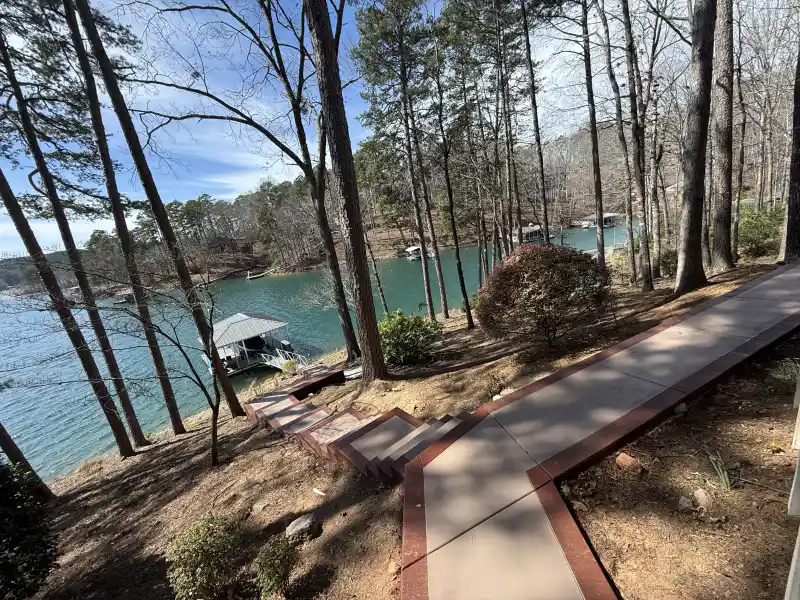
The Tru Tint sheet says stain does not hide or cover blemishes, and that stains, footprints and defects can become more visible after staining. A crack or a patched corner stays visible.
Color choice matters outside too. Both data sheets limit their blue and green shades to indoor use, because moisture or sun can darken them over time. On an Upstate patio or walkway, the earth tones are the safer pick.
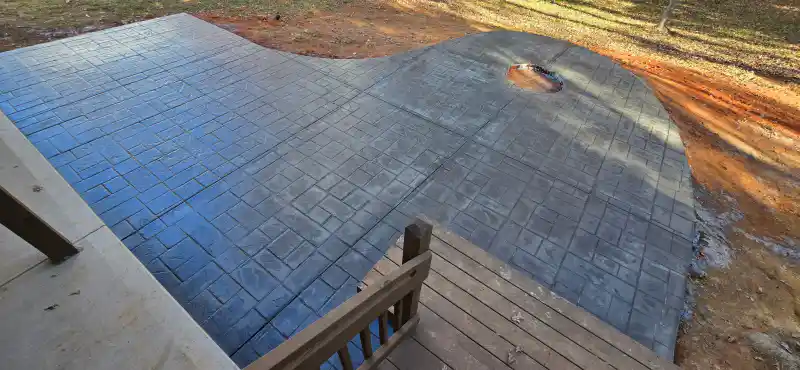
If the surface is worn but the slab underneath is sound, a stamped and stained overlay is often the better route than stain alone. It puts down a new surface with its own texture and color. We cover that work on our epoxy flooring and overlays page. If the slab has settled or a crack keeps moving, no surface finish will fix it, and that usually means a repour.
Sealing after the stain
A stained slab gets sealed. The Tru Tint sheet lays out the order: let the stain react, scrub off the residue, neutralize, rinse until the water runs clean, let it dry, and wait at least 24 hours before sealing, with the joints and corners dry too. Sealing over damp concrete can leave a cloudy finish that is hard to remove. That sheet calls for keeping foot and vehicle traffic off for 48 to 72 hours afterward and suggests a grit additive in the sealer where a slip-resistant finish is needed.
Outdoor stained concrete in the Upstate also sees freeze-thaw in January and February, so plan on the sealer as part of the job. Our stamped vs broom finish guide covers why resealing matters here.
Stained concrete in Greenville, Easley and the Upstate
Our crews pour and finish stamped and stained concrete on patios, walkways, steps and driveways across Greenville, Spartanburg, Anderson and Laurens counties, including Easley. Whether your slab is a good candidate for stain, needs an overlay, or is better replaced comes down to what it looks like in person. See our decorative concrete service page for the finishes we do, and the estimate form below if you want someone to look at yours.
Sources: Tru Impressions, Tru Tint Chemical Reactive Acid Stain product data sheet; SureCrete, VIVID Acid Stain product data sheet SC19-0014-031. Both read October 5, 2026.