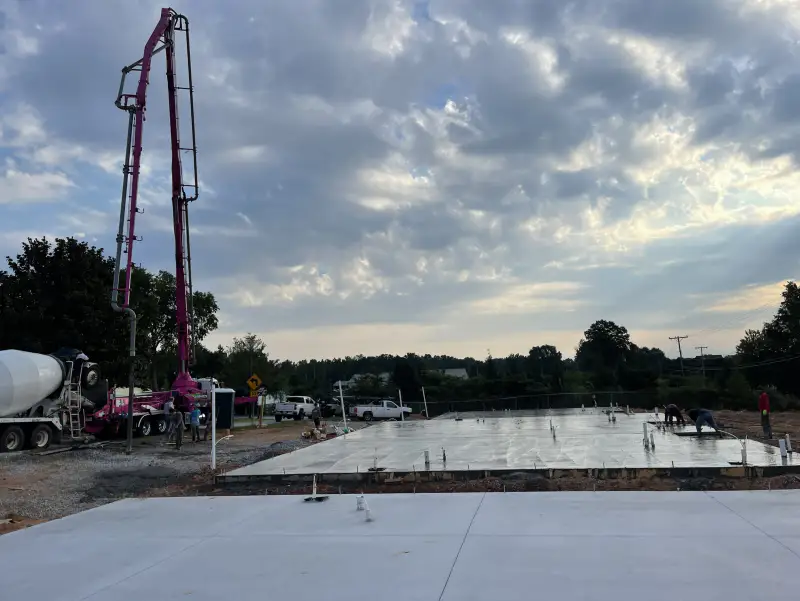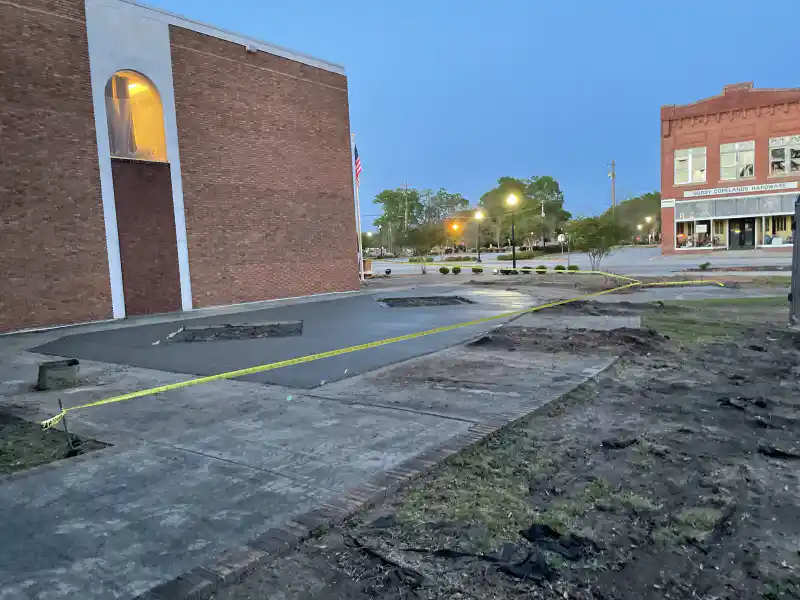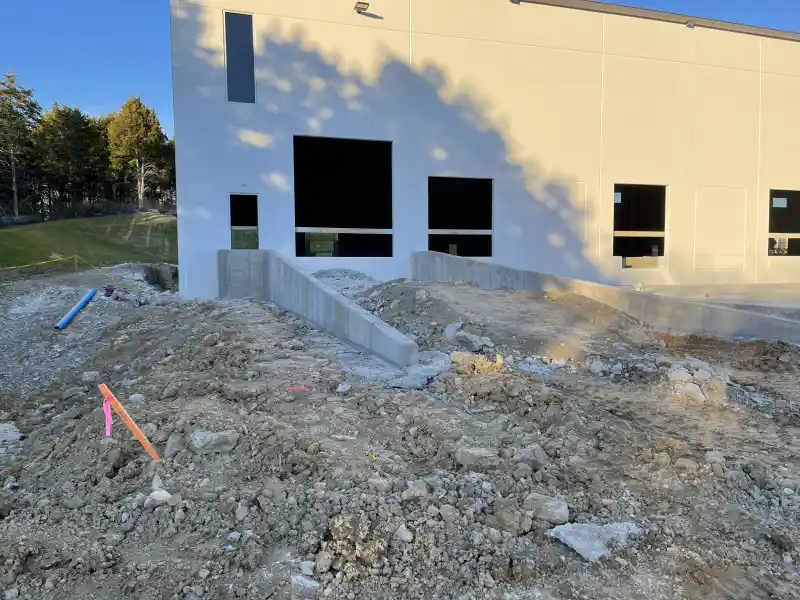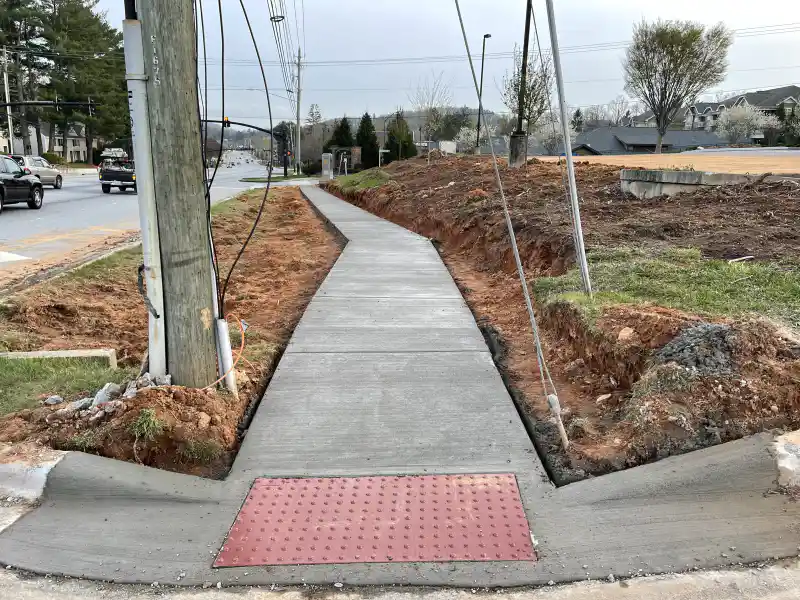
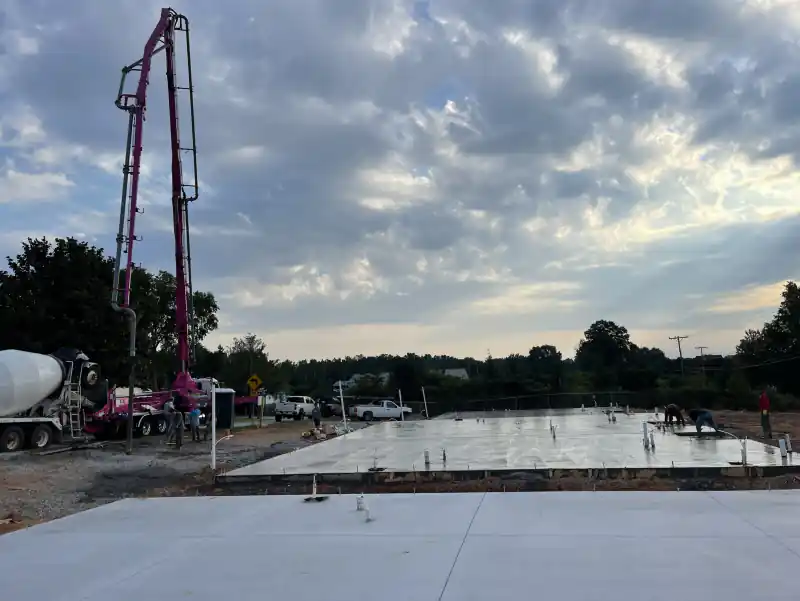
A commercial pad in Spartanburg, SC gets decided in the planning office before it gets decided in the field. A new dumpster pad, a loading apron or a bigger parking lot can bring in site plan review, screening rules, tree protection and a stormwater packet. The rules below are the City's, from its permit pages, application packet and zoning ordinance, with SC811, NOAA and NRMCA for the field side. All were read October 21, 2026.
Does a commercial pad in Spartanburg need a permit and site plan review?
Start with the city line. The City's Building Permits page tells applicants to confirm the parcel is inside City limits first, and a Spartanburg mailing address can sit outside it.
Inside the line, the Commercial Building page says any work on non-residential property will require a commercial building permit. It also says those permits go only to state and City-licensed contractors, so ask every bidder which licenses they hold.
For exterior work the same page adds a second filing: a site plan has to go to the Planning Department. The Site Plan Review page says the review covers all new development, and building renovations priced above 50 percent of the current land value. A pad is exterior work, so assume review applies and have Planning confirm it. The office is at 440 S Church Street, 864-596-2068.
How long does Spartanburg site plan review take?
The Site Plan Review page gives a typical 45 to 60 days from a complete application to the final approval letter. The Planning permits table lists 30 to 60 days. The time swings with how complete the submittal is and how fast the applicant answers staff comments, so plan on the longer number.
Review has to finish before a building permit can be issued, though the City encourages running the two reviews together. Applications go through the GoPost portal. Once the plan is conditionally approved, the process sheet has the applicant schedule a pre-construction meeting with the Building Official, Public Works and Stormwater.
The application packet, updated July 1, 2026, lists what staff look for. Several items touch concrete: sealed civil drawings from a licensed engineer, a grading plan at 2-foot contours, dumpster pad detail drawings, and the paving surface named for every drive and parking area. The fee schedule, updated March 20, 2026, puts engineering and stormwater review at a $500 minimum for up to one acre disturbed, plus $100 per additional acre.
What are the dumpster pad rules in the City of Spartanburg?
Section 504.6 of the zoning ordinance says stores and other establishments need a solid waste collection area with access and egress independent of parking and loading. It adds that dumpster pads and access drives must meet the requirements of City solid waste collection vehicles. That puts the approach drive under the same rule as the pad. The ordinance gives no slab thickness, so the packet's pad detail drawing is where it gets set.
Screening comes from Section 505.63, which treats dumpster pads as service areas. The screen has to hide the area from public roads and adjoining property, be 75 percent opaque, stand a foot above what it hides but never under six feet, and cover three sides. The gate in front has to be opaque enough to hide the inside. Walls must be split face block, stucco or brick. The ordinance says under no circumstances can a wall be unfinished concrete or cinder block.
An older checklist still posted on the City's site asked for a clear pad of 12 by 16 feet, not counting the wall or gate. The July 2026 packet doesn't repeat a size, so get the dimension from Planning in writing before the forms go in.
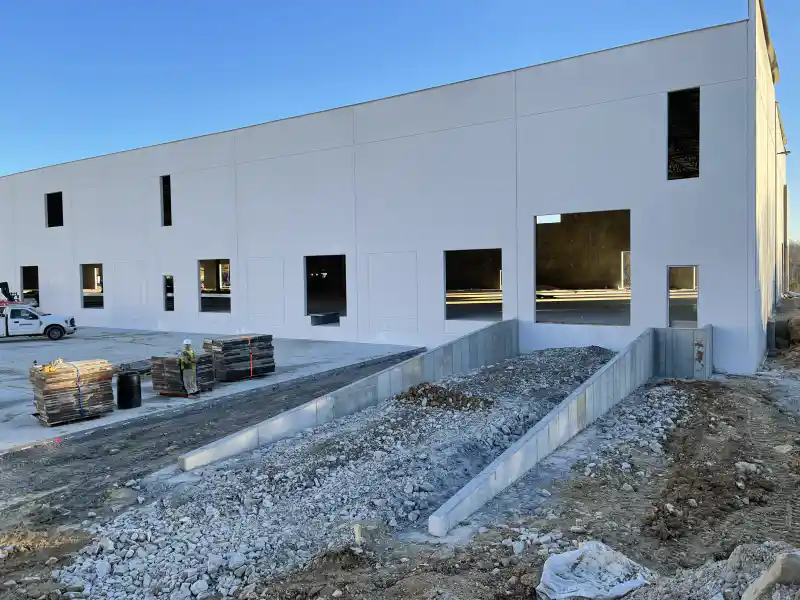
NRMCA's joint sheet (CIP 6) says isolation joints separate a slab from walls and footings, and that metal dowels should be used in slabs or pavements carrying heavy loads. A pad against a masonry screen wall touches both, so ask the designer how the slab meets the wall.
What do the parking, curb and loading rules say?
Section 504.11 lists the surfaces the City accepts for required parking. The list runs from pavers and cut stone to hot-laid asphalt, and it includes concrete at 4 inches in a 2,500 or 3,000 pound mix. That is the City's menu, not a design for your traffic, so the engineer's drawing still governs.
Lot size triggers more than paving. Under Section 505.3, a parking lot of more than four spaces has to meet the tree island, buffer and frontage landscaping rules, and a lot expanded by more than four spaces has to bring the new spaces up to them. If site and building improvements reach 50 percent or more of the property's appraised value in the county records, the whole existing property is retrofitted to those rules.
Two of the packet's required statements put concrete on the plan. All landscaped areas are to be delineated by curbing, which covers tree islands and frontage strips. And unused driveways and curb cuts are to be removed and replaced with concrete curb, gutter or sidewalk. Our Spartanburg driveway replacement guide covers who owns the road where a new entrance meets the street.
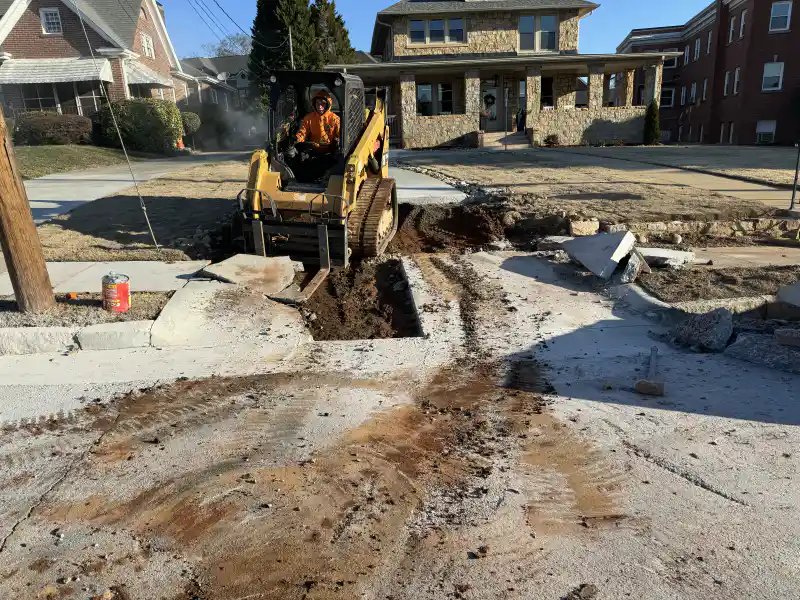
If the building needs a loading berth, Section 504.3 sets the minimum plan size at 12 by 55 feet with 14 feet of overhead clearance.
What do the tree rules mean for a slab near existing trees?
Section 505 covers commercial and other non-residential property, not single-family or duplex lots. Under Section 505.57, a tree kept on the site gets a protection zone of one foot per inch of trunk diameter or five feet out from the trunk, whichever is greater. Inside it the ordinance bans paving, vehicle parking and cement rinsing. So the spot where a mixer truck rinses its chute is a plan item.
A second rule keeps impervious surface at least five feet from the base of a tree 12 to 24 inches across and 12 feet from one 24 inches or larger, unless special methods such as porous paving are certified by a horticultural or landscape authority. The packet's grading note has the zoning enforcement officer called before grading to confirm retained trees are marked and fenced.
What stormwater paperwork comes with a new pad?
A new pad adds hard surface, and the packet has an Engineering and Stormwater section for it. Where it applies, the City asks for a stormwater pollution prevention plan, a Notice of Intent, a signed erosion control checklist from the design professional and signed stormwater management agreements. Under an acre, the packet points to the City's small project requirements.
That sheet asks for a sediment control narrative, a stamped drawing with before-and-after runoff calculations and a description of the permanent water quality measure. The ordinance PDF carries amendment notes back to 1978, so have Planning confirm any number first.
Locates, and when the pour can happen
SC811 says facility operators get three full working days to answer a normal locate request, not counting the day it is entered, weekends and holidays, and the excavator has to check positive response before starting. The tolerance zone is 24 inches on either side of the marks plus half the facility's diameter, hand dug until the line is exposed. SC811 recommends each excavating company hold its own ticket, so a subcontractor should confirm it is on the general contractor's notice.
Then the calendar. NOAA's 1991 to 2020 monthly normals for the Greer, SC station average 4.6 days with 0.10 inch of rain or more in October, the fewest of any month, against 7.4 days in July, the most. With review running 45 to 60 days, a pour planned for one season can land in another. Ask for the pour window once the approval letter is in hand.
Our commercial concrete services page lists the work we pour, and the commercial project gallery shows finished jobs. For the base, drainage and joint questions on the county side, see our guide to commercial slabs in Greenville County. Property managers who want a concrete company that works inside Spartanburg city limits can send the address and scope through the estimate form below for a free on-site estimate.
Sources: City of Spartanburg, Commercial Building; City of Spartanburg, Building Permits; City of Spartanburg, Site Plan Review; City of Spartanburg, Permits and Board Applications; City of Spartanburg, Planning; Site Plan Review Application and Checklist (updated 07.01.2026); Site Plan Review Process; Site Plan Review Fee Schedule (updated 03.20.2026); City Stormwater Requirements for Small Projects; Site Plan Review Checklist (older version); City of Spartanburg Zoning Ordinance (Sections 504.3, 504.6, 504.11, 505.3, 505.57 and 505.63); SC811, FAQs; SC811, Excavators; NOAA NCEI 1991 to 2020 monthly normals, Greer, SC (USW00003870); NRMCA CIP 6, Joints in Concrete Slabs on Grade. All read October 21, 2026.