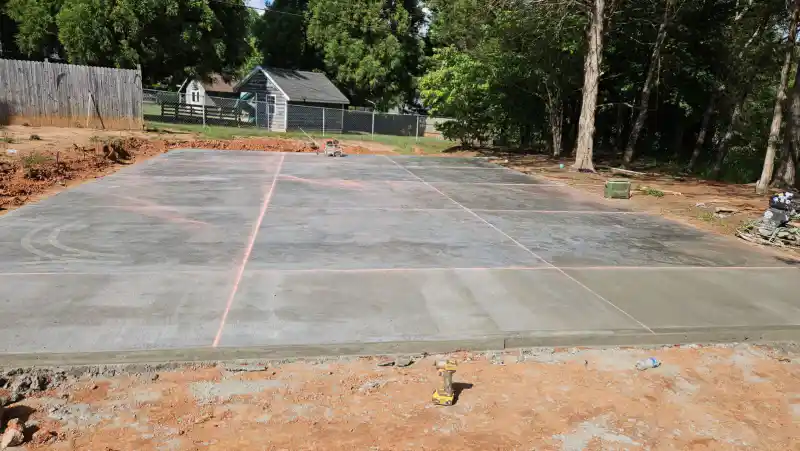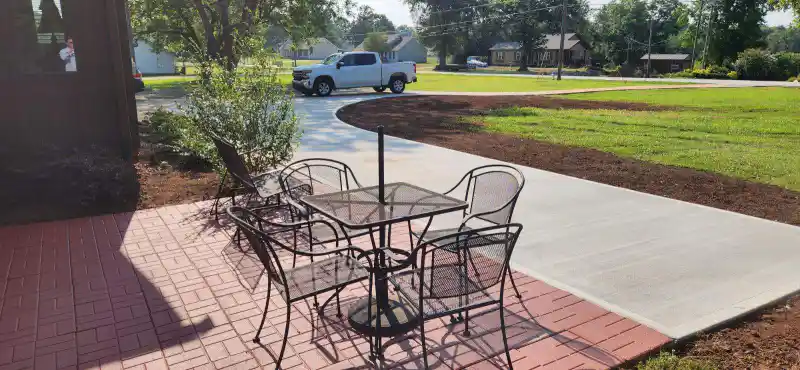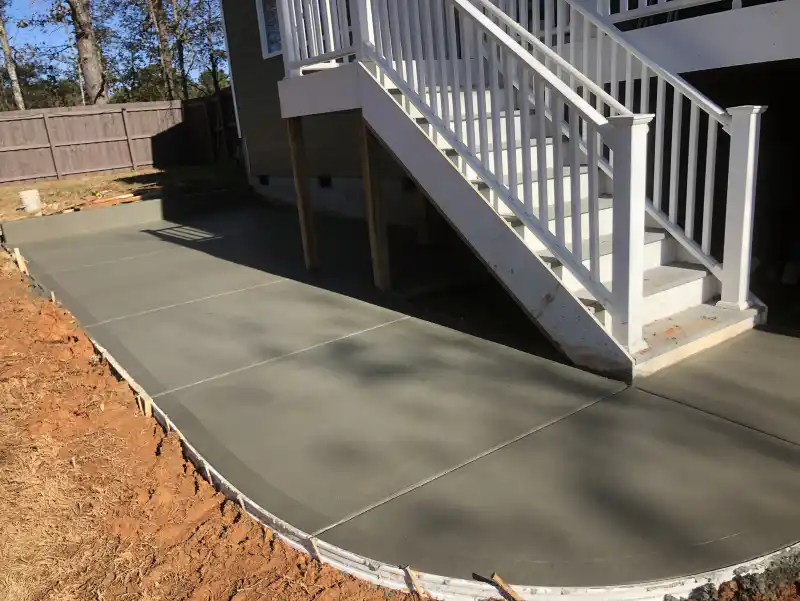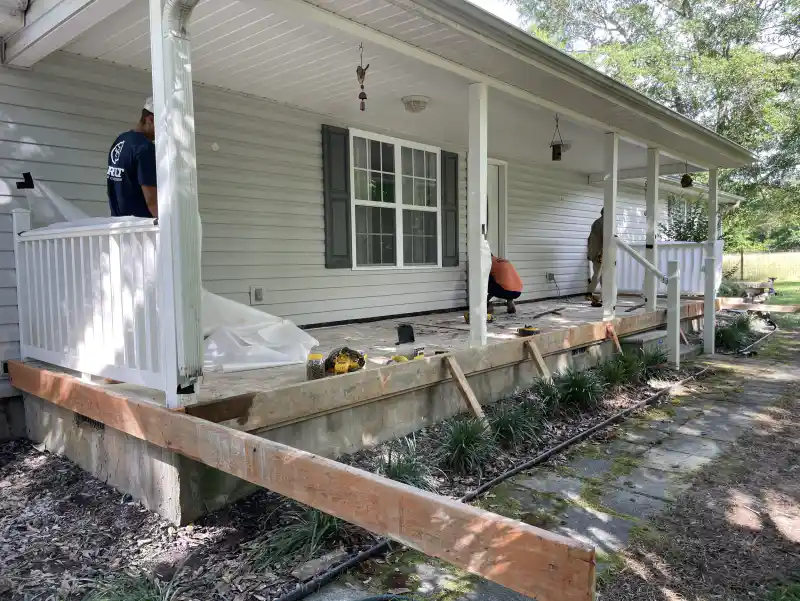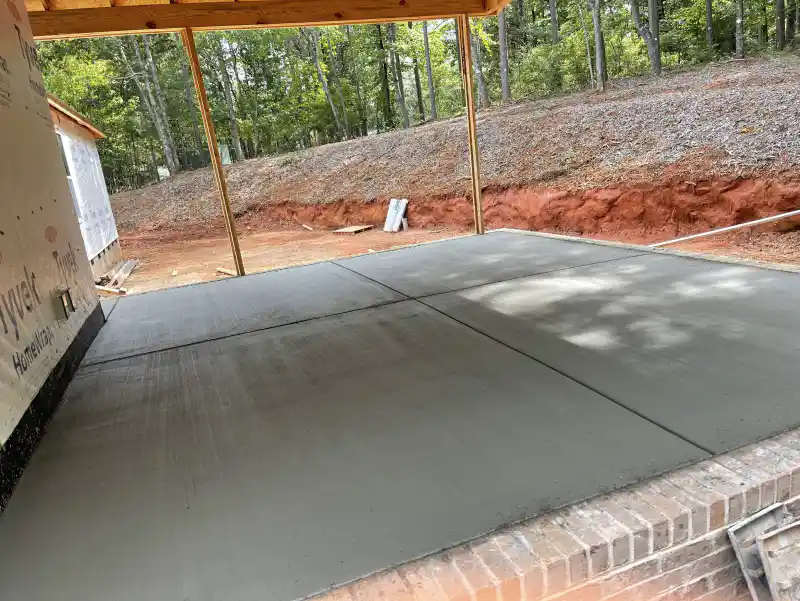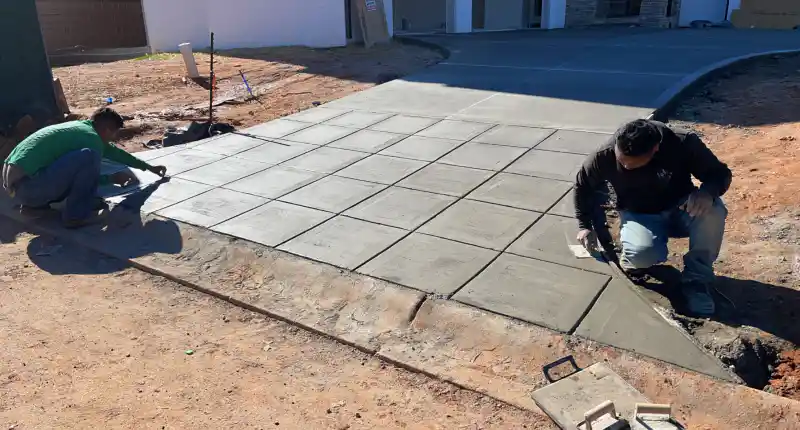
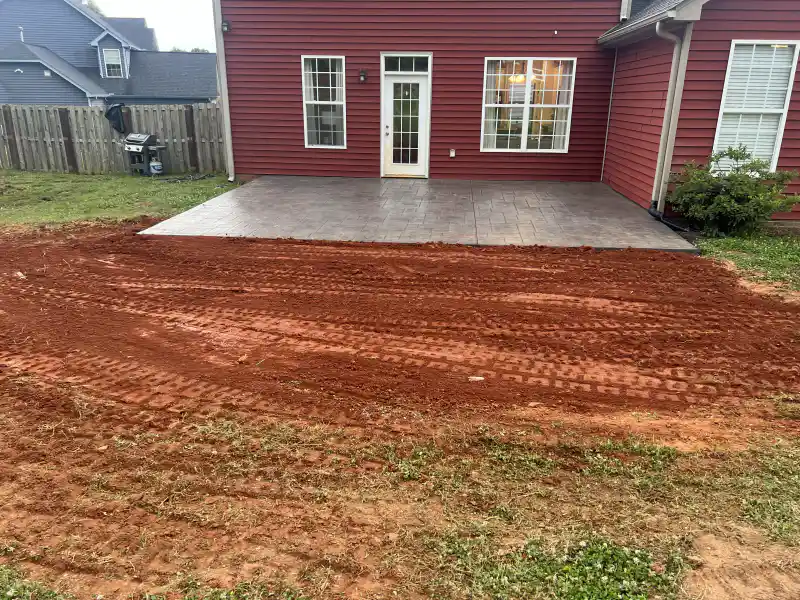
Most of what decides a concrete patio in Spartanburg, SC gets settled on paper before anyone sets a form. Which side of the city line the house sits on, how close the slab comes to the neighbor, and whether a creek or a historic district touches the lot all change the plan. Everything below comes from the City of Spartanburg's own pages and code, read October 13, 2026.
Is your Spartanburg address inside city limits?
Start here, because a Spartanburg mailing address does not mean the City has any say. The City's building permits page asks applicants to make sure the property is actually inside city limits before they apply. The Planning Department describes the City's zoning ordinance as covering all land within the corporate limits.
The Planning Department's FAQ links an interactive zoning map. If your lot shows a city zoning district there, the rules in this article apply. If it doesn't, the county handles it, and our page for a concrete contractor in Spartanburg, SC covers which county desk to call.
Does a concrete patio need a permit in the City of Spartanburg?
Plan on yes. The City's Residential Building page says any work done on a residential property in the City of Spartanburg will require a residential building permit. A patio isn't named as an exception anywhere on that page.
The same page says the permit can be issued to the owner or to a state and City licensed contractor, and that major work needs a plan submitted to Building Inspections for review. Ask the permit desk which group a patio falls in. They're at 440 S Church Street, and the department line on the City site is 864-596-2041.
One form worth filling in early is the City's Typical Dwelling Plot Plan. It asks for the lot dimensions, where the new work goes, the existing structures, and the distances to the front, rear and side property lines. That sketch answers most of the next section too.
A side note if you're weighing a deck instead: the City publishes a Residential Wood Deck Construction Guide on the same permits page. There's no matching guide for patios, which is one more reason to just call.
How close to the property line can a patio go in Spartanburg?
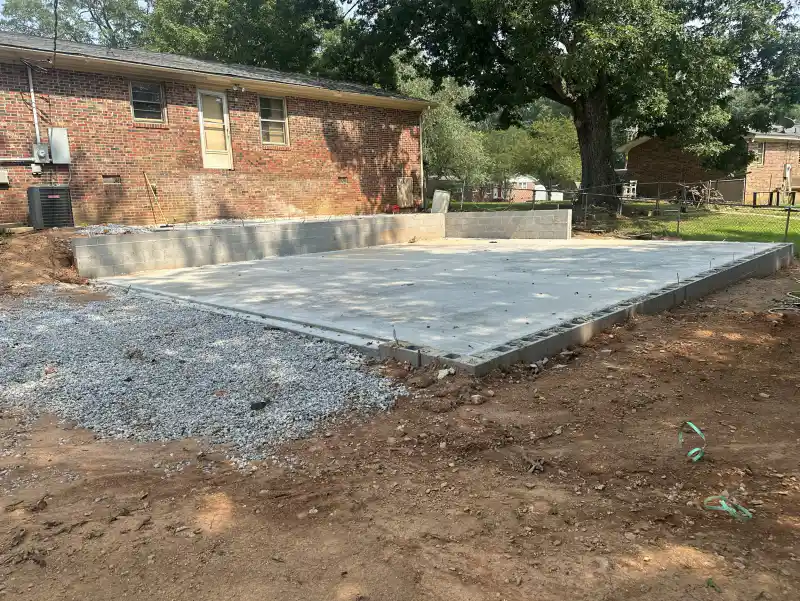
The City's zoning ordinance says every required yard has to stay open to the sky, then lists a few things allowed in it anyway. The first item is terraces, steps and uncovered porches that are no more than 4 feet above the ground floor level and not within 2 and a half feet of any party lot line.
A ground-level patio reads a lot like a terrace under that rule, but the ordinance doesn't use the word patio, so ask Planning to confirm before you draw the slab tight to a fence. Their office shares the 440 S Church Street address, and the department number listed is 864-596-2068.
Also worth knowing: the Planning page says the City is rewriting its zoning code. A rule you read today could move, so ask which version applies on the date you apply.
What if the lot backs onto Lawson's Fork or Fairforest Creek?
This one can stop a patio outright. Section 501.15 of the zoning ordinance sets a riparian buffer of 100 feet on either side of the centerline of Lawson's Fork Creek and Fairforest Creek, and 50 feet on either side of their tributaries. The ordinance names Beaverdam Creek, Chinquepin Creek, Holston Creek, Halfway Branch, Collins Branch, Williams Branch and Greenville Branch among them.
Inside that buffer the ordinance prohibits any land-disturbing activity and all types of impervious surfaces. Existing uses are grandfathered, until they're enlarged to cover more ground. So a new or bigger slab near the creek is the case to check with Planning before anything else.
Floodplain lots carry a second layer. The flood damage prevention section defines development to include grading, paving and excavation, and requires a development permit before any development in an area of special flood hazard. The Building Official administers it.
Patios in Hampton Heights and Beaumont Mills
These are the City's two locally designated historic districts, and exterior changes there go through a Certificate of Appropriateness. The homeowner guides for both districts get specific about patios.
Repairs to existing walks, patios, fences and driveways count as normal maintenance with no certificate, as long as the replacement materials match the original or existing ones in detail and color. Painting concrete is left off that maintenance list unless it was already painted, and painting unpainted masonry is listed as Major Work for the review board.
A brand-new patio isn't named on either list. The guides tell owners to contact the Planning Department before starting any project, and they say the certificate comes before a building permit can be issued. If you want a colored or stamped surface in place of a plain gray slab, raise it in that first call. Our article on stamped concrete versus a broom finish lays out the two looks.
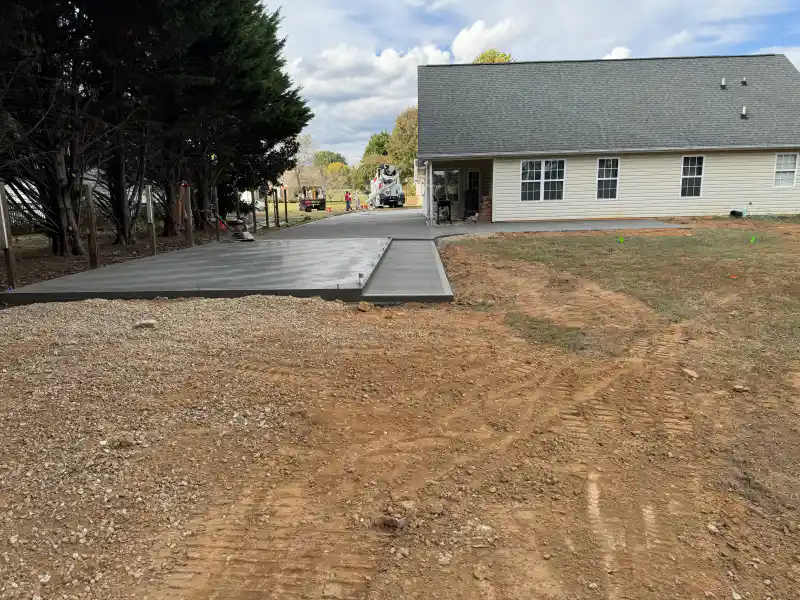
Before the digging starts on a Spartanburg patio
SC811's homeowner page says to submit a locate request at least three business days before digging, not counting the day you file, weekends and holidays. It's free. Their FAQ adds that utility companies only mark the lines they install and maintain, so private lines like a plumber's water line or power to a detached garage won't be painted. A private locator finds those.
Then the calendar. NOAA's 1991 to 2020 normals for the Greer airport station average 54.4 nights a year at 32 degrees or colder, most of them from December through February, and 47.6 days at 90 or hotter, mostly June through August.
NRMCA's CIP 2 sheet warns about placing exterior concrete in late fall, winter or early spring when it can freeze while still saturated. Its CIP 12 sheet says to avoid the hottest part of the day for placing and finishing when possible. April and October each average under one day of either kind at that station. Our Spartanburg driveway replacement guide covers the street side if a driveway is part of the same job.
For finishes and what a build includes, see our page on concrete patios in Spartanburg and the Upstate, and send the address through the estimate form below.
Sources: City of Spartanburg, Residential Building; City of Spartanburg, Building Permits; City of Spartanburg, Typical Dwelling Plot Plan; City of Spartanburg, Planning; City of Spartanburg, Codes and Ordinances; City of Spartanburg, Permits and Board Applications; City of Spartanburg Zoning Ordinance (Sections 501.14, 501.15 and Projection Into Yards); City of Spartanburg, Historic Districts; Hampton Heights Homeowner Guide; Beaumont Mills Homeowner Guide; SC811, Homeowners; SC811, FAQs; NOAA NCEI 1991 to 2020 normals, Greenville-Spartanburg Airport (USW00003870); NRMCA CIP 2, Scaling Concrete Surfaces; NRMCA CIP 12, Hot Weather Concreting. All read October 13, 2026.