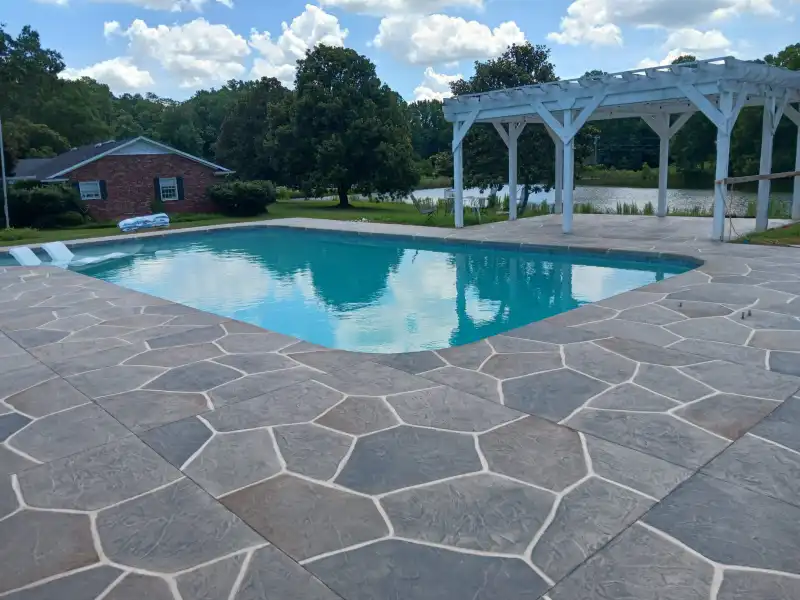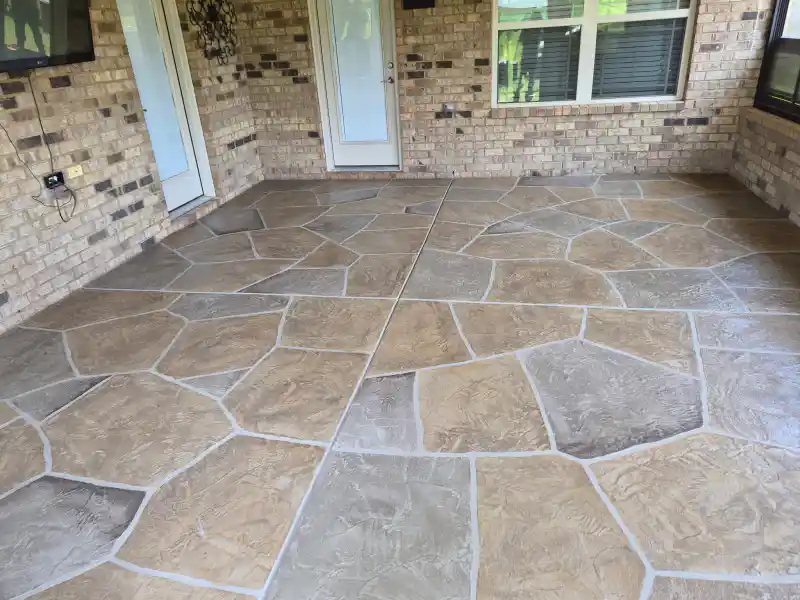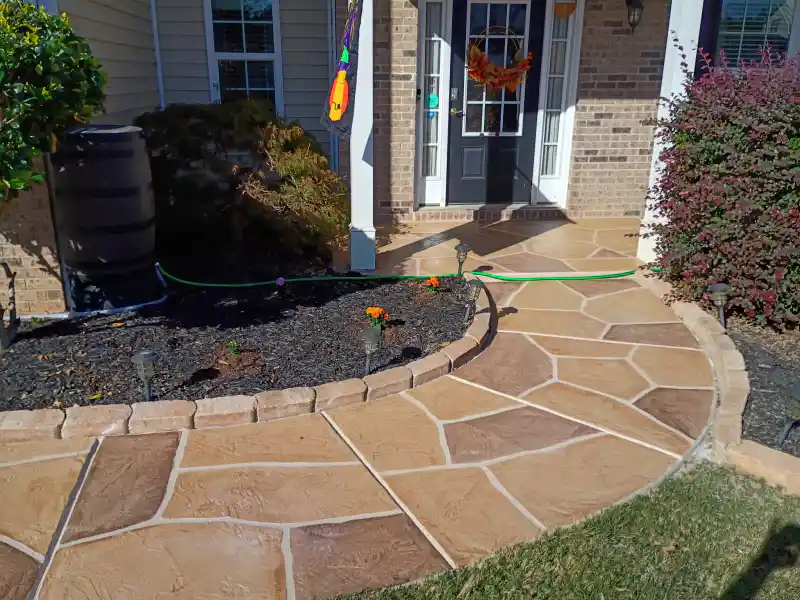
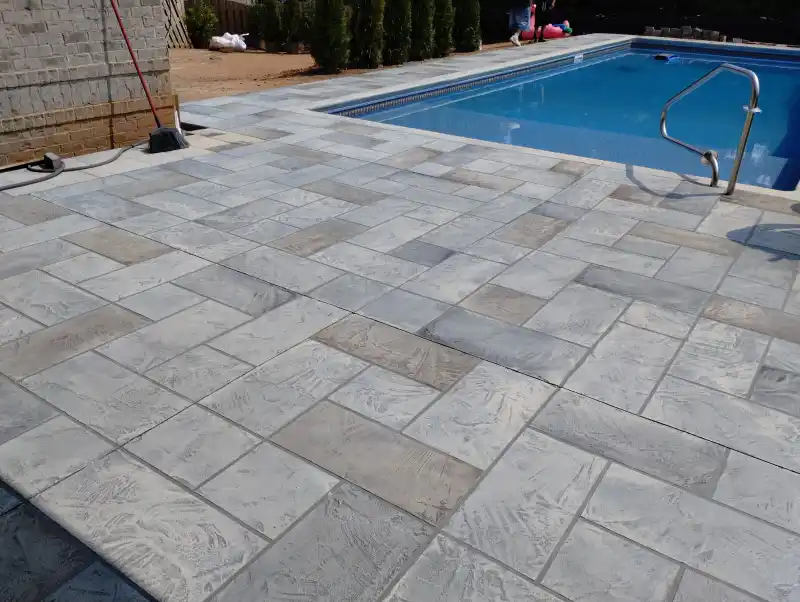
A new concrete pool deck in Greenville is mostly decided before anyone mixes a yard of concrete. The deck size, where water runs off, how the steel in the slab ties to the pool, where the fence posts go and what hour the truck arrives in July all get worked out first. Pour day is the short part.
This guide is about that prep, for a deck going in around a new pool or a pool that's getting its first real deck.
Which pool deck decisions end up on the permit plans?
More than most people expect.
The City of Columbia's building inspections office publishes a plain list of what it wants to see at pool plan review, and it makes a good example of how a South Carolina permit desk thinks. Under decking and drainage it asks for the material, the slope direction for runoff and the deck dimensions. It also wants setbacks from the water's edge to the property lines and the house, drawn to scale.
So the shape of your deck, and which way it sheds water, is something to settle with your pool builder before the permit goes in. Greenville writes its own requirements, and city addresses go through the city's permit center (it's listed on our page for a concrete contractor in Greenville). Ask them for their pool checklist before you lock in a deck size.
Why a pool deck gets inspected before the concrete goes in
Because once the concrete is down, nobody can see what's under it. Columbia's plan review sheet says this outright: pool inspections land just before a stage gets covered up, pouring concrete included, so the hidden work can be checked.
For the deck that hidden work is the electrical bonding. Columbia's pool permit page lists an equipotential bonding inspection, which it says is often called a perimeter bonding inspection, and it is required before pouring concrete or finishing the pool deck. Its plan review sheet describes a pre-deck stage where the inspector checks that the rebar or mesh in the deck is tied into the pool's bonding grid.
That matters for scheduling. If the inspection hasn't passed, the truck can't come.
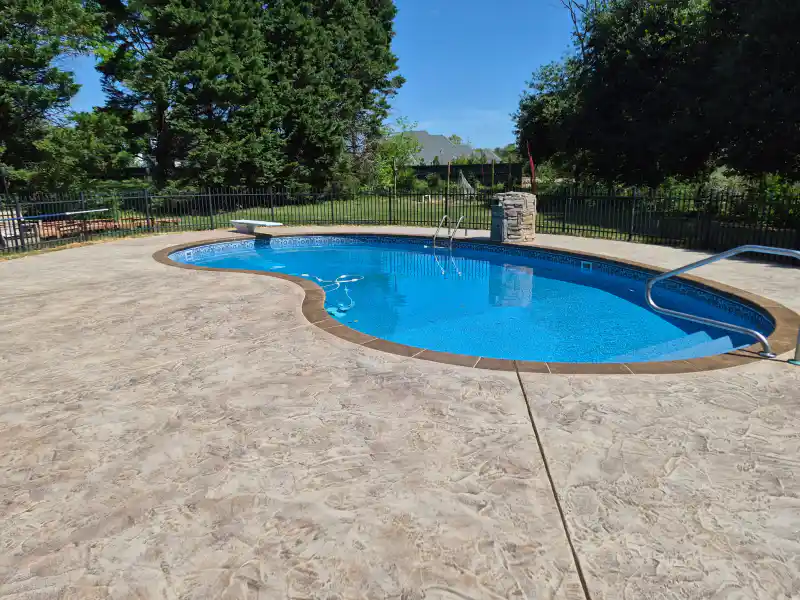
What the bonding inspector looks for in the deck
Columbia's permit requirements spell out the perimeter bond in some detail. It has to be attached to the pool's rebar or copper grid at a minimum of four points, spaced evenly around the pool.
Where a copper conductor is used, the city calls for bare solid copper no smaller than #8 AWG, following the pool's contour 18 to 24 inches from the inside walls and buried 4 to 6 inches below the finished surface. It has to run continuous around the pool with no breaks or splices. The same page says perimeter bonding covers concrete pool decks, pavers or stone set in mortar and any conductive surface within 5 feet of the inside pool wall.
Bonding is electrical work, and the inspection belongs to whoever pulled that permit. What a homeowner can do is ask two questions early: who is doing the bonding, and when is that inspection booked. Your local inspector's checklist is the one that counts, so read Greenville's when you get it.
Where the pool fence meets the new deck
Columbia's pool permit page says a barrier may need its own fence permit, and that the fence is inspected before the pool is filled. At final inspection its plan review sheet has inspectors checking fence height (usually 48 inches or more), self-closing and self-latching gates, and alarms on house doors and windows that open toward the pool.
For the deck that raises a practical question. Do the fence posts sit in the concrete, or in the ground just past the deck edge? Either can work. Decide it before the forms go down, because moving a post line after the slab is poured means cutting concrete. The gate opening matters too, it needs a landing that lets the gate swing and close on its own.
How Greenville summer heat changes pour day
Greenville summers are hot enough to change how a pour is run. NOAA's 1991 to 2020 normals for the weather station at Greenville-Spartanburg International Airport (listed under Greer) put the average July high at 90.3 degrees. The same station averages about 48 days a year at 90 or above, and about 40 of them fall in June, July and August.
The National Ready Mixed Concrete Association's Concrete in Practice sheet on hot weather lays out what heat does to fresh concrete. It sets faster and needs quicker finishing, it loses slump faster, and the extra water demand can raise the water to cement ratio and cut strength. Heat, wind and low humidity together can pull water off the surface fast enough to cause plastic shrinkage cracks.
Its fixes are mostly about timing and water. The sheet says to schedule deliveries away from the hottest part of the day when possible, keep added water on site to a small amount, and on hot dry days dampen the subgrade, forms and reinforcement before placing without letting water pond. Curing starts as soon as finishing is done and runs at least 3 days, and a white pigmented curing compound helps reflect heat off the surface.
On a pool deck in August that usually means an early truck. Ask your contractor what time they plan to start and how they'll cure it.
The finish around the water
We don't put a smooth trowel finish around a pool. A broom finish or a textured stamp keeps grip when the deck is wet, and that's what we use. If you're stuck between the two, our post on stamped vs broom finish patios in Greenville walks through how they compare on look and upkeep.
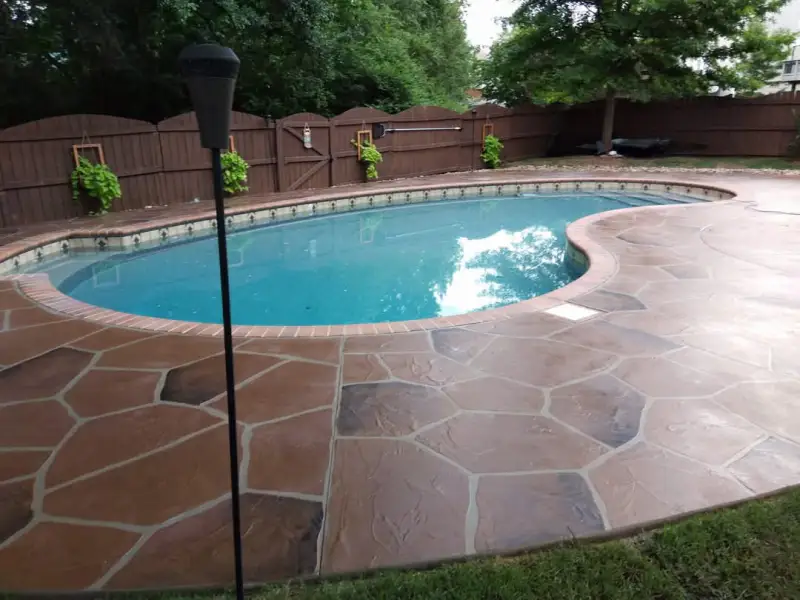
Stamped work takes more planning on pour day, since the pattern has to be pressed while the concrete is still workable. In summer heat that window is shorter, which loops right back to the start time. The joint where the deck meets the coping is covered on our page for concrete pool decks in Greenville and the Upstate.
What to have ready for a Greenville pool deck estimate
An estimate goes faster when a few things are already known. The ones we ask about most:
- Where the pool permit stands, and the deck dimensions on the drawings.
- Who is handling the bonding, and whether that inspection has a date yet.
- The fence plan, including where the posts and the gate go.
- The finish you want, broom or a stamped pattern.
If an older deck is the real problem, resurfacing is sometimes an option, and that's a separate conversation from a new pour. For a new deck, start with our page on concrete pool deck installation in Greenville and send the details through the estimate form below.
Sources: City of Columbia Building Inspections, Permit Requirements for Residential Pools; City of Columbia Building Inspections, Essential Components for Pool Plan Review; NOAA NCEI, 1991 to 2020 monthly normals, Greer SC station; NOAA NCEI, 1991 to 2020 annual and seasonal normals, Greer SC station; NRMCA, CIP 12 Hot Weather Concreting (copy hosted by Prairie Materials). All read October 17, 2026.