Concrete resurfacing in Greenville means bonding a thin layer of polymer-modified cement onto an old slab so it gets a new top. Some people call it refinishing, and the product sheets call it an overlay. It only holds up when the concrete underneath is solid and staying put, so most of this guide is about the slab underneath.
What goes down in a concrete resurfacing job
The material is a bagged blend of portland cement, sand and polymer, mixed with water on site. Quikrete's data sheet for its Re-Cap resurfacer gives a range from a 1/16 inch feather edge up to 1/2 inch. Sika's sheet for its SikaCem-172 T1000 stampable overlay lists 1/8 inch to 1/2 inch in a single application, with thicker builds placed in layers.
The finish sets the thickness. Sika says a stamped overlay has to go down as deep as the mortar joint the stamp will press in, because too thin or too thick and the pattern won't transfer cleanly, while a plain squeegeed resurface can run much thinner. Color either goes into the mix or gets stained on after, and the cured surface is sealed.
Which worn concrete around a Greenville house resurfacing can save
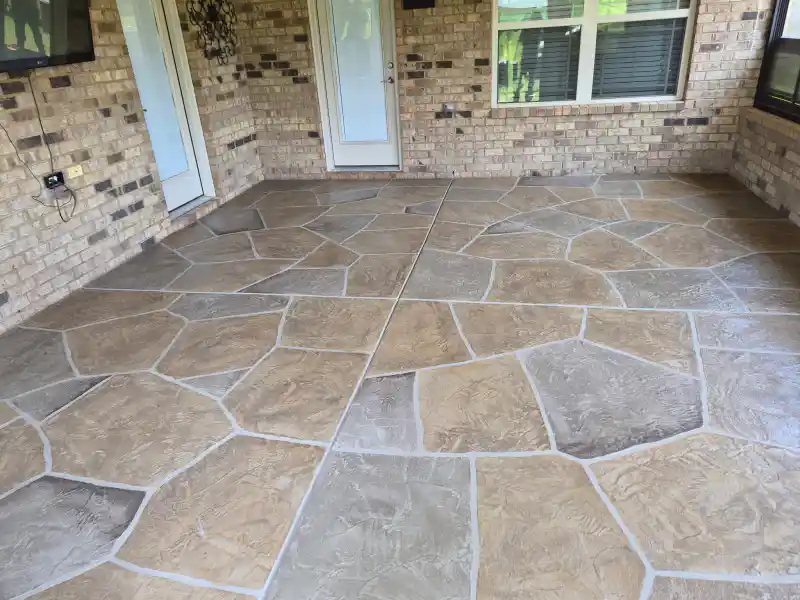
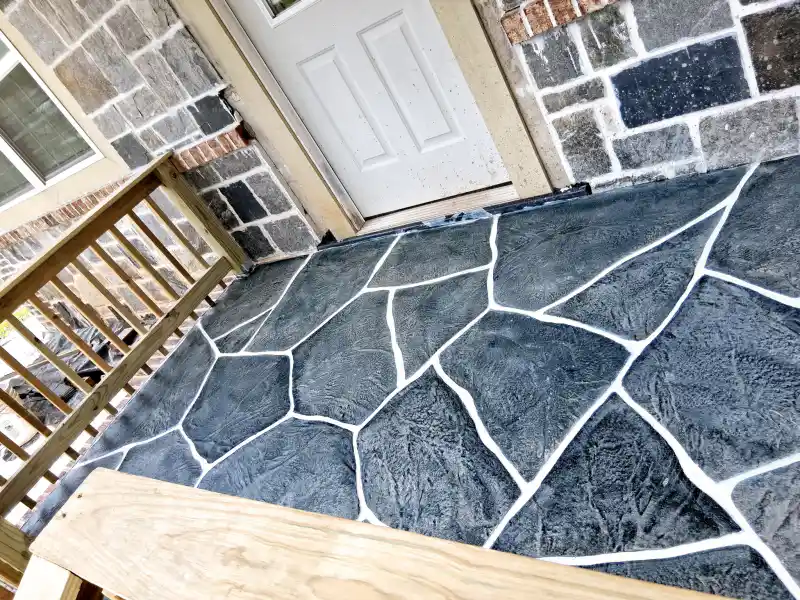
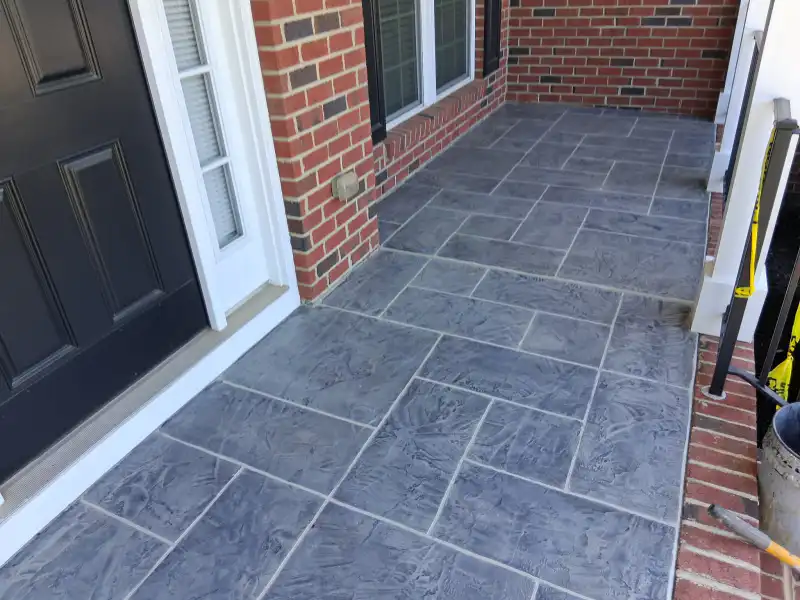
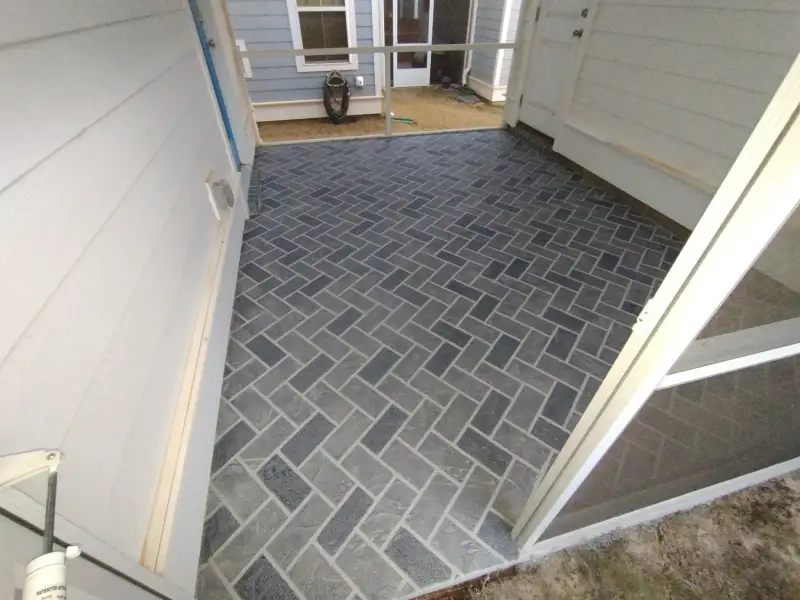
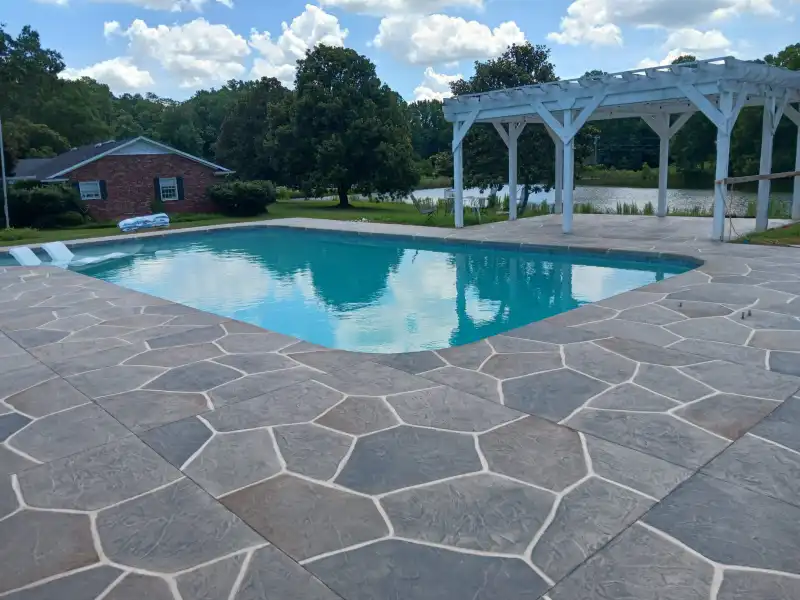
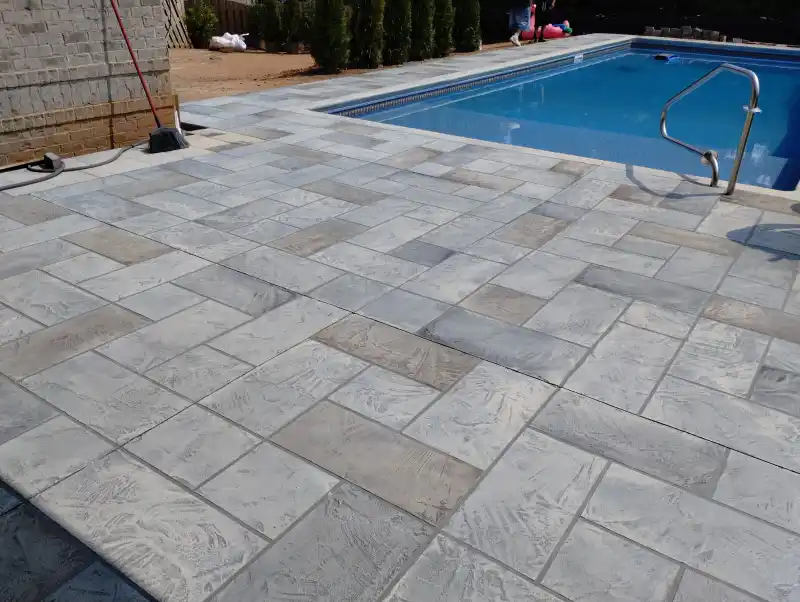
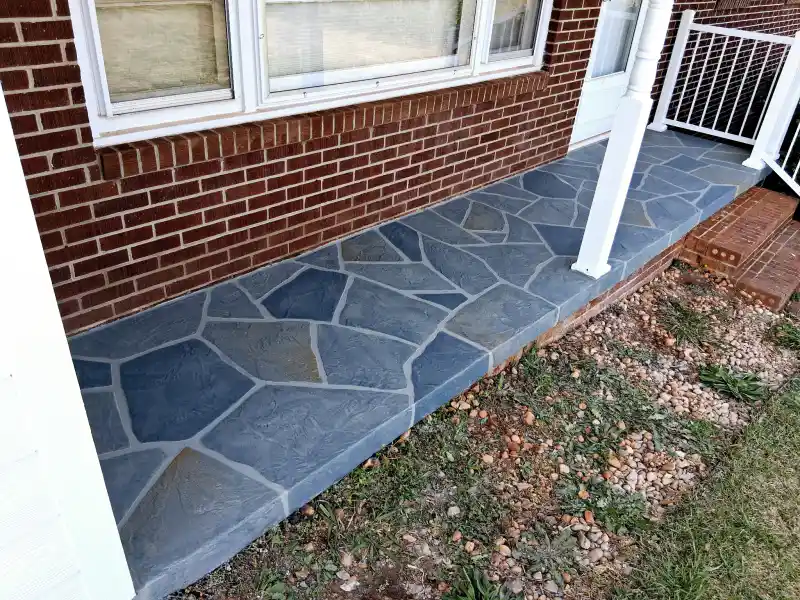
Sika lists patios, walkways, stairs, sidewalks, driveways and pool decks among the uses for its overlay, and names worn or color-blemished concrete, out-of-level surfaces and construction mistakes as the problems it's meant for. Most of the overlays in our own project photos sit on porches, pool decks and walkways.
A good candidate has a tired top on a healthy slab. Think scaling, pitting, old stains, a finish gone patchy. A covered porch that has only ever seen foot traffic and furniture is often a good fit.
Driveways can be resurfaced too, though heavy loads and Upstate red clay make that its own decision, which we wrote up separately in driveway repour vs resurfacing in Greenville.
What the old slab has to pass before it gets an overlay
Sika puts it in one line: the overlay is formulated for "structurally sound, non-moving concrete." Quikrete's sheet says old cracks can reappear when the base concrete moves. So when we come out as a concrete contractor in Greenville to look at an overlay job, the first thing we check is movement. A section that has dropped at a joint, a crack with one side higher than the other, a crack that has opened up since last year, broken edges.
Old paint or sealer adds work. Quikrete says to apply its resurfacer only to bare concrete, never over painted or sealed surfaces, so any old coating has to come off first. Patches need time, both sheets want every repair fully cured before the overlay goes over it.
Water is the one that can rule a slab out. Sika says not to install its overlay where it will see periodic water immersion or hydrostatic pressure, worth checking on a low patio that collects runoff from a downspout.
How the surface gets prepped for a resurfacing overlay
Sika's sheet says any contamination left on the slab that blocks adhesion will cause the topping to delaminate, and the tools for getting it off depend on what's there. Sika lists high-pressure washing, grinding, scarifying, shot blasting and sandblasting. Quikrete calls a 2500 psi pressure wash essential, plus scraping or grinding off paint, grease, algae and mildew.
Roughness is judged against a scale from the International Concrete Repair Institute's guideline 310.2R: ten Concrete Surface Profile chips, from CSP 1, nearly flat, to CSP 10, very rough. Sika names CSP 3 as the profile for new concrete going under its stampable overlay. The two sheets split on acid, too. Quikrete allows acid washing for soaked-in oil stains if it's rinsed off thoroughly, Sika says not to acid etch at all because it may weaken the surface, and we follow the sheet for whichever product is going down.
The bond step differs as well. Quikrete wants the old slab watered to saturated surface dry, damp with no standing water. Sika uses a primer and the overlay has to go on within 24 hours of priming, or the slab gets primed again.
Flagstone, ashlar and wood-plank overlays in Greenville
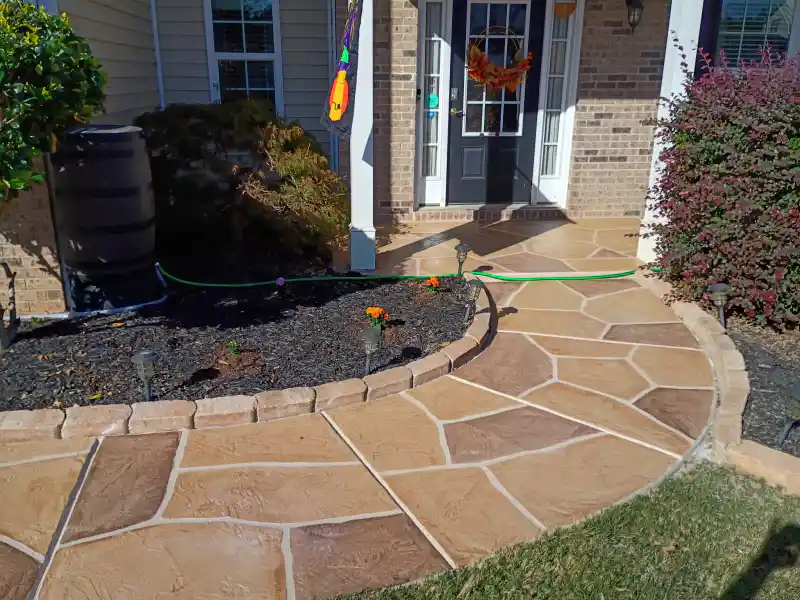
Most of our overlay work is patterned, flagstone and ashlar troweled over porches, pool decks and walkways, and wood plank on covered porches. Knockdown texture is the plainer option when someone wants grip without a stone look. If the surface is decent and only the color is tired, stain and seal may be enough, see our post on staining an existing patio in Greenville. The full set of finishes is on our concrete resurfacing and overlays in Greenville page.
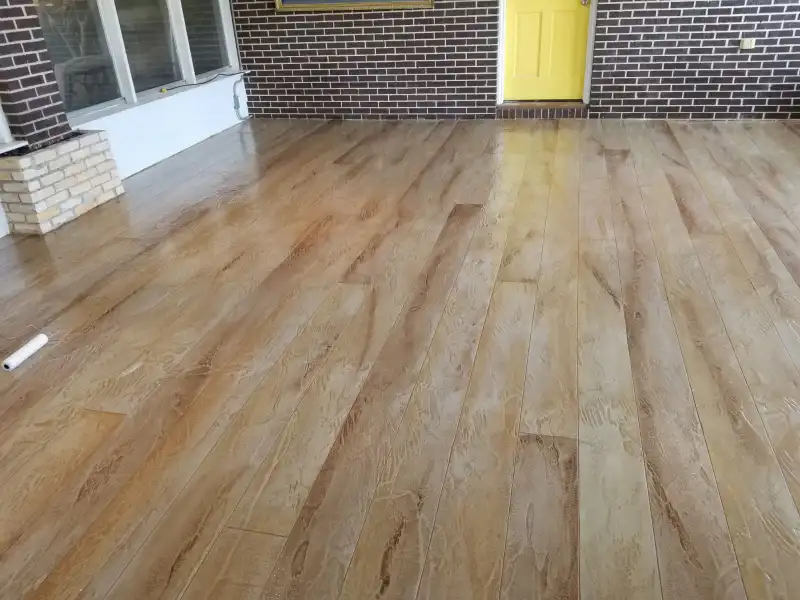
The pattern goes in while the overlay is still workable, then it gets colored, cleaned and sealed. Then the joints. Sika says to mark every working joint in the old slab and saw-cut the overlay directly over it, full depth and as wide as the original joint, within 14 hours of placement. Quikrete says existing control and expansion joints have to be kept, and warns that cracks reflecting up through the new surface can't be completely prevented, more so on a slab without enough control joints.
Greenville weather, cure times and when you can use it again
Each product has a temperature window for air and concrete: 50 to 90 degrees F for the Quikrete resurfacer, 45 to 85 for the Sika overlay. NOAA's 1991 to 2020 normals for its Greer station, near Greenville, put the July average high at 90.3 degrees and August at 88.5. A July overlay here has to be planned around the cooler part of the day, and Sika suggests chilling the mix water in hot weather.
| From the data sheet | Quikrete Re-Cap resurfacer | SikaCem-172 T1000 stampable overlay |
|---|---|---|
| Thickness | 1/16 to 1/2 inch | 1/8 to 1/2 inch per application |
| Air and slab temperature | 50 to 90 F | 45 to 85 F |
| Foot traffic | after 8 hours | gently after about 4 hours at 70 F |
| Cars | after 24 hours | after at least 96 hours |
| Rain protection | at least 8 hours | 24 hours |
Sika adds one more number: a full 28-day cure before heavy traffic or freeze-thaw cycling. The same NOAA normals average 54.4 days a year at Greer with a low at or below 32 degrees, and the January average low is 32.1. An overlay laid late in the fall may not reach its 28 days before the first hard freezes, so the timing of a late-season job matters.
What concrete resurfacing will not fix
An overlay is a surface. It won't lift a sunken section or stop a slab that heaves, and a crack that keeps moving will come back through, since Sika warns even repaired random cracks may transfer. A slab that holds puddles or stays wet against the house needs the drainage sorted out before any overlay goes on.
When the base is the problem we price a repour instead and explain why. If your slab is sound and just looks worn, our Greenville concrete resurfacing page shows the overlay finishes we lay, and the estimate form below gets us the address and a few photos.
Sources: Quikrete, Re-Cap Concrete Resurfacer data sheet; Sika, SikaCem-172 T1000 Stampable Overlay product data sheet (March 2024); DeFelsko, ICRI Concrete Surface Profile (310.2R) reference; NOAA NCEI, 1991 to 2020 monthly normals, Greer SC station; NOAA NCEI, 1991 to 2020 annual normals, Greer SC station. All read October 17, 2026.