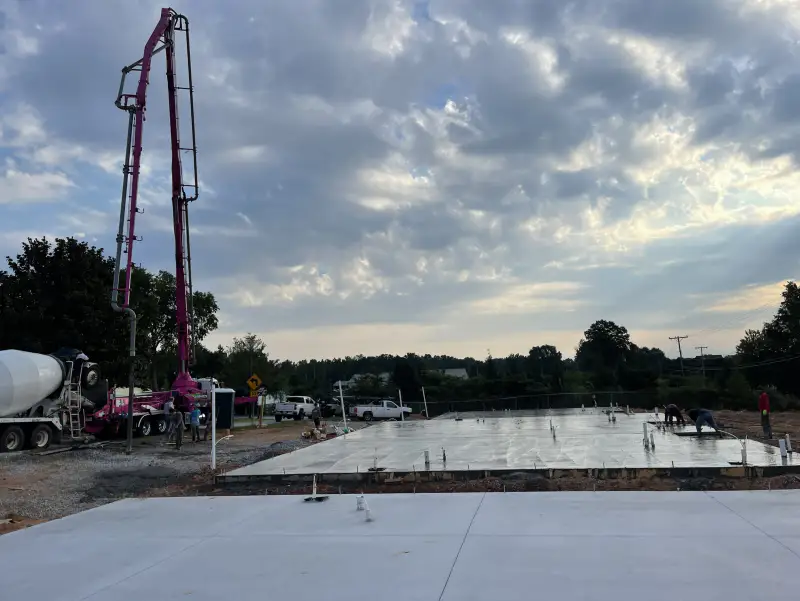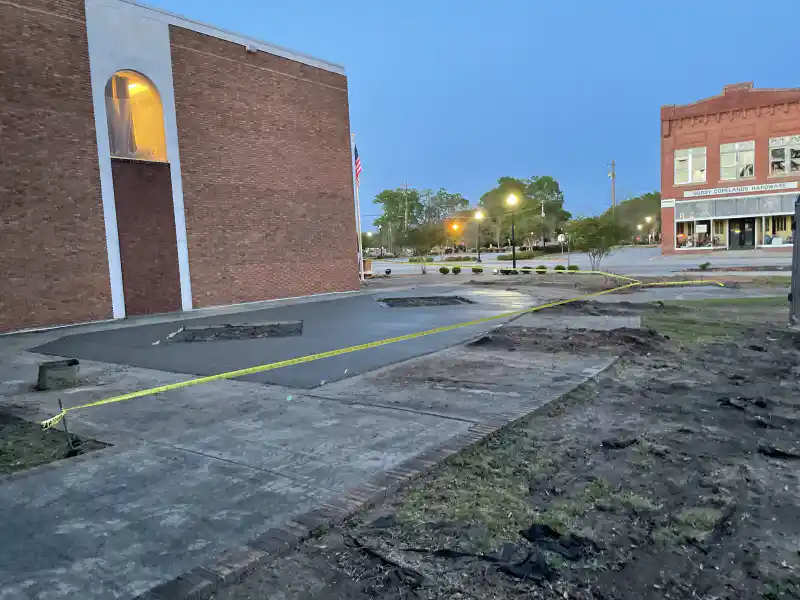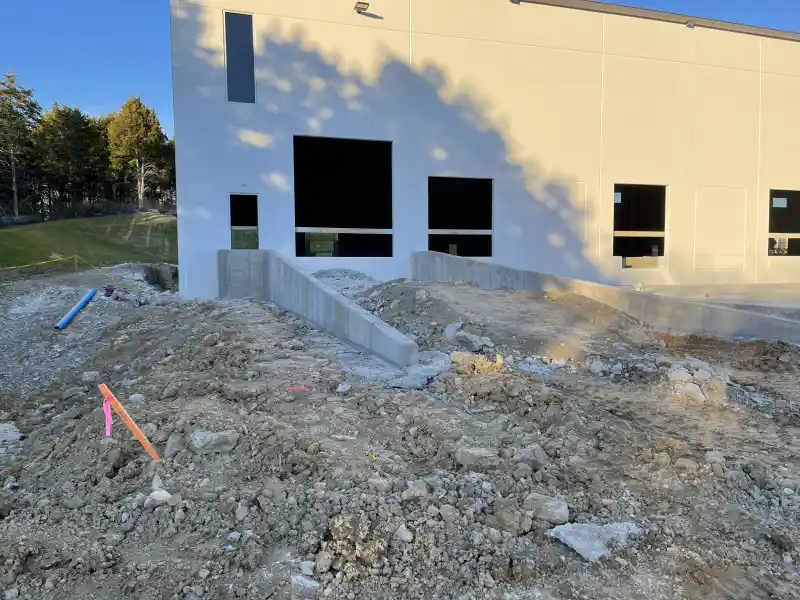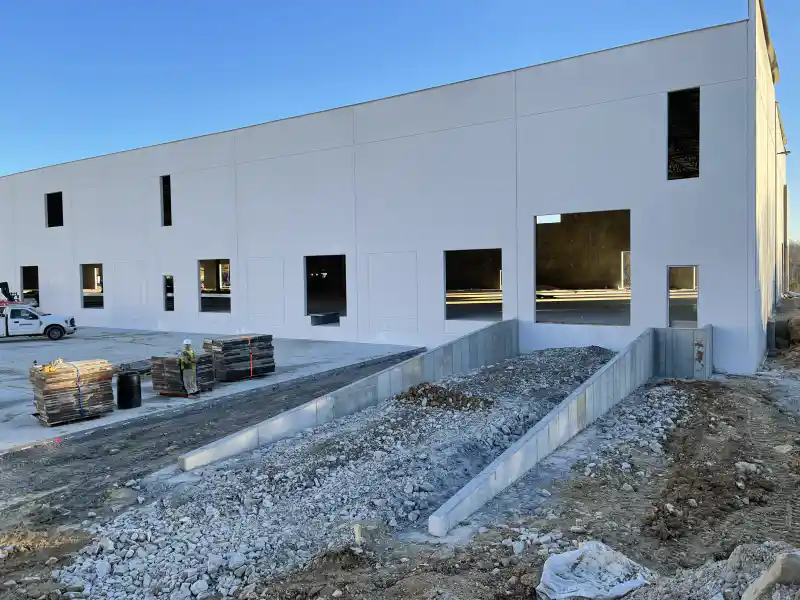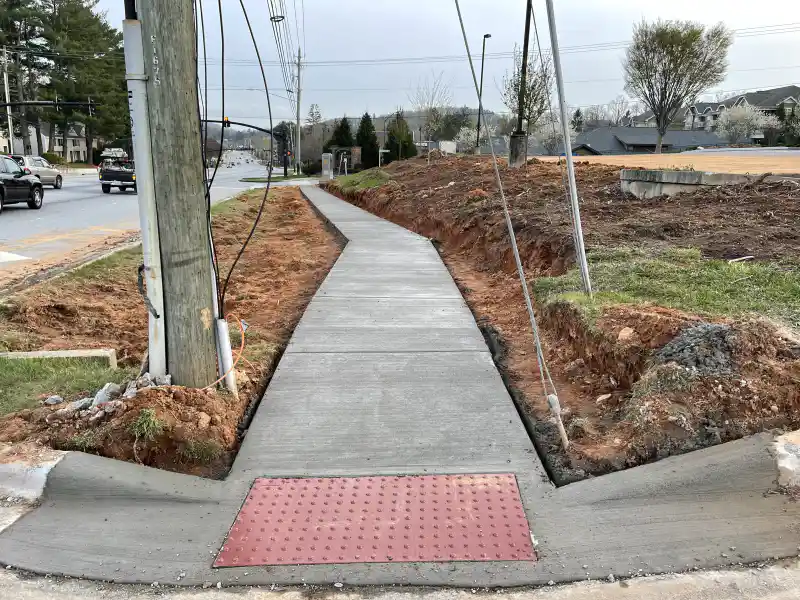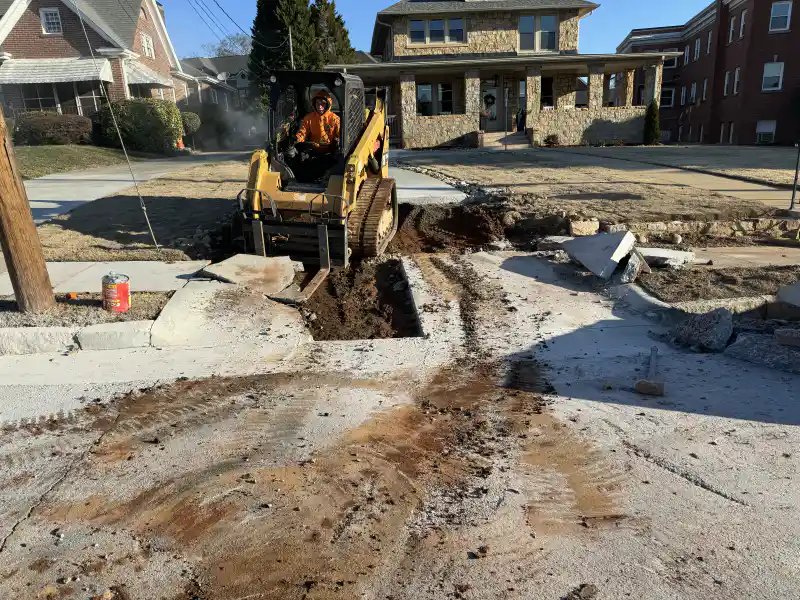
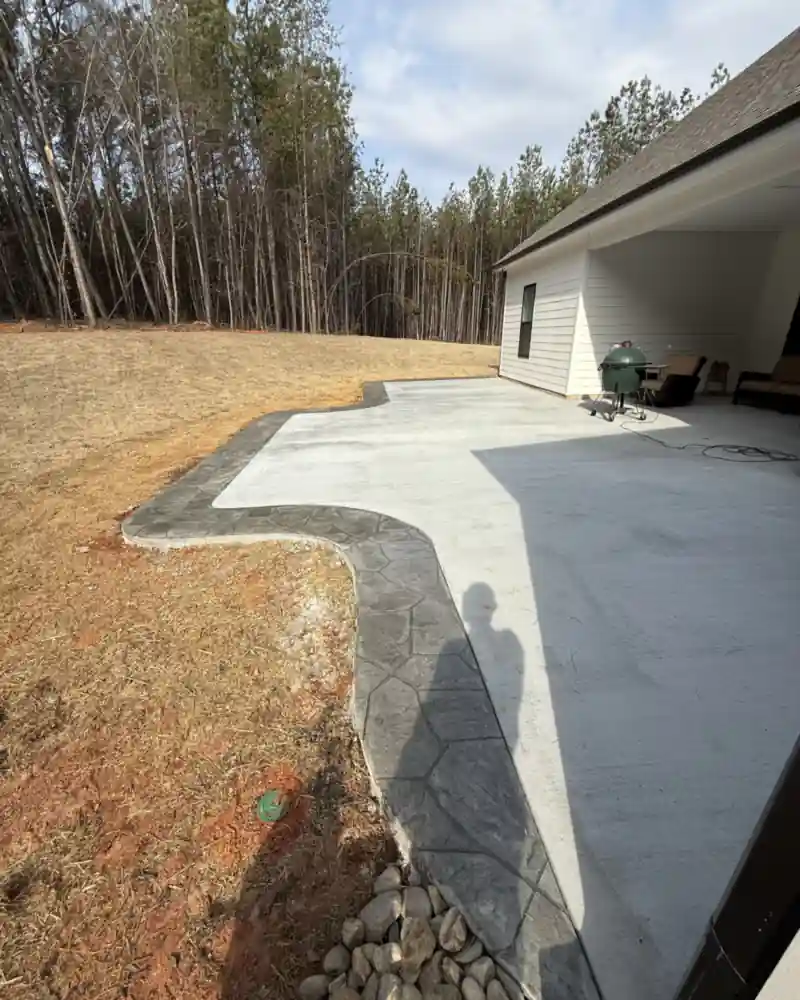
Most concrete arrives in a ready-mix truck, and the easy jobs are the ones where the chute reaches the forms. Plenty of back yards around Easley don't work that way. The slab spot sits behind a fence, down a slope or past the side of the house, and the truck can only get as far as the street or the driveway. As an Easley, SC concrete contractor, we have poured several of those jobs, and the notes below come from them. Each job here is one of the eight Easley jobs from our own records, described from the scope the owner signed.
What does a backyard pour without truck access look like?
On these jobs the truck stays at the road and the concrete moves to the forms by buggy, a small powered cart that carries a load at a time. Four of our eight Easley jobs went in that way:
| Job | What went in |
|---|---|
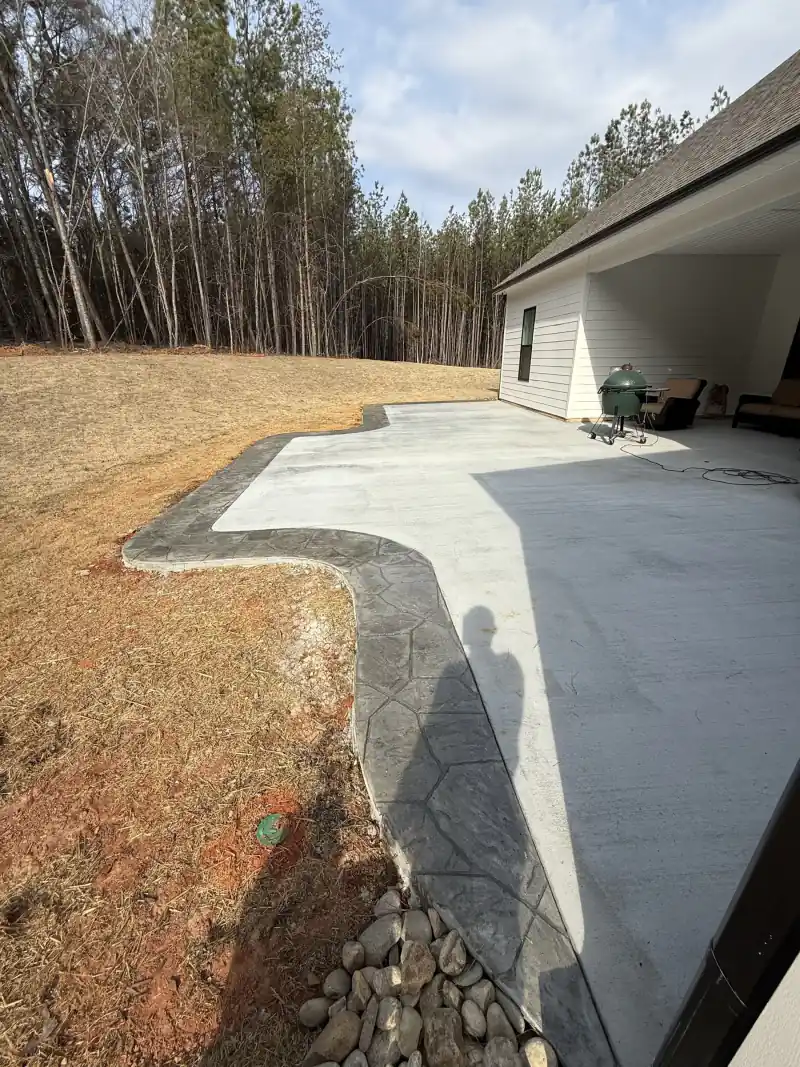
| Backyard patio | A 13x26 patio, 4 inches thick and broom finished to match the patio beside it. The concrete came in by buggy. |
| Sidewalk with curved corners | A 4x80 ft sidewalk set 2 inches above the lawn, buggied in from the road, with picture-frame edges and a saw cut every 4 feet. |
| Wider driveway | Sixteen yards of 4000 PSI at 4 inches thick, placed with two buggies because the site would not take a truck, with saw cuts every 10 to 15 feet. |
| Stamped and broomed patio pads | 592 sq ft of pads at 4.5 inches with 4000 PSI. The main pad is stamped in an English slate pattern with no colour and the side pads are broom finished. |
Tight access changes how the concrete gets to the forms. The slab is still formed, placed, finished and jointed the same way it would be with the truck backed up to it.
What should you look at along the route?
Walk the path a buggy would take, from where a truck can park to where the slab goes, before anyone comes out to price it. Things worth noting:
- The narrowest point on the way back: a gate, the gap between the house and a fence, or a spot beside an AC unit or a meter.
- Whether a fence section can come down for the day, and who will put it back.
- How steep the route is and whether the ground is soft after rain.
- What sits under the route, like a septic field or irrigation heads, that should not take a loaded cart.
- Where the dirt we dig out can go. On one Easley driveway extension the spoil left the site in a 20-yard dumpster.
Tell us about tight access when you ask for the estimate, so it is in the plan from the start. Whether a job goes in by buggy is settled at the site visit, standing on the route.
What is buried under the yard?
Backyard slabs tend to land on top of lines nobody thinks about until a shovel finds them. SC811 is a free service, and its homeowner page asks for a locate request at least three business days before digging, not counting the day you file, weekends or holidays.
The gap is private lines. SC811 says utility companies only locate within their right-of-way, and public lines typically run from the street to your meter. Its examples of private lines are sprinkler systems, gas lines for pools or grills, electrical wiring to detached garages or sheds, and septic or irrigation lines. Those are the lines most likely to run under a patio, a hot tub pad or a path out to a shed, and they need a private locator or the owner's own records.
Where does the water go once the slab is down?
A new slab in a back yard changes where rain runs. On the 13x26 Easley patio, 25 feet of corrugated pipe runs under the slab from the gutter to a pop-up drain out in the yard. On another Easley job, a 23x16 driveway pad that held water was torn out, regraded and poured back two inches higher, with a drain at the end of the driveway running to a pop-up drain in the yard. Both drains were part of the plan before the pour.
For a slab beside the house, Section R401.3 of the International Residential Code calls for impervious surfaces within 10 feet of the foundation to slope at least 2 percent away from the building. Inside city limits, the City of Easley posts an Impervious Coverage Calculation form on its Codes, Maps and Ordinances page, and it is worth reading before you add a large slab to a lot. The City of Easley Building Department at City Hall, 205 North First Street, can tell you whether your project needs a permit. For how the city's code treats sidewalks, curbs and driveway crossings, see our guide to Easley's sidewalk and curb rules.
How does uneven ground get leveled first?
A back yard is rarely flat where the slab is going. On the 13x26 Easley patio, 10 tons of dirt went in to level the area before the forms were set. On a 277 sq ft hot tub pad, we graded the site with a rented Dingo, a compact loader small enough for a back yard, and set the pad on a #4 rebar mat. That pad steps down to a 3-foot walkway with a thickened edge on the walkway side. The 4x80 ft sidewalk sits on dirt that was levelled and compacted first. Fill and grading are part of the quote because they decide how the finished slab sits against the lawn and the house.
What should you have ready before you ask for a price?
- The street address, since Easley sits across the Pickens and Anderson county line and the permit office follows the address.
- Rough measurements of the slab and the narrowest point on the route.
- Photos of the route from the street to the slab spot.
- Anything you know about buried lines, septic, irrigation or a pool's gas line.
- Where water sits or runs after a heavy rain.
Most patios, pads and walks like these fall under our patio and outdoor living work. If you want a price on a backyard job in Easley, send the address and a few photos through the form below or call 864-214-5271, and mention the access so we come prepared to look at it.
Sources: SC811, Homeowners; SC811, Private Lines; International Code Council, 2021 International Residential Code, Section R401.3; City of Easley, Codes, Maps and Ordinances; City of Easley, Building Department. Job details from Ace Concrete Construction's own Easley job records. All read October 30, 2026.