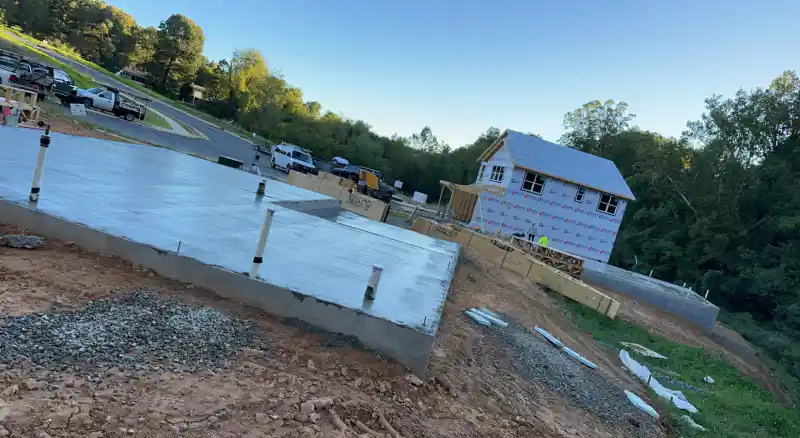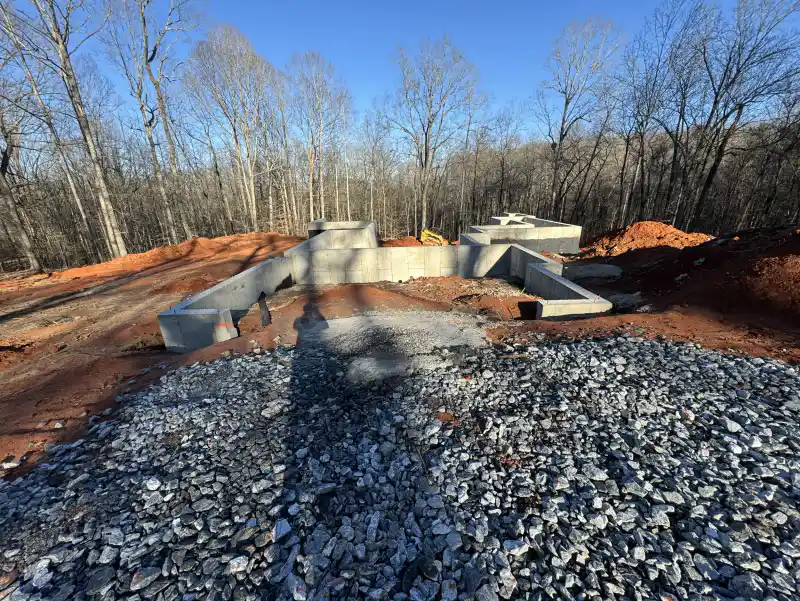
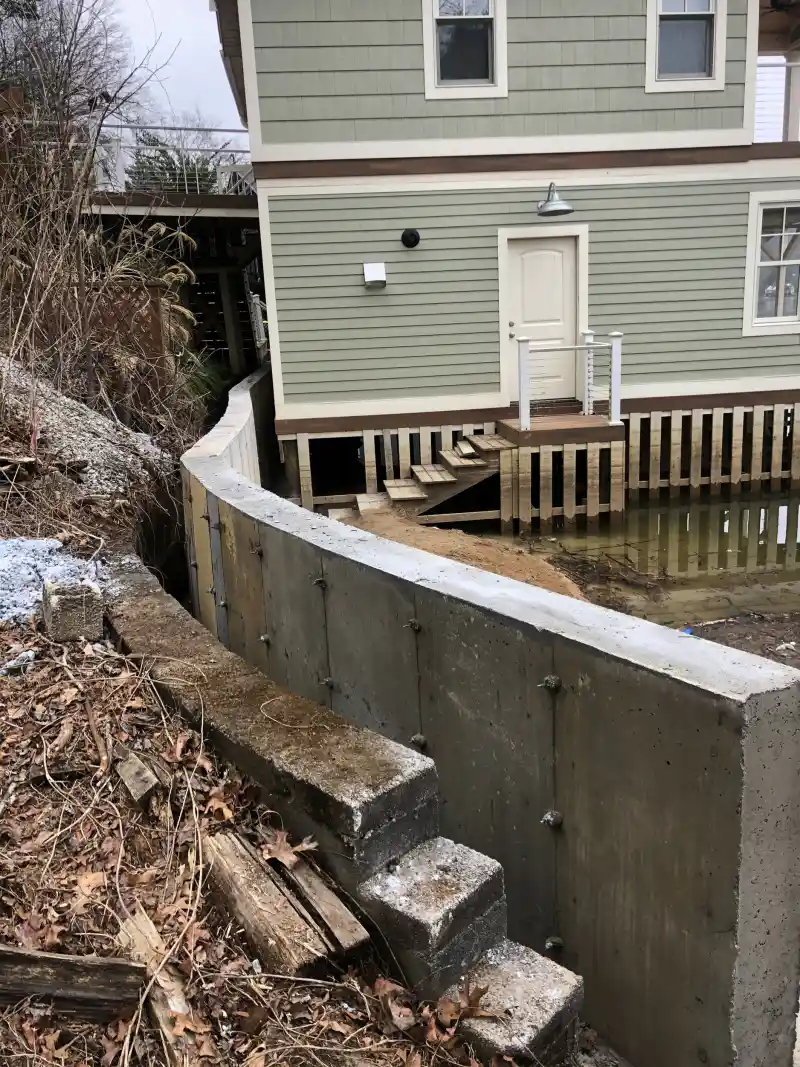
People ask who the best retaining wall builder in Greer is, and no public ranking settles it. By the time a wall is finished, most of it is underground or buried behind the face, so the useful comparison happens at the estimate, while you can still ask what goes into the trench and where the water ends up.
These are the eight checks we would run if we were the ones hiring. Hold us to them too. We at Ace Concrete Construction form poured walls and build segmental block walls, and our page on retaining wall work in Greer and the Upstate covers how we build both. For the town itself, see our page for a concrete contractor in Greer.
1. Will they show you a licence number and proof of insurance?
South Carolina splits contractors in two under Title 40, Chapter 59 of the state code. Residential builders are licensed, residential specialty contractors are registered, and the cost of the job decides which one applies. Ask which one they hold and look the number up yourself through SC LLR. Ours is residential builder licence RBS.65343.
Insurance is the other half. The City of Greer's inspections page says the city verifies contractors are licensed, insured and bonded before it issues permits. That check is for the city's permit, though. Ask for a certificate of insurance sent from the contractor's agent with your address on it, because a wall job puts an excavator a few feet from your house and maybe your neighbor's fence, and you want to know whose policy pays before the dig starts.
2. Do they know which office issues the permit at your address?
Greer sits in two counties. The City of Greer's About Greer page says Line Street marks the boundary between Greenville and Spartanburg counties, and a Greer mailing address can also sit outside city limits. So there are three possible offices, and the lot decides which one.
Inside city limits, Greer's permits page says permits are required before any work begins on any new structure, and that getting them is the contractor's responsibility. The state residential code's list of work exempt from a permit, Section R105.2, includes retaining walls no taller than 4 feet from the bottom of the footing to the top of the wall, unless the wall supports a surcharge. Don't read that as the last word on a short wall in Greer. Ask the builder which office has your address and what that office said about walls, and if the answer is "you won't need one," ask who said so. Outside the city, call the county your address sits in. Our notes on the Spartanburg County side of Greer cover that office.
3. Does your wall cross the line where an engineer has to design it?
Section R404.4 of the 2021 South Carolina Residential Code covers two cases: a wall that isn't laterally supported at the top and retains more than 48 inches of unbalanced fill, and a wall over 24 inches tall that resists lateral loads in addition to soil. Either one has to be designed to accepted engineering practice against overturning, sliding, excessive foundation pressure and water uplift, with a safety factor of 1.5 against sliding and overturning.
The second case is the one people miss. A wall well under 4 feet can still end up there if something heavy sits above it, and a driveway, a parking pad or a shed near the top are the things we'd ask about first. Ask whether yours crosses either line. If it does, ask who the engineer is and whether the design is in the bid. Our post on a concrete retaining wall in Piedmont goes through how the height gets measured.
4. Where does the water behind the wall go?
Water soaking the soil behind a wall adds to the push on it, which is why water uplift is on the R404.4 list. Greer gets a fair amount. NOAA's 1991 to 2020 climate normals for the weather station at Greenville-Spartanburg International Airport, which sits next to Greer, put average yearly precipitation at 49.67 inches, with about 14 days a year of an inch or more.
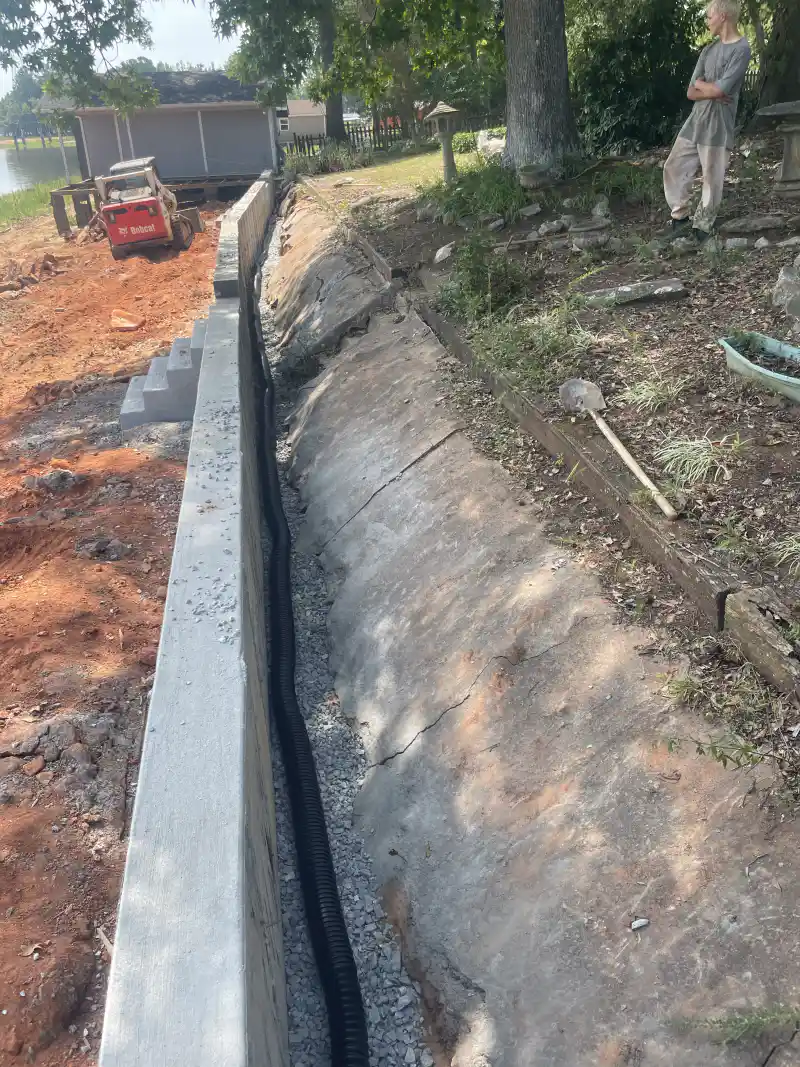
A good answer here is specific: washed stone behind the wall in place of the clay that came out of the hole, a perforated pipe at the base, and a named spot downhill on your own lot where that pipe lets out. On a poured wall, ask about weep holes as well. If the plan for the water is "it'll find its way out," write that down and compare it with the other bids. We lay out the drainage first and build the wall around it.
5. What goes under the wall?
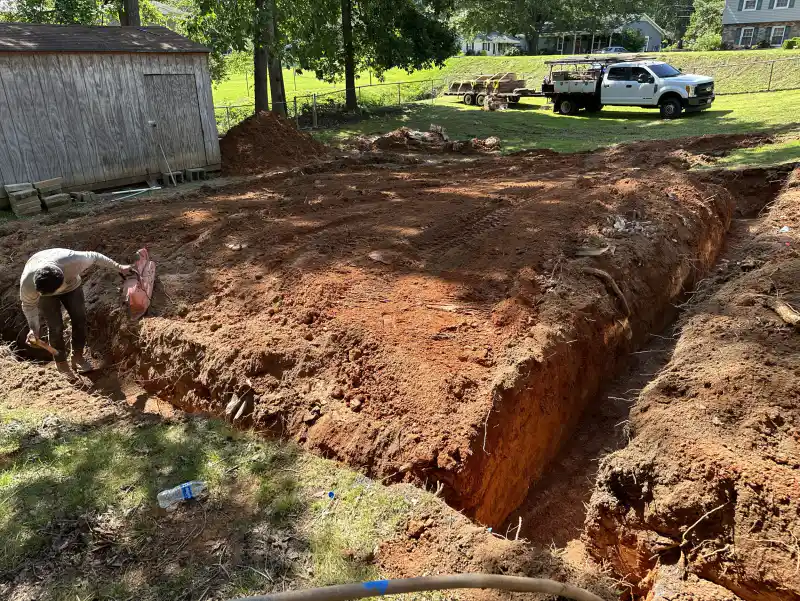
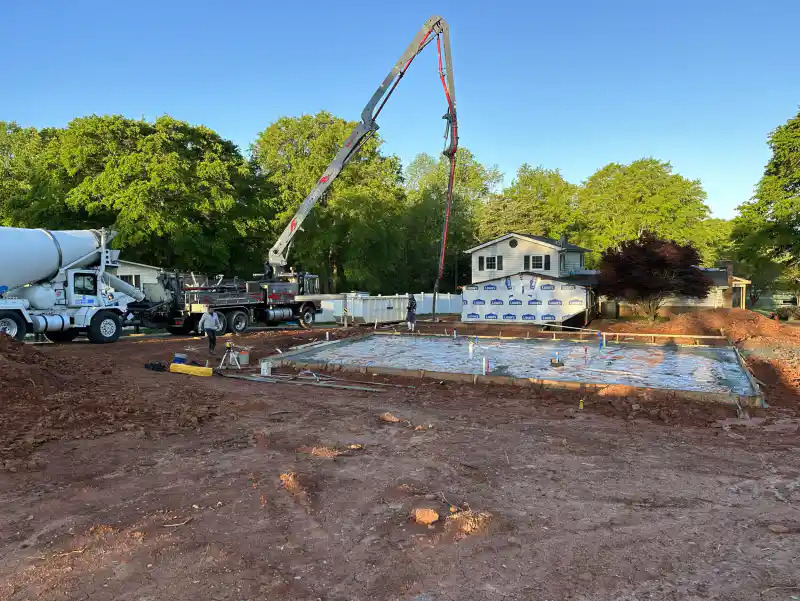
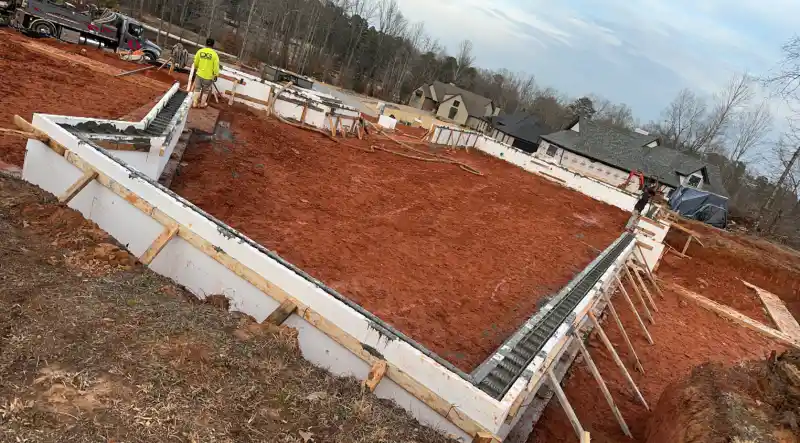
Nobody sees the footing once the wall is up, so ask about it while the wall is still a line of paint on the grass. A poured wall sits on a concrete footing. A segmental block wall usually sits on a leveling pad of compacted crushed stone. Either way, ask how deep they dig, what happens if the bottom of the trench turns out soft, and what they compact the base with. "We'll level it off" answers none of that.
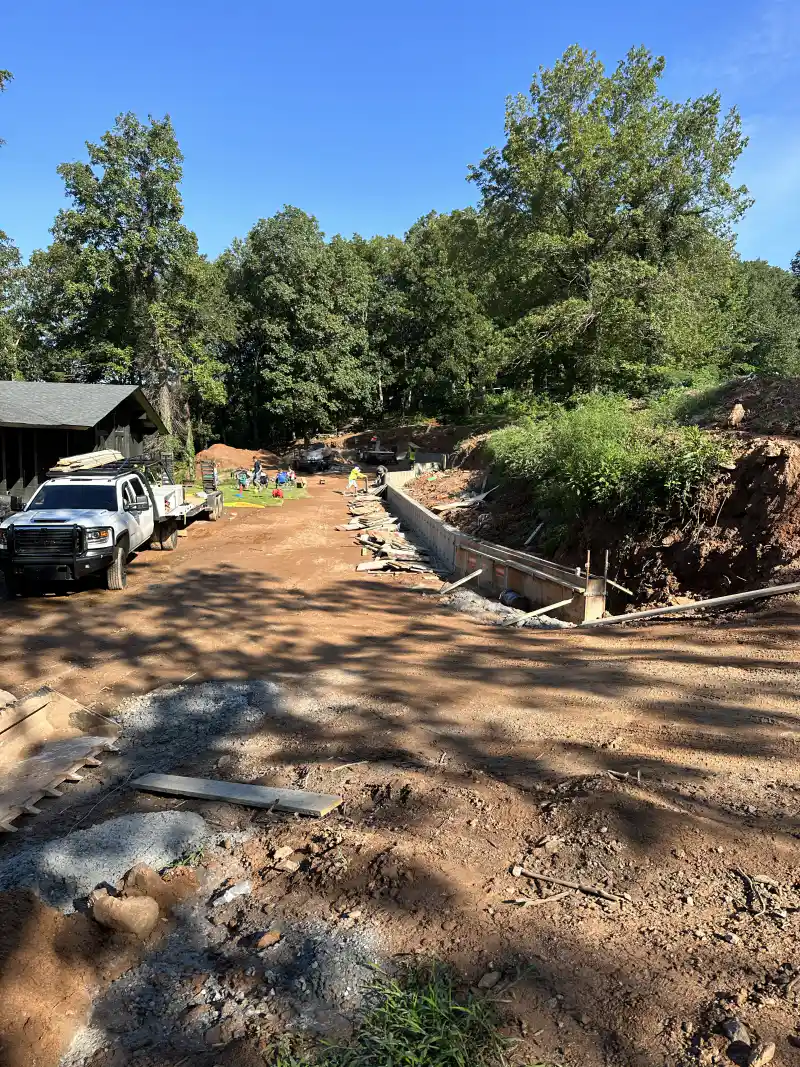
If the wall needs a permit, there may be an inspection of the footing or base before anything goes on top of it. Book the concrete truck or the block delivery after that inspection passes.
6. Why poured concrete or block for your yard?
We build both, so we don't have a horse in this one. A poured wall is formed on site and cast in one piece on its footing. A segmental block wall is stacked dry from factory-made units, and taller ones are usually tied into geogrid buried in the backfill, which means digging well back behind the face.
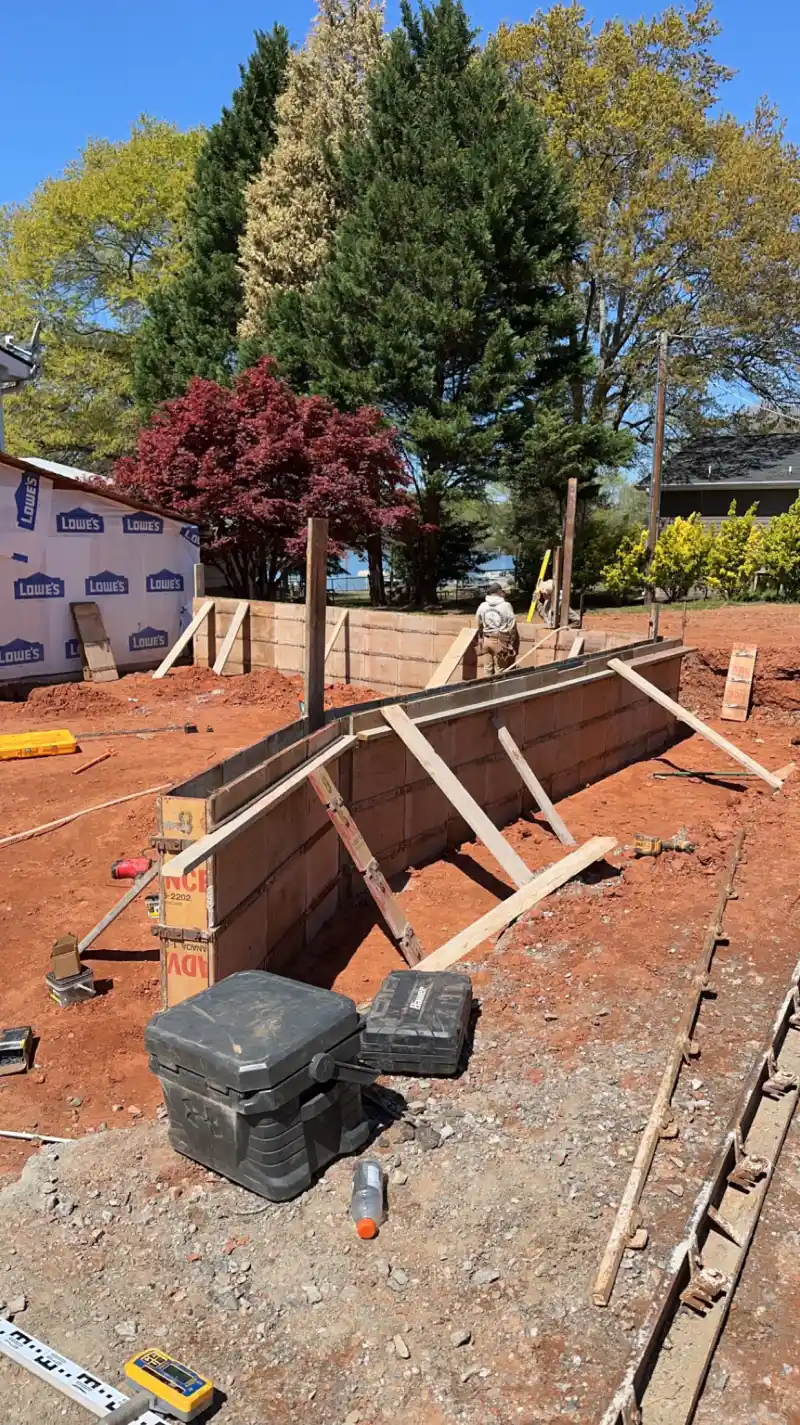
The site usually decides it, mostly how much room there is behind the wall line and how a concrete truck or a pallet of block gets back there. Ask each builder why they picked their type for your yard. If every bid comes back as whatever that company happens to build, get one more from someone who builds the other type. Our guide to choosing poured concrete or block for a retaining wall compares the two in more detail.
7. Can you see walls they built a few years ago?
Every wall looks good the week it's finished. One that has been through a few years of rain shows you more. Check that it's still plumb, and look for a stain on the face where water has been seeping through instead of going out the drain. Ask for addresses you can drive past, or photos from older jobs and not just the day the crew packed up. Our foundation and retaining wall photos are there if you want to look at ours.
8. Does the written estimate spell out the wall and the warranty?
Everything above should end up on paper: wall type, length and height, the footing or base, the drainage stone and pipe and where it lets out, backfill, who pulls the permit, who pays for an engineer if one is needed, haul-off of the dirt and any old wall, and the payment schedule. Add who files the locate request, since SC811 wants it at least three business days before digging, not counting the day you file, weekends or holidays. A single number next to "retaining wall" is hard to compare with anything.
Get the warranty in writing as well: what it covers, for how long, and what voids it. A spoken warranty leaves you nothing to show anyone if the wall starts to lean later.
Taking this list to an estimate
Print it and ask all eight at the site visit. If a garage or shop is going in near the wall, our guide to garage and shop slab rules in Greer covers the city's side of that job.
We'll answer all eight for your Greer wall at no charge. Call 864-214-5271 or send the address through the estimate form below.
Sources: City of Greer, About Greer; City of Greer Planning and Development, Permits; City of Greer Planning and Development, Inspections; SC Code of Laws, Title 40, Chapter 59; 2021 South Carolina Residential Code, R105.2 Work exempt from permit; 2021 South Carolina Residential Code, R404.4 Retaining walls; NOAA NCEI U.S. Climate Normals 1991 to 2020, station USW00003870 (Greenville-Spartanburg Airport); SC811, Homeowners; Wikipedia, Greer, South Carolina. All read November 10, 2026.